Destruction of Infrastructure for the Impact on Civilians is Manifestly Illegal
Last week the US president announced that : ... if the Hormuz Strait is not immediately "Open for Business," we will conclude our lovely "stay" in Iran by blowing up and completely obliterating all of their Electric Generating Plants, Oil Wells and Kharg Island (and possibly all desalinization plants!), which we have purposefully not yet "touched." This will be in retribution for our many soldiers, and others, that Iran has butchered and killed over the old Regime's 47 year "Reign of Terror." Yesterday morning he posted that : Tuesday will be Power Plant Day, and Bridge Day, all wrapped up in one, in Iran. There will be nothing like it!!! Open the Fuckin' Strait, you crazy bastards, or you'll be living in Hell... These are threats to target civilian infrastructure as a coercive measure, which would be a war crime: if Iran doesn't allow tankers through the Strait of Hormuz, the US will cause massive damage to power plants, bridges, and possibly water systems. The US has historically accepted that this is off limits: destroying a bridge to stop it from being used to transport weapons is allowed, but not as retribution or to cause the civilian population to experience "Hell". The Pentagon's own Law of War Manual recognizes this distinction: when NATO destroyed power infrastructure in Kosovo, it was key that the civilian impact was secondary to the military advantage and not the primary purpose. [1][2] To be clear, what Iran has been doing to precipitate this, by attacking
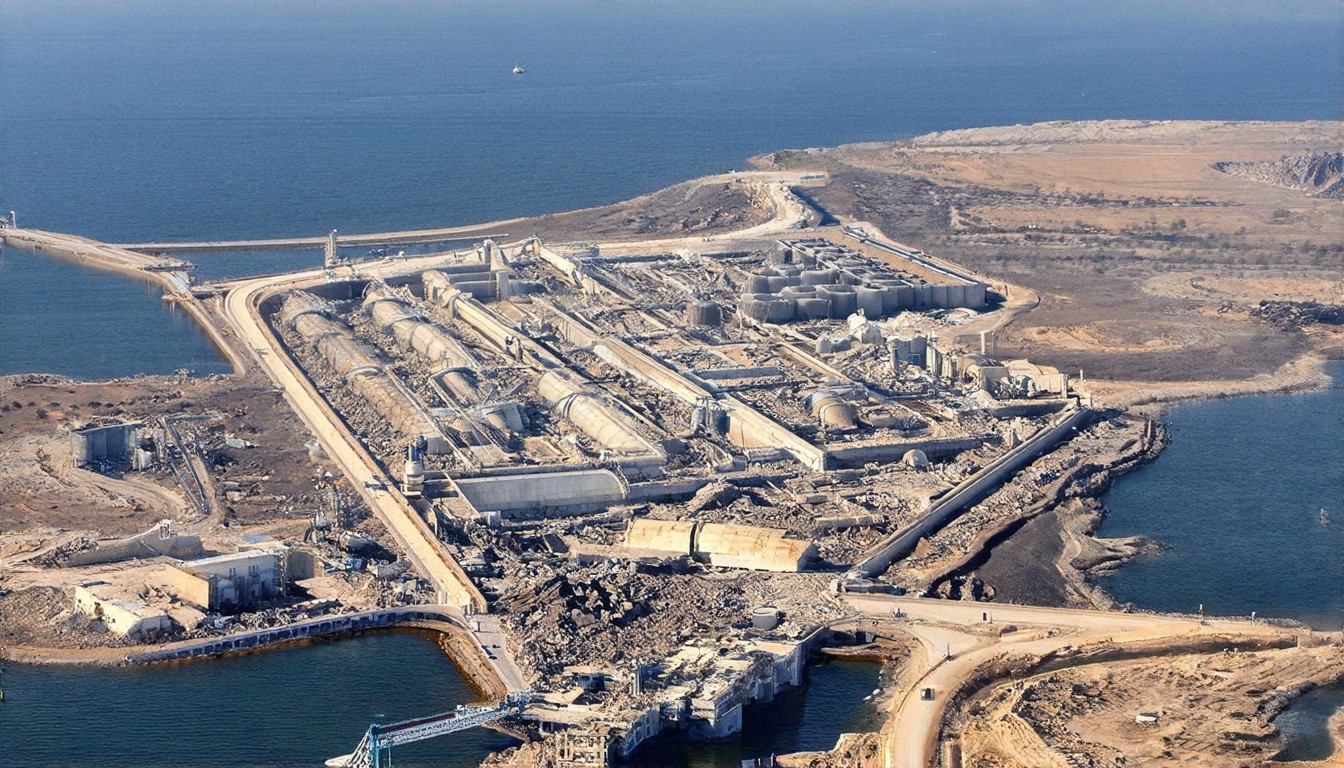
The threat of destroying civilian infrastructure in Iran as a coercive measure has sparked international concern, with many experts arguing that such actions would constitute a war crime. Last week, the US President announced that if the Strait of Hormuz is not immediately "open for business," the US would obliterate Iran's electric generating plants, oil wells, and Kharg Island, potentially including desalinization plants. This retaliation is in response to the deaths of US soldiers and others killed by Iran over the past 47 years under the old regime.
In a recent tweet, the President further escalated the situation, declaring Tuesday as "Power Plant Day" and "Bridge Day," warning Iran that it will face "nothing like it" if it does not open the strait. These threats to target civilian infrastructure as a coercive measure have been met with criticism, as they would violate the principles of the Law of War.
The US has historically accepted that certain actions are off-limits, such as destroying a bridge purely as retribution or to cause civilian suffering. The Pentagon's Law of War Manual distinguishes between actions that target infrastructure to prevent its use for military purposes and those that do so as a primary means of coercion or retribution. For example, NATO's destruction of power infrastructure in Kosovo was deemed acceptable if the civilian impact was secondary to military advantage.
Iran's actions, including attacking civilian tankers to harm the economy, have been condemned as war crimes. However, this does not alter the US's commitment to upholding the Law of War in all circumstances. The US has spent decades advocating for the principle that adherence to the Law of War is unconditional, even when faced with enemy aggression. The US has prosecuted its own service members and enemy combatants under this principle, emphasizing that it will not deviate from its obligations.
Despite the public statements, there are concerns that no one will receive orders to target infrastructure beyond what is necessary for military purposes. The international community is watching closely, as the potential consequences of such actions on the civilian population in Iran could be catastrophic. The escalating tensions in the region highlight the need for all parties to adhere to the Law of War and avoid actions that could lead to widespread civilian suffering.