
? Data to start your week — Helium special
The Iran War’s unexpected front
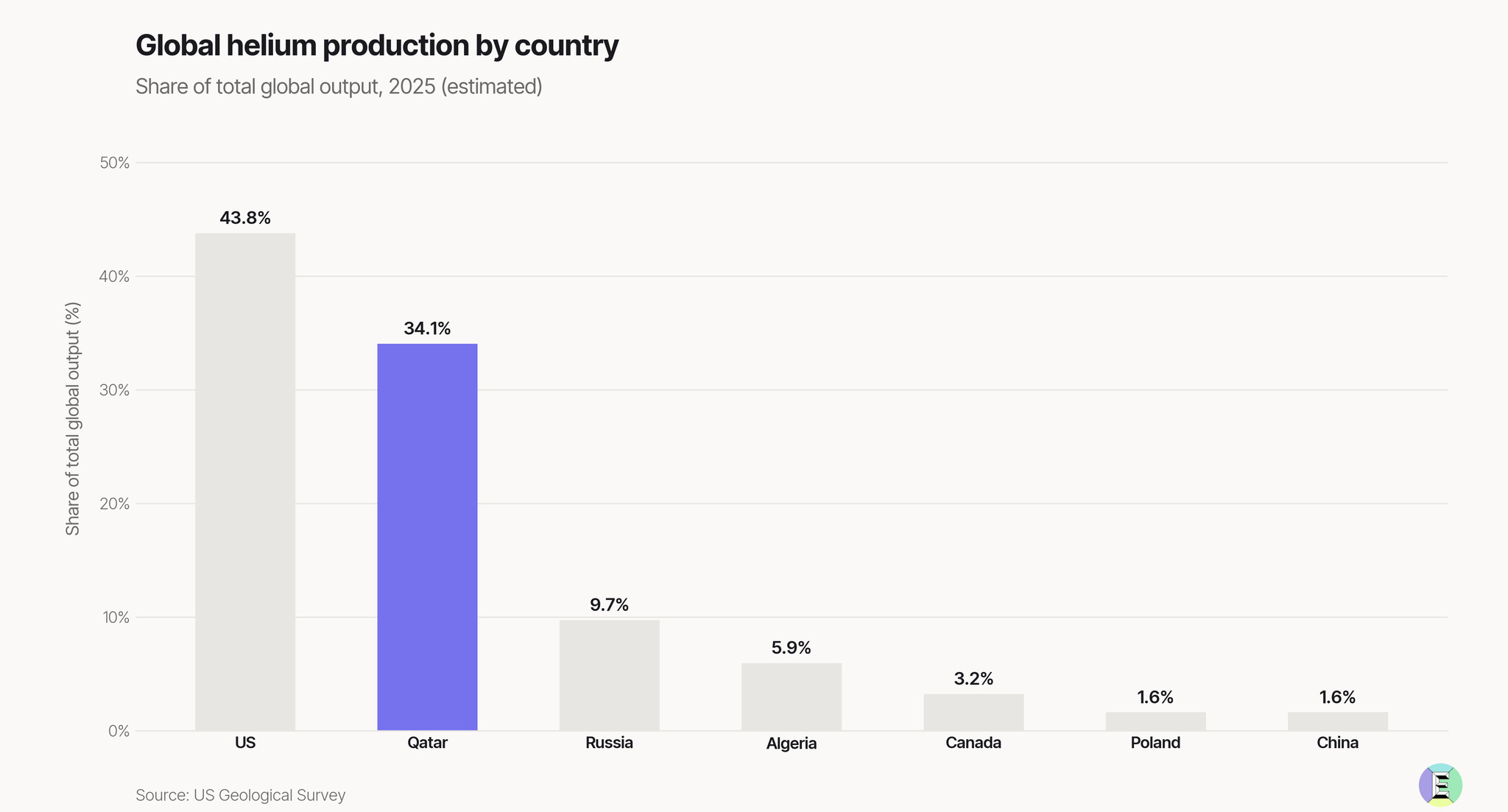
The Iran War's unexpected front: Helium's critical role in the global semiconductor industry is under threat, yet the situation is more nuanced than headlines suggest. Helium, a byproduct of natural gas processing and liquefied natural gas (LNG) production, is essential for more than 20 steps in semiconductor fabrication. While the war has created a chokepoint in helium supply, the reality of the impact on the chip shortage is complex.
Qatar, the source of 34% of global helium supply, has been hit hard by the conflict. Last week, Iran struck the Ras Laffan facility near Doha, Qatar's largest concentrated source of helium. The damage is reportedly "extensive," and it will cut 14% of annual helium exports. Repairing the facility will take 3-5 years, leaving a significant gap in the market.
Helium is transported in insulated containers, and its liquid form remains viable for 35 to 48 days. After that, it warms, turns to gas, and escapes Earth's atmosphere forever. This creates a tight window for distribution, making supply chain disruptions even more challenging.
South Korea, a major player in memory manufacturing, sourced 64% of its helium from Qatar last year. Its fabs use helium to produce approximately 80% of the world's High Bandwidth Memory (HBM), which is crucial for leading AI chips. However, SK Hynix, South Korea's leading memory manufacturer, claims there is "almost no chance" of being affected due to supply diversification. Samsung, another Korean player, introduced the industry's first helium reuse system before the war began, further mitigating risks.
Despite the potential disruption, helium accounts for an estimated 0.5-1% of total semiconductor manufacturing costs. Fabricators are likely to prioritize securing supply, but the immediate impact may not be as severe as feared. Helium suppliers typically prioritize high-priority sectors like semiconductors and MRI machines. Less critical uses, such as balloons and welding, which together make up 25% of US demand, will likely be the first to suffer.
In a severe scenario where Qatar takes years to restore helium supply, the global semiconductor industry may face challenges. However, the resilience of key players like SK Hynix and Samsung, combined with the relatively small cost impact of helium, suggests that the situation is manageable. The real test will be how well the industry can adapt and diversify its supply chains to avoid future disruptions. As the war continues, the helium crisis serves as a reminder of the intricate and often overlooked dependencies in the global technology ecosystem.









