
Data From Chinese Moon Lander Shows Signs of Peculiar Radiation “Cavity”
This could have major implications for future visits to the lunar surface. The post Data From Chinese Moon Lander Shows Signs of Peculiar Radiation “Cavity” appeared first on Futurism .
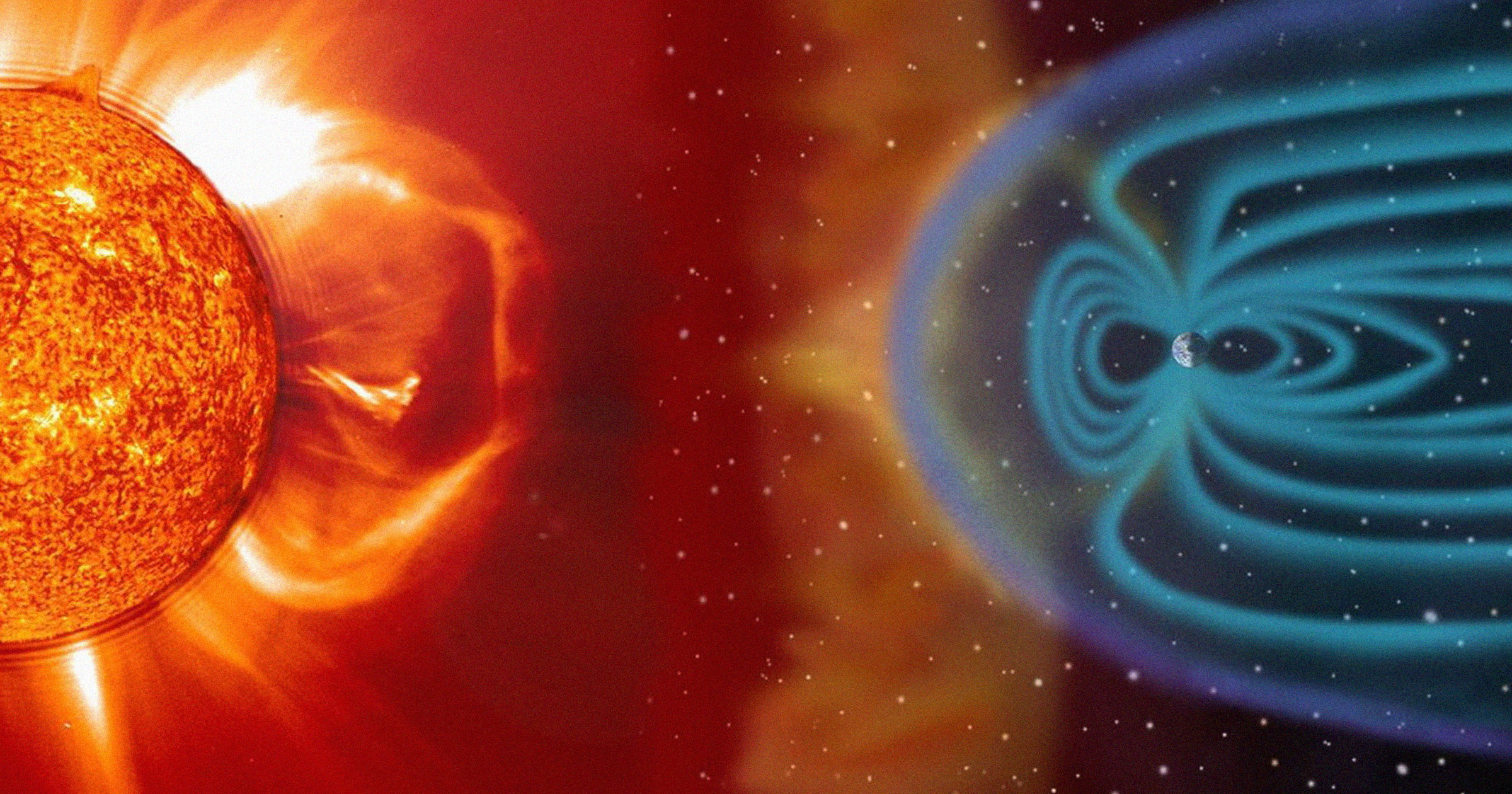
As NASA continues to advance its plans for a permanent lunar presence, the challenges of deep space radiation have long been a concern for space agencies and researchers alike. With the Artemis 2 mission set to launch as early as next week, astronauts will venture far beyond the Moon, exposing them to potentially higher levels of radiation. The fear is that these cosmic rays could penetrate astronauts' bodies, damaging DNA or increasing the risk of cancer. However, recent findings from an international team of researchers may offer a glimmer of hope.
Using data collected by China's Chang'e-4 lander, which became the first spacecraft to explore the far side of the Moon in early 2019, the researchers discovered a peculiar "cavity" of reduced cosmic radiation. This cavity, which includes the Moon and extends far beyond it into space, only appears at a specific moment in the Moon's orbit around the Earth. At this precise point in time, cosmic rays die down significantly, challenging the long-held belief that radiation is uniformly distributed over the Earth-Moon distance.
The team's analysis, published this week in the journal Science Advances, revealed a "region of reduced galactic cosmic ray flux in the prenoon sector of the lunar orbit." This finding suggests that the Earth's magnetic field plays a crucial role in creating the cavity. Just before dawn on the Moon, the "galactic cosmic ray (GCR) cavity" forms, providing a natural shelter from the Sun's radiation.
The researchers have created an illustration to help visualize when and where this cavity forms. The white dotted circle represents the Moon's orbit around the Earth. The brighter streak of light, illustrating the GCR cavity, appears just before dawn on the Moon. This means that during this specific time in the Moon's orbit, astronauts or lunar bases could potentially benefit from reduced radiation exposure.
This discovery has major implications for future lunar exploration, particularly as NASA and other space agencies plan for sustained human presence on the Moon. By understanding the patterns of cosmic radiation, researchers can better protect astronauts and design safer habitats. The existence of this cavity also opens up possibilities for strategic planning of missions, allowing for periods of lower radiation exposure to be utilized more effectively.
Furthermore, the findings challenge previous assumptions about the distribution of cosmic radiation in the Earth-Moon system. The uniform distribution model has been a cornerstone of radiation research, but the Chang'e-4 data suggests that there are indeed variations in radiation levels depending on the position of the Moon in its orbit. This could have broader implications for space travel beyond the Moon, as scientists gain a deeper understanding of how cosmic radiation behaves in different parts of the solar system.
In conclusion, the discovery of the peculiar radiation cavity, revealed through data from China's Chang'e-4 lander, offers a potential solution to one of the most significant challenges facing future lunar explorers. By harnessing this natural shelter, space agencies can better protect astronauts and pave the way for more sustainable and safer missions to the Moon and beyond. As our understanding of cosmic radiation continues to evolve, so too does our capacity to mitigate its risks and expand our presence in the cosmos.








