
Cuba is Not a Piece of Cake, Says Ambassador on US Threat
The Cuban Ambassador lashes out on the US–Israel War, the Iran crisis and the politics of Western blockades that generates untold human suffering.
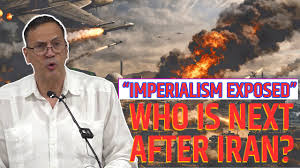
The Cuban Ambassador to the United Nations, Juan Miguel Gomez, recently delivered a fiery speech at the General Assembly, condemning the US-Israeli war, the Iran crisis, and the Western blockades that have caused immense human suffering in Cuba. His remarks highlighted the ongoing tensions between the US and Cuba, as well as the broader geopolitical landscape that has left many nations struggling under the weight of political and economic sanctions.
Gomez began by addressing the US-Israeli war, which he described as a "disgraceful conflict" that has resulted in the deaths of thousands of innocent civilians. He accused the United States of turning a blind eye to the violence and human rights abuses committed by Israel, while simultaneously using its influence to silence critics. The Cuban diplomat argued that the US's unwavering support for Israel, despite its actions, was a direct result of political calculations and the desire to maintain a strategic alliance in the Middle East.
Moving on to the Iran crisis, Gomez criticized the US and its allies for their aggressive stance towards Iran, warning that their actions could lead to a full-scale war in the region. He emphasized that the root of the problem lay in the US's refusal to negotiate with Iran and its insistence on imposing unilateral sanctions. Gomez contended that such policies were not only counterproductive but also served to fuel extremism and instability in the Middle East.
The Cuban Ambassador then turned his attention to the issue of Western blockades, which he claimed were responsible for the humanitarian crisis in Cuba. He accused the US and its allies of imposing unjustified sanctions that had crippled the Cuban economy and left millions of people living in poverty. Gomez argued that these blockades were not only a violation of international law but also a moral failing, as they disregarded the well-being of ordinary Cubans.
Gomez further highlighted the impact of these blockades on Cuba's healthcare system, education, and infrastructure. He recounted stories of hospitals struggling to provide basic medical care, schools lacking essential resources, and communities facing water shortages and power outages. The Cuban Ambassador warned that the consequences of these blockades were not limited to Cuba; they were a symptom of a larger global issue, where powerful nations used their economic and political power to suppress the rights of smaller, weaker states.
In response to critics who argue that the Cuban government is responsible for its own economic woes, Gomez insisted that the blockades were the primary cause of the country's struggles. He pointed out that Cuba had made significant strides in recent years, including reducing poverty and improving living standards, but these efforts were constantly undermined by the US's refusal to lift its sanctions.
Gomez concluded his speech by calling for a more equitable and just global order, one in which all nations are treated with respect and dignity. He urged the international community to recognize the humanitarian impact of the US-led blockades and to demand an end to the policies that perpetuate suffering and inequality. The Cuban Ambassador's powerful words served as a stark reminder of the ongoing challenges faced by nations like Cuba, which are trapped in the crossfire of geopolitical rivalries and economic exploitation.
As the world watches the tensions between the US and Cuba escalate, the speech by the Cuban Ambassador underscores the urgent need for dialogue and cooperation. The human suffering caused by blockades and sanctions cannot be ignored, and it is up to the international community to take action and demand a more just and equitable global system. Only then can we hope to overcome the challenges that threaten peace and stability around the world.









