
Closing statements in Tiananmen vigil group trial set for May, as activist again barred from referring to 1989 ‘massacre’
The national security trial of Hong Kong’s now-defunct Tiananmen vigil group has been adjourned to May after the defence called its last witness to the stand. Chow Hang-tung, a barrister and a former leader of the Hong Kong Alliance in Support of Patriotic Democratic Movements of China, continued representing herself in her case at the […]
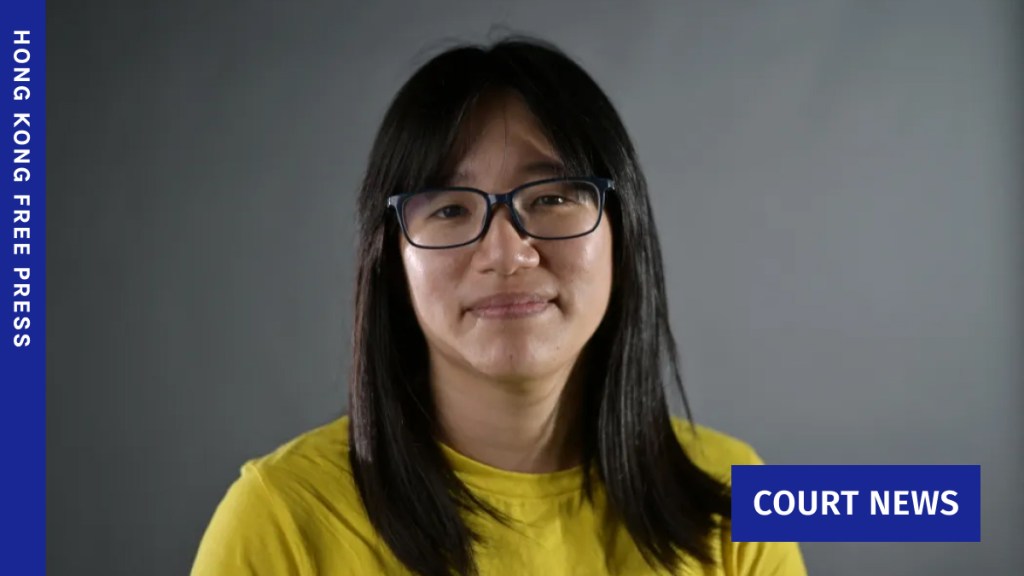
The national security trial of Hong Kong's now-defunct Tiananmen vigil group has been adjourned to May after the defence called its last witness to the stand. The case, which has been underway for several weeks, involves three defendants – barrister and former leader of the Hong Kong Alliance in Support of Patriotic Democratic Movements of China, Chow Hang-tung, and activists Lee Cheuk-yan and Albert Ho – who are charged with inciting subversion. Chow and Lee pleaded not guilty, while Ho pleaded guilty.
The trial took a significant turn on Tuesday as Chow Hang-tung continued representing herself in her case at the West Kowloon Law Courts Building. She called Kwan Chun-pong, a former standing committee member and volunteer of the Alliance, to testify as a defence witness. Kwan, 54, who works at a supply chain company, began volunteering for the Alliance in December 1989 and was part of the group's standing committee from 1998 to 2014.
During his testimony, Kwan recalled feeling touched by Hongkongers braving a typhoon in May 1989 to march for the students. He also attended a protest that month and witnessed the establishment of the Alliance when an activist announced the formation of the new group at Happy Valley Racecourse, where the march ended.
However, the judges frequently interrupted Kwan, asking him to bring his evidence to "more recent" times and questioning how his testimony related to the case. Judge Alex Lee also cautioned Chow, stating, "The court will not allow you to make political statements." Chow responded to the judge's remarks, but the exact nature of her response was not disclosed.
The trial has been marked by tensions between the defendants and the court, with the latter repeatedly reminding the former to stay focused on the case. The defendants, on the other hand, have sought to highlight the historical significance of the Tiananmen vigil group and its role in promoting democracy and human rights in China.
In a separate development, Chow Hang-tung has been barred from referring to the 1989 Tiananmen Square protests and massacre as a "massacre" in her court appearances. This restriction has been imposed as part of the government's efforts to suppress any mention of the tragic events that led to the deaths of hundreds, if not thousands, of pro-democracy protesters.
The trial's adjournment to May comes as Hong Kong's political climate remains tense, with ongoing concerns about freedom of expression and the suppression of dissent. The case of the Tiananmen vigil group has become a focal point for those advocating for democracy and human rights, as well as for those who view such activism as a threat to national security.
As the trial resumes in May, it will be crucial to see how the defendants navigate the legal and political challenges they face. The outcome of the case could have significant implications for the future of political activism in Hong Kong and the broader region, as well as for the ongoing debate over the balance between national security and individual freedoms.
In the meantime, the barring of Chow Hang-tung from using the term "massacre" in relation to the 1989 events highlights the government's efforts to control the narrative surrounding the Tiananmen Square tragedies. This restriction not only silences a key aspect of the defendants' case but also underscores the challenges faced by those who seek to remember and commemorate the lives lost during that tumultuous period.
As the trial progresses, it will be important to monitor how the court handles the defendants' arguments and whether they are allowed to present a comprehensive view of the Tiananmen vigil group's history and mission. The case serves as a stark reminder of the ongoing struggle for freedom of expression and the complex interplay between national security concerns and individual rights in Hong Kong and beyond.









