
Clear market uncertainty despite latest Trump attempt to soothe concerns
The latest attempt by Donald Trump to ease uncertainty over the US and Israel's war on Iran has only heightened investor concerns.
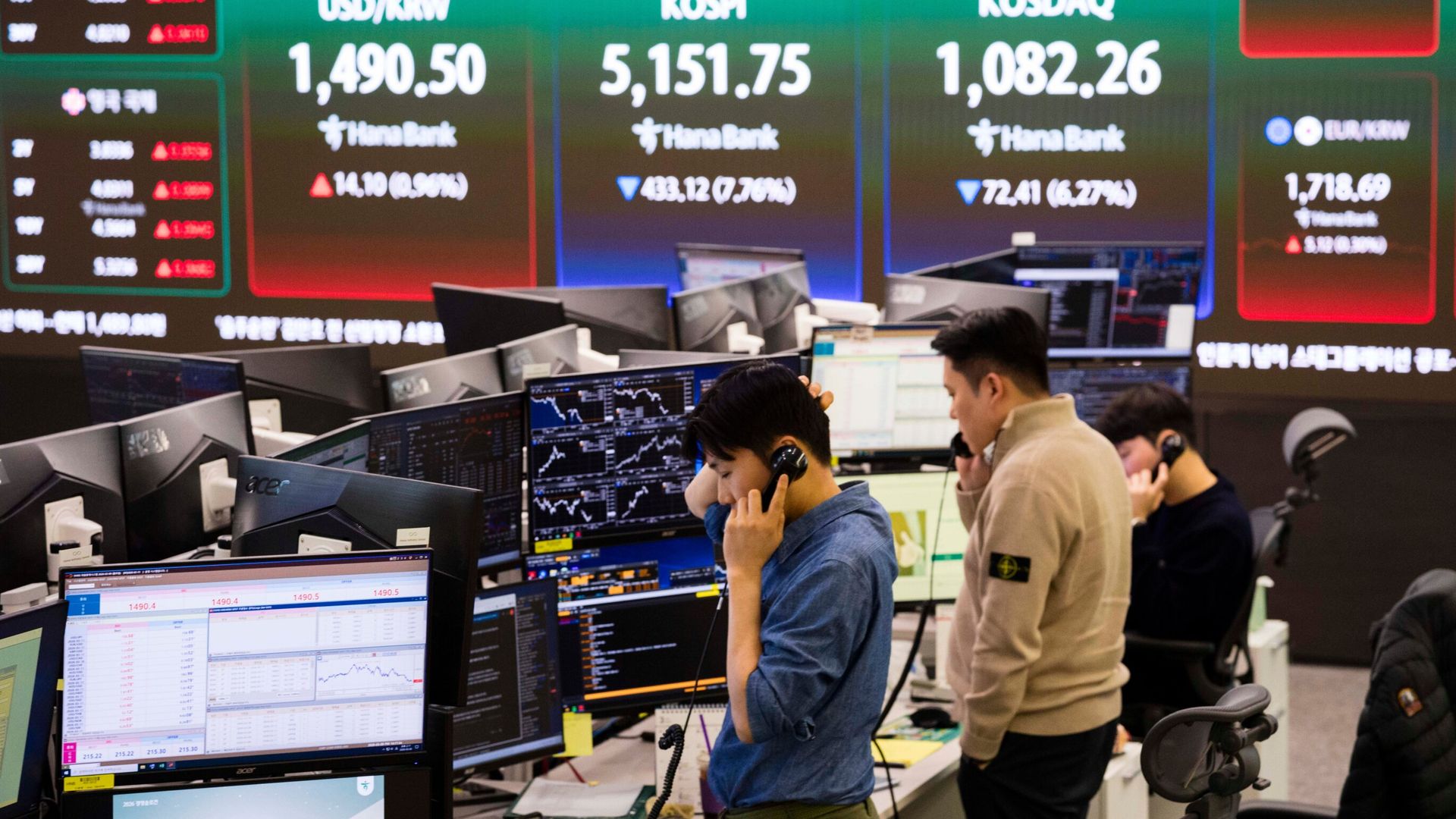
The latest attempt by Donald Trump to ease uncertainty over the US and Israel's war on Iran has only heightened investor concerns, as tensions in the Middle East continue to cast a shadow over global markets. Despite Trump's efforts to reassure investors and stakeholders, the volatile geopolitical landscape has left many traders and analysts wary of the potential impact on oil prices and regional stability.
In a recent tweet, Trump claimed that the situation with Iran was "under control" and that he was "very close" to a deal with the country. However, this statement came as tensions escalated after a series of attacks on US interests in Iraq and Syria, which the US and Israel have blamed on Iranian-backed militias. The Trump administration's previous attempts to negotiate with Iran have faced significant hurdles, including the withdrawal from the 2015 nuclear deal and the imposition of new sanctions.
Investors have been particularly concerned about the potential for a full-scale conflict between the US, Israel, and Iran, which could disrupt global oil supplies and lead to significant price increases. The Organization of the Petroleum Exporting Countries (OPEC) has already warned that any disruption to Middle Eastern oil production could have severe consequences for global markets.
Additionally, the ongoing trade tensions between the US and China have added to the market uncertainty. The recent escalation in the trade war, including the imposition of new tariffs and the threat of further restrictions, has left investors uncertain about the global economic outlook. Many are concerned that a prolonged trade war could lead to a global recession, further impacting stock markets and commodity prices.
The uncertainty surrounding the US-China trade war and the potential for conflict in the Middle East has led to a flight to safety in certain assets, such as gold and the US dollar. Gold prices have risen significantly in recent weeks, with investors seeking a hedge against potential market volatility. Meanwhile, the US dollar has also strengthened, as it is often seen as a safe-haven currency in times of economic uncertainty.
In the technology sector, investors have been particularly cautious, with concerns about the impact of the trade war on companies like Apple and Microsoft, which have significant operations in China. The Nasdaq Composite Index has experienced a sharp decline in recent weeks, reflecting investor apprehension about the broader economic implications of the trade tensions.
Despite Trump's efforts to downplay the risks, many analysts believe that the uncertainty surrounding geopolitical tensions and trade disputes will persist for some time. The lack of clear communication from the Trump administration has only added to the investor concerns, as markets struggle to gauge the potential impact of these developments.
In conclusion, while Donald Trump's latest attempt to ease concerns over the US and Israel's war on Iran may have had some short-term impact, the underlying geopolitical tensions and trade disputes continue to cast a shadow over global markets. Investors are likely to remain on edge, closely monitoring developments in the Middle East and the evolving trade war between the US and China. As these uncertainties persist, it will be challenging for markets to recover and regain investor confidence.









