
Claude, OpenClaw and the new reality: AI agents are here — and so is the chaos
The age of agentic AI is upon us — whether we like it or not. What started with an innocent question-answer banter with ChatGPT back in 2022 has become an existential debate on job security and the rise of the machines. More recently, fears of reaching artificial general intelligence (AGI) have become more real with the advent of powerful autonomous agents like Claude Cowork and OpenClaw . Having played with these tools for some time, here is a comparison. First, we have OpenClaw (formerly known as Moltbot and Clawdbot). Surpassing 150,000 GitHub stars in days, OpenClaw is already being deployed on local machines with deep system access. This is like a robot “maid” (Irona for Richie Rich fans, for instance) that you give the keys to your house. It’s supposed to clean it, and you give it the necessary autonomy to take actions and manage your belongings (files and data) as it pleases. The whole purpose is to perform the task at hand — inbox triaging, auto-replies, content curation, travel planning, and more. Next we have Google’s Antigravity , a coding agent with an IDE that accelerates the path from prompt to production. You can interactively create complete application projects and modify specific details over individual prompts. This is like having a junior developer that can not only code, but build, test, integrate, and fix issues. In the realworld, this is like hiring an electrician: They are really good at a specific job and you only need to give them
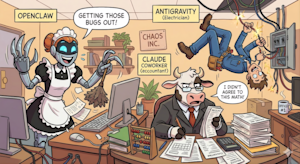
The age of agentic AI is upon us — whether we like it or not. What started with an innocent question-answer banter with ChatGPT back in 2022 has become an existential debate on job security and the rise of the machines. More recently, fears of reaching artificial general intelligence (AGI) have become more real with the advent of powerful autonomous agents like Claude Cowork and OpenClaw. Having played with these tools for some time, here is a comparison of these AI agents and their impact on the world.
First, we have OpenClaw, formerly known as Moltbot and Clawdbot. Surpassing 150,000 GitHub stars in days, OpenClaw is already being deployed on local machines with deep system access. This is like a robot "maid" (Irona for Richie Rich fans, for instance) that you give the keys to your house. It's supposed to clean it, and you give it the necessary autonomy to take actions and manage your belongings (files and data) as it pleases. The whole purpose is to perform the task at hand — inbox triaging, auto-replies, content curation, travel planning, and more.
OpenClaw's capabilities are vast, and it can handle various tasks with ease. For example, it can manage your email inbox, automatically sorting and replying to emails based on predefined rules. It can also curate content for you, suggesting articles, videos, or podcasts based on your interests. Additionally, it can plan your travel itinerary, booking flights, hotels, and even creating a detailed schedule for your trip.
However, giving an AI agent like OpenClaw deep system access raises concerns about security and privacy. Imagine if the robot maid accidentally deletes important files or leaks sensitive information. The potential for misuse or unintended consequences is significant. Users must be cautious and ensure that they have proper safeguards in place, such as encryption and access controls, to mitigate these risks.
Next, we have Google's Antigravity, a coding agent with an IDE that accelerates the path from prompt to production. You can interactively create complete application projects and modify specific details over individual prompts. This is like having a junior developer that can not only code but also build, test, integrate, and fix issues. In the real world, this is like hiring an electrician: They are really good at a specific job and you only need to give them access to a specific item (your electric junction box).
Antigravity's strength lies in its ability to quickly develop and deploy applications. It can generate code based on user prompts, allowing developers to focus on higher-level tasks while the AI handles the technical details. This can significantly speed up development cycles and reduce costs. However, like any tool, Antigravity has its limitations. It may not be as effective for complex projects that require a deep understanding of the domain or for tasks that require creative thinking.
Finally, we have the mighty Claude, the AI agent developed by Anthropic. The release of Claude Cowork, which featured AI agents for automating legal tasks like contract review and NDA triage, caused a sharp sell-off in legal-tech and software-as-a-service (SaaS) stocks (referred to as the SaaSpocalypse). Claude has, however, been the go-to chatbot; now with Cowork, it has domain knowledge for specific industries like legal and finance. This is like hiring an accountant. They know the domain inside and out and can handle tasks with precision and accuracy.
Claude's ability to understand and apply legal and financial concepts makes it invaluable for professionals in these fields. It can review contracts, identify potential issues, and provide recommendations for improvement. Similarly, it can help financial analysts by processing large datasets, identifying patterns, and generating insights. However, like any AI tool, Claude is not infallible. It relies on the quality of the data it is trained on and may make errors or overlook important details.
The rise of agentic AI like OpenClaw, Antigravity, and Claude is undeniable. These tools have the potential to revolutionize the way we work, from managing daily tasks to developing complex applications and analyzing legal documents. However, they also bring with them new challenges and concerns. As we navigate this new reality, it is crucial to strike a balance between harnessing the power of AI and ensuring that we maintain control and oversight. We must also consider the impact on employment and the need for reskilling and upskilling workforce to adapt to the changing landscape.
In conclusion, the age of agentic AI is here, and it is transforming the way we live and work. While these tools offer numerous benefits, they also present significant challenges. As we continue to develop and refine these AI agents, it is essential to approach them with caution, critical thinking, and a commitment to ethical use. Only then can we harness the full potential of AI while mitigating the risks and uncertainties that come with it.









