Chinese University Announces 30-Story “Artificial Island” for Marine Research Purposes
Massive. The post Chinese University Announces 30-Story “Artificial Island” for Marine Research Purposes appeared first on Futurism .
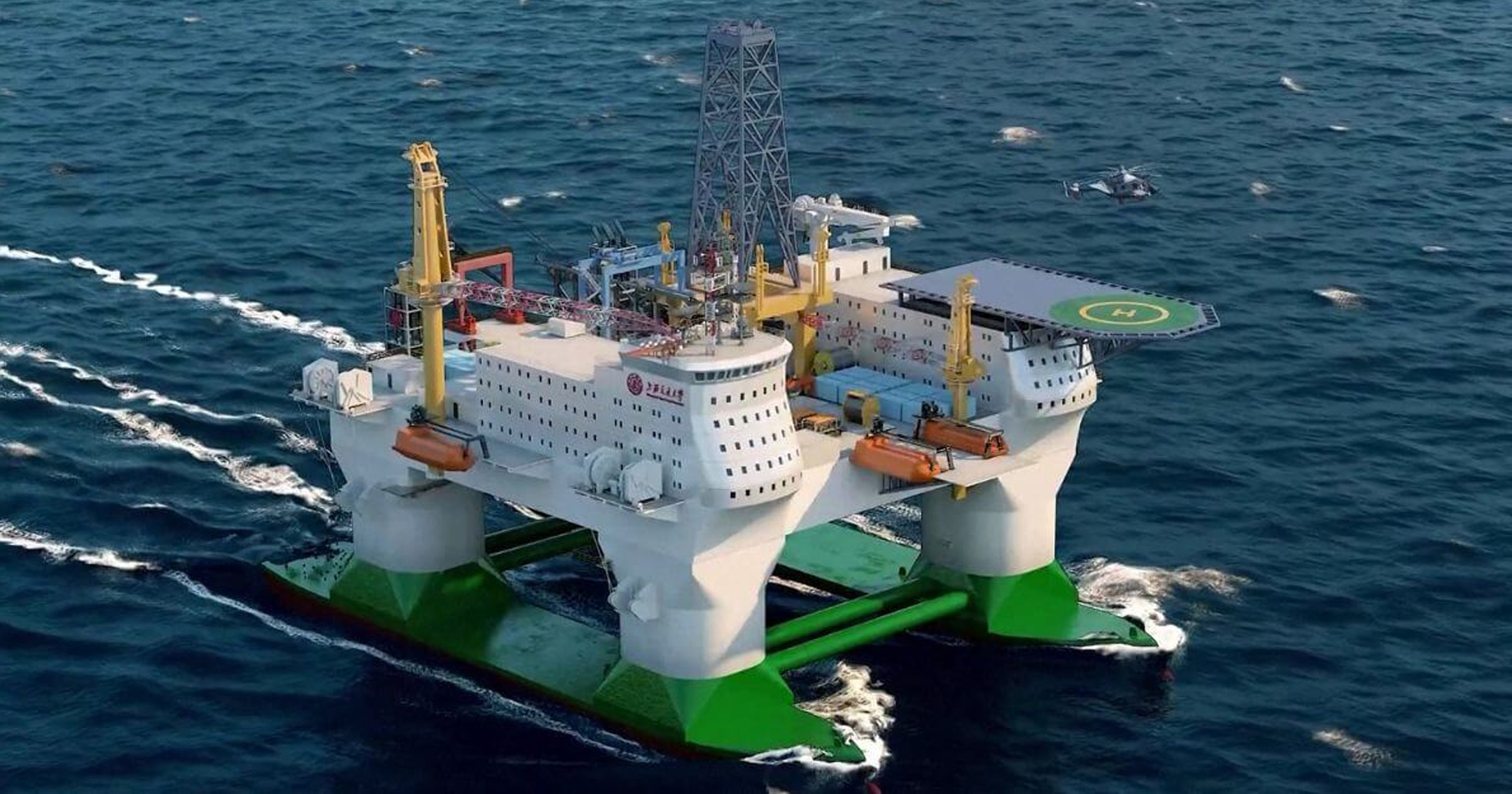
China's Shanghai Jiao Tong University has unveiled plans for a groundbreaking marine research facility that will redefine oceanic exploration. The ambitious project, dubbed the Deep-Sea All-Weather Resident Floating Research Facility or "Open-Sea Floating Island," promises to be the largest semi-submersible research platform ever attempted. Standing 30 stories high, this artificial island will not only surpass traditional research ships in scale but also offer unprecedented capabilities for marine research.
The floating research megastructure is designed to feature six major research facilities, including a marine disaster lab, installations for studying marine meteorology, and heavy ocean equipment. With a staff capacity of 238 people, researchers will be able to conduct experiments at depths of up to 10,000 meters. This innovative platform will enable prolonged and extensive studies in the open sea, addressing a critical gap in China's existing marine research infrastructure.
Construction on this colossal vessel is set to conclude by 2030, with the final product boasting a deck area the size of two football fields. A moon pool, large enough to accommodate a "full-grown blue whale," will further enhance the facility's capabilities. The People's Republic of China, already recognized for its largest fleet of civilian research vessels, is further solidifying its position as a global leader in marine research.
The concept behind the Open-Sea Floating Island stems from the need for research facilities that can both navigate quickly and operate for extended periods in a single mission area. As Xiao Longfei, the project's chief engineer, explained to CCTV, "By integrating the characteristics of semi-submersible platforms and research vessels used in the marine oil and gas sector, a completely new concept of a semi-submersible research platform has been formed."
While China's commitment to marine research has been met with both admiration and criticism, particularly from Western China hawks, the development of this artificial island underscores the nation's ambition to lead in oceanic exploration. With its advanced facilities and unparalleled scale, the Deep-Sea All-Weather Resident Floating Research Facility will undoubtedly play a pivotal role in advancing scientific understanding of the world's oceans. As the project progresses, it serves as a testament to the potential of human ingenuity and the importance of investing in marine research to safeguard our planet's aquatic ecosystems.