
Chinese robotaxis stall in apparent ‘malfunction,’ police say
A string of self-driving robotaxis owned by Chinese internet giant Baidu stalled in central China, stranding passengers after an apparent “system malfunction”, police said Wednesday. Local authorities in Wuhan, Hubei province, began receiving calls “one after another” on Tuesday night about “multiple Apollo Go cars stopped in the middle of the road, unable to move”, police […]
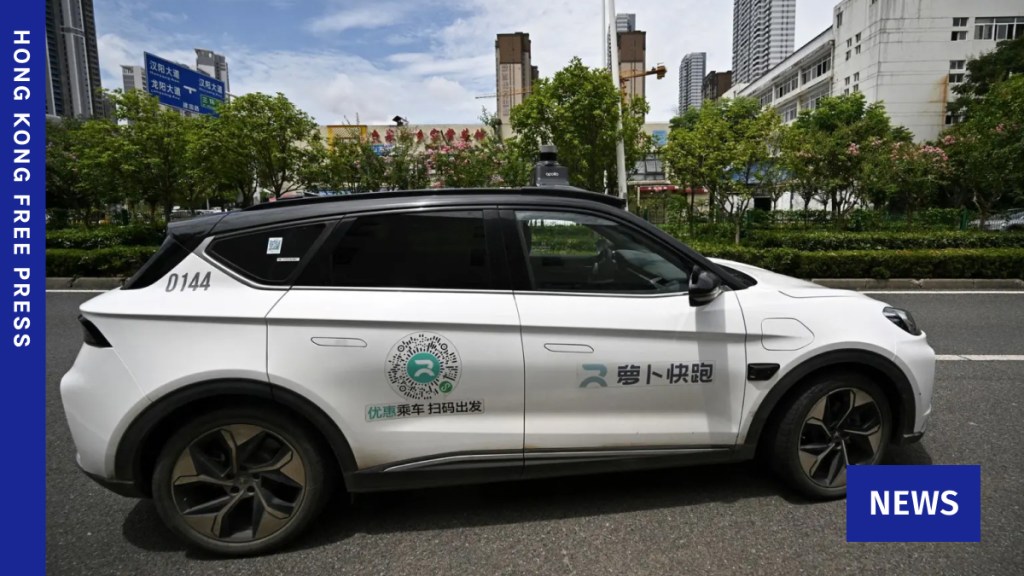
A string of self-driving robotaxis owned by Chinese internet giant Baidu stalled in central China, stranding passengers after an apparent "system malfunction," police said Wednesday. The incident occurred in Wuhan, Hubei province, where local authorities received numerous calls on Tuesday night about "multiple Apollo Go cars stopped in the middle of the road, unable to move," according to a police statement.
Apollo Go is Baidu's driverless taxi service, which began charging for rides in Beijing in 2021 and operates in designated areas across several cities. The company has a fleet of more than 500 driverless cars, and in the fourth quarter of 2025, Apollo Go delivered 3.4 million driverless rides, with total rides increasing over 200 percent compared to the same period a year prior, according to company filings. Baidu has also announced deals to have its cars on popular rideshare apps Lyft and Uber and is seeking to expand its presence outside China.
Police investigations suggested that the cause of the stallings was a "system malfunction," though the exact nature of the issue and the number of affected cars were not specified. Social media users shared videos of themselves attempting to contact customer service from inside their stalled robotaxis as other vehicles passed by. One user wrote on social media, "Apollo Go, are you paralysed?" alongside a video of unanswered calls to the company dialled from an in-car tablet. The light green Apollo Go logo was visible on the steering wheel. The user reported being "stuck" in the middle of the road for more than 30 minutes.
Baidu did not immediately respond to requests for comment. The incident highlights the challenges faced by autonomous vehicle companies as they scale their operations and expand into new markets. While Apollo Go has made significant strides in recent years, with a rapid increase in rides and partnerships with major rideshare platforms, setbacks like this serve as a reminder of the ongoing technical and logistical hurdles in the development and deployment of self-driving technology.
The stalling of the robotaxis in Wuhan also underscores the public's growing concerns and expectations regarding autonomous vehicles. As these systems become more integrated into urban transportation networks, incidents like this can lead to questions about safety, reliability, and customer service. The incident in Wuhan comes at a time when China's "robotaxi" fleet is expanding rapidly, with plans to deploy thousands of autonomous vehicles across the country in the coming years.
Authorities in Wuhan and Baidu are likely to be under pressure to quickly resolve the issue and provide clear communication about the cause of the malfunction. Passengers stranded in their vehicles would expect timely assistance, and the company would need to address concerns about the reliability of its service. The incident could also prompt regulators to scrutinize the safety measures and contingency plans in place for autonomous vehicle operations.
In the broader context of China's ambitions in the autonomous vehicle market, this incident serves as a stark reminder of the potential challenges that lie ahead. While the country is leading the global race in this field, with significant investments in research and development, the success of autonomous vehicle projects will ultimately depend on their ability to deliver safe, efficient, and reliable services to users. The stalling of the Apollo Go robotaxis in Wuhan will undoubtedly be a point of interest for industry experts and policymakers as they monitor the progress and potential pitfalls of autonomous transportation systems.









