China urges respect for Palestinian rights after Israel passes death penalty law
China called on Friday for Palestinians’ rights to be protected after Israel approved a bill to allow the execution of Palestinians convicted on terror charges for deadly attacks. Under the new law, passed by Israel’s parliament on Monday, Palestinians in the occupied West Bank convicted by military courts of carrying out deadly attacks classified as […]
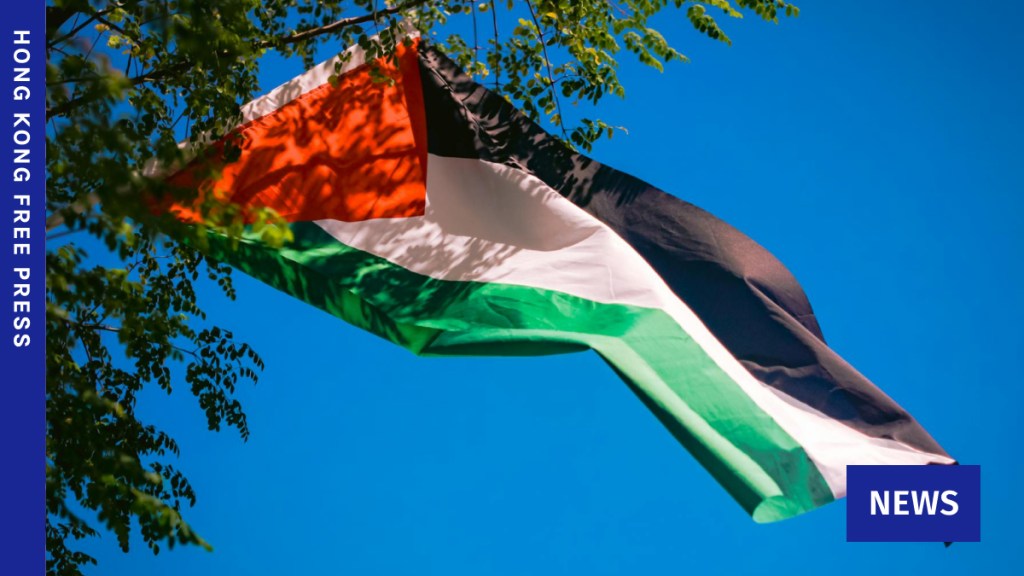
China has called for the protection of Palestinian rights following Israel's approval of a bill that allows the execution of Palestinians convicted on terror charges for deadly attacks. The new law, passed by Israel's parliament on Monday, mandates the death penalty as a default sentence for Palestinians in the occupied West Bank convicted by military courts of carrying out attacks classified as "terrorism."
China's foreign ministry spokeswoman Mao Ning emphasized the need to respect and protect the legal rights of the Palestinian people during a press briefing on Friday. She also urged relevant parties to cease actions that escalate tensions and exacerbate conflict, without explicitly mentioning Israel. Mao stressed that any law should adhere to legal principles such as equality and justice and should not discriminate based on ethnicity, religion, nationality, or political views.
The bill has faced widespread criticism from a range of countries and international organizations. The United Nations declared on Tuesday that applying the new law in occupied Palestinian territory would constitute a war crime. Additionally, the foreign ministers of Saudi Arabia, Egypt, Jordan, Indonesia, Pakistan, Qatar, Turkey, and the United Arab Emirates jointly condemned the bill in a statement on Thursday, describing it as a "dangerous escalation" with discriminatory application against Palestinian prisoners. They warned that such measures risk further increasing tensions and undermining regional stability.
Israeli Prime Minister Benjamin Netanyahu has supported the bill, which has drawn comparisons to previous controversial legislation that has drawn international condemnation. The move comes amid ongoing tensions in the region, with both sides frequently accusing each other of actions that escalate conflict.
China's stance on the issue reflects its consistent advocacy for the protection of human rights and the application of international law. The country has previously spoken out against Israeli settlements in the West Bank and called for a two-state solution to the Israeli-Palestinian conflict.
The approval of the death penalty law has reignited global debates on the treatment of Palestinians in Israeli-occupied territories and the applicability of international humanitarian law in such contexts. As tensions continue to rise, the international community is closely monitoring the situation, with many countries and organizations urging restraint and a commitment to peaceful resolution.
In response to the criticism, Israel has argued that the law is necessary for national security and to deter future attacks. However, critics contend that the legislation disproportionately targets Palestinians and violates international human rights standards.
The situation highlights the complex dynamics of the Israeli-Palestinian conflict and the challenges faced by both sides in finding a path to lasting peace. As the debate continues, the international community remains divided on how to approach the issue, with some countries supporting Israel's right to defend itself while others condemn its actions as unlawful and unjust.
China's call for respecting Palestinian rights underscores its position as a vocal critic of Israeli policies in the occupied territories. The country's stance is part of a broader effort to promote international cooperation and adherence to global norms and standards, particularly in areas such as human rights and international law.
As the situation evolves, it remains to be seen how the international community will respond to Israel's latest move and whether it will lead to further escalation or a step towards de-escalation. The ongoing conflict between Israel and Palestine continues to be a focal point of global attention, with many countries and organizations urging both sides to engage in dialogue and pursue a peaceful resolution.