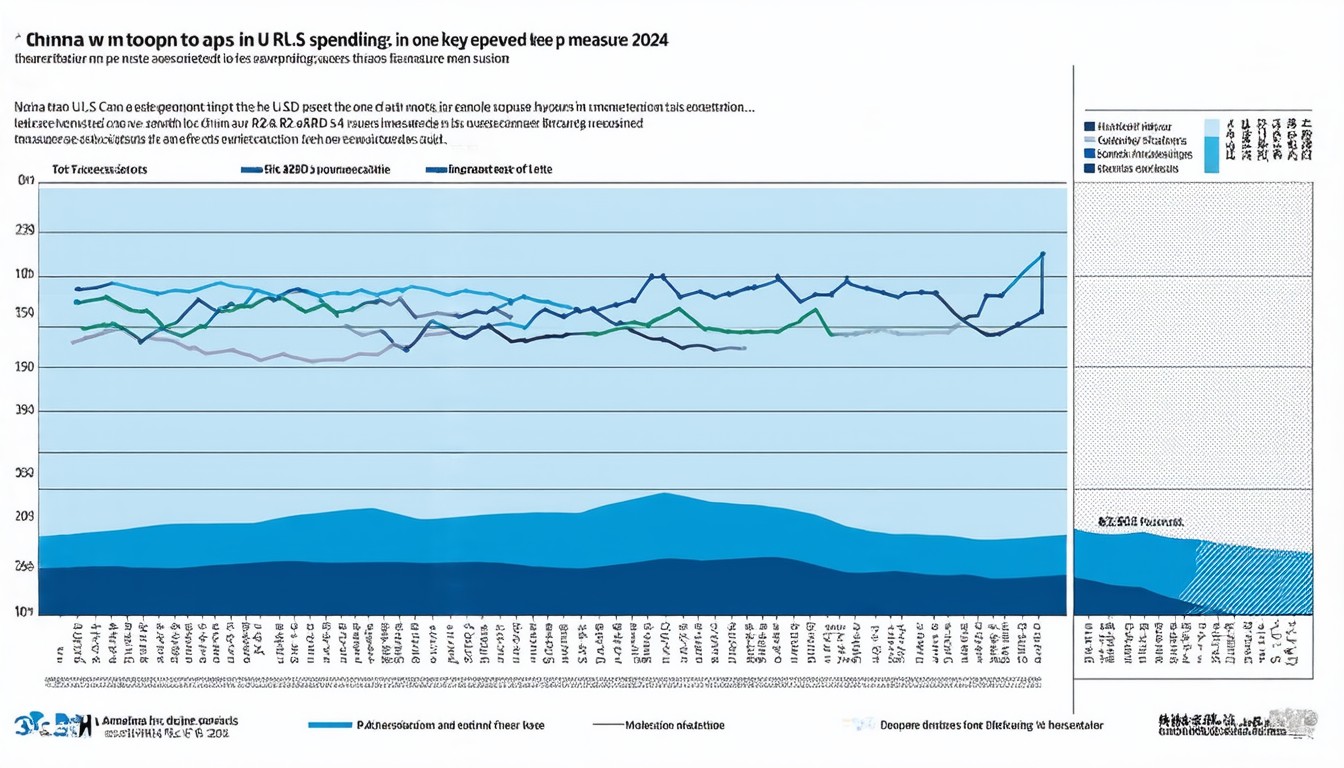
China now tops the U.S. in R&D spending by one key measure
China reached long expected milestone in 2024
In a significant shift in the global landscape of innovation, China has surpassed the United States as the world's largest spender on research and development (R&D) by one key measure. This milestone, long anticipated by observers of the global economy and technological advancement, was achieved in 2024. The move underscores China's ambitious push to become a global leader in technology and scientific progress, a goal that has been a central tenet of its economic strategy for years.
The measure in question is the nominal R&D expenditure, which reflects the total amount of money spent on research and development activities. According to the latest data released by the United Nations Conference on Trade and Development (UNCTAD), China's R&D spending in 2024 reached $622 billion, surpassing the United States' $619 billion. This is a stark contrast to the previous years, where the U.S. consistently held the top spot in this category.
The shift in R&D leadership is a reflection of China's strategic investments in key sectors such as artificial intelligence, renewable energy, and advanced manufacturing. The Chinese government has prioritized these areas, allocating substantial resources to both public and private sectors to drive innovation and technological advancement. In contrast, the U.S. has seen a decline in its R&D spending growth rate, partly due to shifting priorities and economic challenges.
However, it is important to note that the comparison between the two countries is not entirely straightforward. The U.S. leads in certain critical areas such as pharmaceutical R&D and basic research, while China's strength lies in applied research and infrastructure development. Moreover, the U.S. has a more diversified R&D ecosystem, with a significant contribution from small and medium-sized enterprises (SMEs), whereas China's R&D is heavily concentrated in large state-owned enterprises and research institutions.
The change in R&D leadership also has implications for global economic dynamics. As China becomes the world's largest R&D spender, it is poised to influence global technological trends and trade patterns. This development could lead to increased competition in the global market, particularly in high-tech industries. Additionally, it may prompt the U.S. to reevaluate its own R&D strategy and invest more in key areas to maintain its competitive edge.
The shift in R&D leadership is also a testament to China's economic transformation over the past few decades. From a primarily agricultural economy in the 1980s, China has evolved into a manufacturing powerhouse and now a formidable force in innovation. This transformation has been driven by a combination of strategic government policies, investments in education and infrastructure, and a growing entrepreneurial culture.
Despite the milestone, challenges remain for China in fully realizing its R&D potential. The country faces issues such as intellectual property protection, talent retention, and the commercialization of research outcomes. Addressing these challenges will be crucial for China to sustain its position as the world's largest R&D spender and to translate its research efforts into tangible economic benefits.
For the United States, the loss of the R&D leadership position serves as a wake-up call to reinvigorate its innovation ecosystem. Policymakers and business leaders must work together to foster a more dynamic R&D environment, encouraging investment in emerging technologies and supporting a diverse range of innovators.
In conclusion, China's surpassing of the United States as the world's largest R&D spender in 2024 marks a significant turning point in the global race for technological supremacy. This development is a result of China's strategic investments and a reflection of its growing influence in the global economy. As both nations navigate this new landscape, the focus will be on leveraging their strengths and addressing their respective challenges to drive sustainable growth and innovation.