China bans entombing cremated remains in ‘bone-ash apartments’
By Mary Yang Chinese authorities have banned entombing cremated remains in empty apartments, a practice that had gained popularity as mourners took advantage of the subdued housing market to dodge rising funeral costs. “Bone-ash apartments” are units in often barely occupied residential complexes used by some families as resting places for their loved ones’ remains. […]
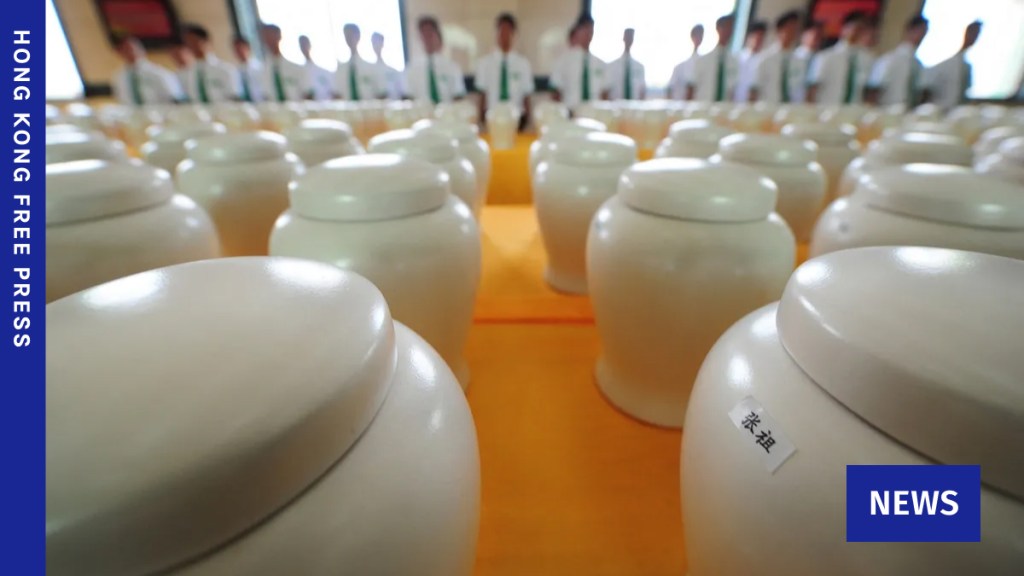
China has recently imposed a ban on the practice of entombing cremated remains in empty apartments, a trend that had become popular as families sought to avoid rising funeral costs by leveraging the subdued housing market. Known colloquially as "bone-ash apartments," these units in often sparsely populated residential complexes were used by some families as resting places for their loved ones' remains. This unconventional burial method offered a cheaper alternative to traditional cemetery plots, as well as providing families with greater control over the site.
The practice of using empty apartments for storing ashes had gained traction in recent years, particularly in urban areas where real estate prices were high. Carsten Herrmann-Pillath, a researcher from Germany's Erfurt University, told AFP that acquiring one of these apartments "kills two birds with one stone." It served as an investment while also facilitating ritual practices. However, the Chinese government has now stepped in to regulate this practice, with new regulations explicitly banning "the use of residential dwellings specifically for the interment of ashes."
Bone-ash apartments were often identifiable by sealed-off windows or closed curtains, as reported by Chinese media. A resident quoted by the Communist Party-run Legal Daily newspaper described peeking inside an apartment in his estate to see two candlesticks around a black box and a black-and-white portrait, a typical arrangement in China for commemorating the dead.
The ban comes just days before the Qingming Festival, also known as Tomb Sweeping Day, when families traditionally visit relatives' graves to tidy them and make ritual offerings. This timing suggests that the government is keen to prevent the practice from becoming more widespread, particularly during a time when mourning and honoring the dead are central to Chinese culture.
The move appears to be aimed at stopping developers and intermediaries who sell empty units "implicitly allowing their use for storing ashes," according to Xinyi Wu, an anthropologist doctoral student at the University of California, Irvine, whose research has centered on the phenomenon. Wu noted that blurred lines existed around the legality of such practices, and the government's intervention aimed to clarify that human remains are only permitted to be buried in designated areas.
The ban on bone-ash apartments reflects a broader trend in China of regulating and controlling burial practices, as the government seeks to maintain social order and ensure that funeral rituals do not become too elaborate or disruptive. While the practice of using empty apartments for storing ashes may have offered families a way to manage rising funeral costs and maintain a sense of control over their loved ones' remains, the government's decision to ban it underscores the importance it places on adhering to traditional burial customs and maintaining public health standards.
In the coming weeks and months, it will be interesting to see how families adapt to this new regulation. Some may choose to opt for more traditional burial methods, while others may look for alternative, legal ways to store their loved ones' remains. Regardless of the outcome, the ban on bone-ash apartments highlights the ongoing tension between cultural practices, economic factors, and governmental control in China's burial industry.