Chandigarh BJP Office Blast: ISI-backed module behind blast, five arrested; Handlers operated from Portugal & Germany
CHANDIGARH: Five accused have been arrested on April 4, 2026, in connection with the explosion outside the BJP Punjab Headquarters in Chandigarh. Chandigarh police and the counter-intelligence wing of the Punjab police also recovered one hand grenade and other ammunition in the joint operation. The arrested accused have been identified as Balwinder Lal alias Shami, Jasvir Singh alias Jassi, Charanjit Singh alias Channi, Rubal Chauhan and Mandeep alias Abhijot Sharma. Two key perpetrators involved in the attack, identified as Gurtej Singh and Amanpreet Singh, are currently on the run, and police teams are conducting raids to arrest them. According to the official, they have recovered one grenade along with another cache, and operations are ongoing to apprehend the remaining absconding accused. Also Read: Delhi Assembly Security Breach: Man places ‘bouquet’ at premises after forcibly entering complex; Accused arrested Addressing the press conference on the Chandigarh grenade attack case, Punjab Director General of Police (DGP) Gaurav Yadav said, “The Counter Intelligence wing of Punjab Police, in a joint operation with Chandigarh Police, solved the Chandigarh grenade attack case on 1st April. Five people involved in the incident have been arrested, and the two perpetrators involved in the attack have been identified. One grenade and another cache have been recovered so far.” The Punjab DGP said that the police teams are still conducting operations to nab the absconding accused. Preliminary investigations suggest that the terror module had backing from Pakistan’s intelligence agency, ISI, and operated under the direction of foreign-based handlers located
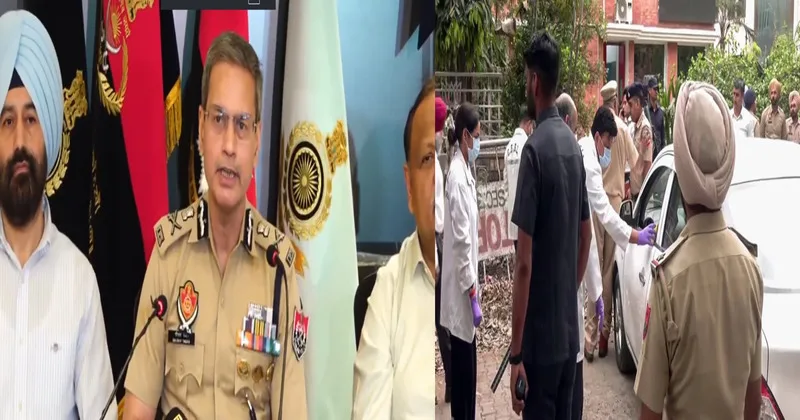
On April 4, 2026, Chandigarh police and the counter-intelligence wing of the Punjab police conducted a joint operation that led to the arrest of five individuals suspected of involvement in the grenade attack outside the BJP Punjab Headquarters in Chandigarh. The explosion occurred on April 1, 2026, and the subsequent investigation has revealed a complex web of terror connections.
The five accused arrested are identified as Balwinder Lal alias Shami, Jasvir Singh alias Jassi, Charanjit Singh alias Channi, Rubal Chauhan, and Mandeep alias Abhijot Sharma. During the operation, authorities also recovered one hand grenade and other ammunition, further bolstering the case against the suspects. Two key perpetrators, Gurtej Singh and Amanpreet Singh, remain at large, and police teams are actively conducting raids to apprehend them.
Punjab Director General of Police (DGP) Gaurav Yadav addressed a press conference on the case, stating that the counter-intelligence wing of the Punjab Police, in collaboration with Chandigarh Police, has solved the Chandigarh grenade attack case. Yadav emphasized that the police teams are still conducting operations to capture the absconding accused.
Preliminary investigations have indicated that the terror module behind the attack had backing from Pakistan's intelligence agency, ISI, and was directed by foreign-based handlers operating from Portugal and Germany. The involvement of ISI adds a significant layer of complexity to the case, as it suggests a potential transnational terror network.
The handlers in Portugal and Germany have been identified, and it appears that multiple cutouts and sub-modules were utilized to execute the attack. This operation has effectively thwarted a major terror conspiracy aimed at disrupting peace and harmony in the region. Authorities are continuing their efforts to apprehend the remaining fugitives and dismantle the network completely.
The Chandigarh grenade attack case has underscored the ongoing challenges faced by Indian security forces in combating terrorism, particularly the threat posed by transnational networks with links to foreign intelligence agencies. The successful arrest of five suspects and the recovery of explosives demonstrate the effectiveness of joint operations between state and central law enforcement agencies.
As the investigation progresses, it is expected to reveal more details about the motivations and objectives of the attackers. The case serves as a stark reminder of the need for vigilance and collaboration in the fight against terrorism, particularly in the context of the ongoing tensions between India and Pakistan.
In the aftermath of the attack, Chandigarh has been on high alert, with increased security measures in place at key locations, including political headquarters and other sensitive sites. The city's residents have expressed concerns about their safety, and authorities are working to reassure the public that all possible measures are being taken to prevent further incidents.
The Chandigarh grenade attack case is a significant development in India's counter-terrorism efforts, highlighting the evolving nature of the terror threat and the necessity for a robust, multi-agency response strategy. The ongoing operations to apprehend the remaining suspects and uncover the full extent of the network will be closely watched by security agencies and the general public alike.