
CERN upgrade to LHCb experiment threatened by UK funding cuts
Upgrade to the UK-led project is unlikely to go ahead if UK funding cuts are not reversed The post CERN upgrade to LHCb experiment threatened by UK funding cuts appeared first on Physics World .
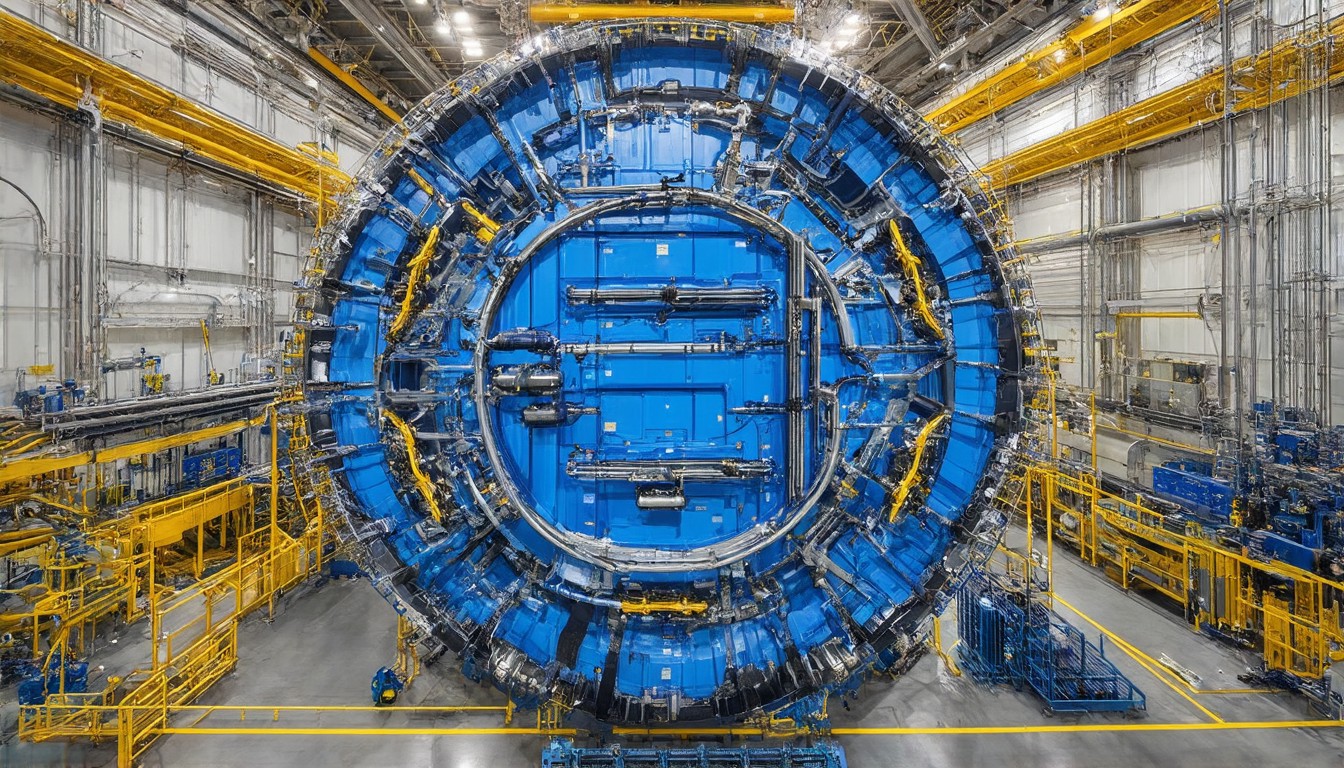
The future of the LHCb experiment at CERN has been put in jeopardy due to the UK's decision to withhold funding for its planned upgrade. The UK Research and Innovation (UKRI) has chosen not to allocate any further resources towards the project, which has left the future of the experiment in doubt. If the funding cuts are not reversed, the LHCb experiment may be forced to conclude operations in 2033, marking the end of its operational lifespan.
LHCb is one of the four major experiments housed within the Large Hadron Collider (LHC) at CERN, specializing in the study of charge-parity (CP) violation in the interactions of b- and c-hadrons. These measurements are crucial in helping scientists understand the matter-antimatter asymmetry observed in the universe. The experiment began recording data in 2009, following the start of LHC operations, and commenced its main research programme in 2010. In 2018, LHCb was shut down for upgrades, which were completed in 2022. This overhaul significantly increased the amount of data the experiment could collect, leading to substantial improvements in measurement precision.
The detector is currently expected to operate until 2033, after which it will reach the end of its lifetime due to years of intense radiation damage. Operated by the LHCb collaboration, which comprises approximately 1700 scientists and technicians from over 100 institutions in 22 countries, the project has already produced over 800 publications. The UK has been a leading contributor to LHCb, with four out of the eight experiment spokespeople hailing from the UK.
Over the past decade, UK-based physicists have been planning an ambitious upgrade to the experiment, known as LHCb upgrade II. This upgrade would leverage the enhancements to the LHC, specifically the High-Luminosity LHC (HL-LHC), to provide an order of magnitude increase in luminosity compared to the first upgrade. The second upgrade would further bolster the experiment's capabilities, enabling it to address critical questions in particle physics, such as whether all observed CP-violation phenomena align with the Standard Model or if they require an extended theoretical framework. Additionally, it would help elucidate the role of the strong interaction in these processes.
The decision by the UKRI to withhold funding for LHCb upgrade II has left the future of the project uncertain. With the UK being a key player in the collaboration, the withdrawal of support could have significant implications for the experiment's ability to continue its groundbreaking research. The potential cancellation of the upgrade would mean that the LHCb experiment would not be able to fully capitalize on the increased luminosity provided by the HL-LHC, limiting its potential to make new discoveries in the field of particle physics.
The implications of this decision extend beyond just the LHCb experiment. The UK's withdrawal from the project could weaken its position in the global scientific community, as well as impact the careers of UK-based researchers involved in the collaboration. The LHCb experiment has been a significant contributor to our understanding of fundamental physics, and its cancellation would be a significant loss for the scientific community.
In light of this development, it is crucial for the UK government to reconsider its decision and find a way to support the LHCb upgrade II. The potential scientific breakthroughs that could result from the experiment's continued operation are too valuable to be squandered. The UK's decision to cut funding for the LHCb upgrade II not only threatens the future of this vital experiment but also underscores the importance of investing in scientific research and collaboration on an international scale.








