
Canada’s Agricultural Innovation is Falling Behind as R&D Spending and Seed Reform Stall
Our seed and plant-breeding systems are stuck in a risk-averse, underfunded loop, experts say The post Canada’s Agricultural Innovation is Falling Behind as R&D Spending and Seed Reform Stall appeared first on Seed World .
Canada’s Agricultural Innovation is Falling Behind as R&D Spending and Seed Reform Stall
Canada’s agricultural sector, once a global leader, is now facing challenges as its research and development (R&D) spending and seed reform efforts struggle to keep pace with global competitors. Experts warn that the country’s seed and plant-breeding systems are stuck in a risk-averse, underfunded loop, threatening the future of its food system.
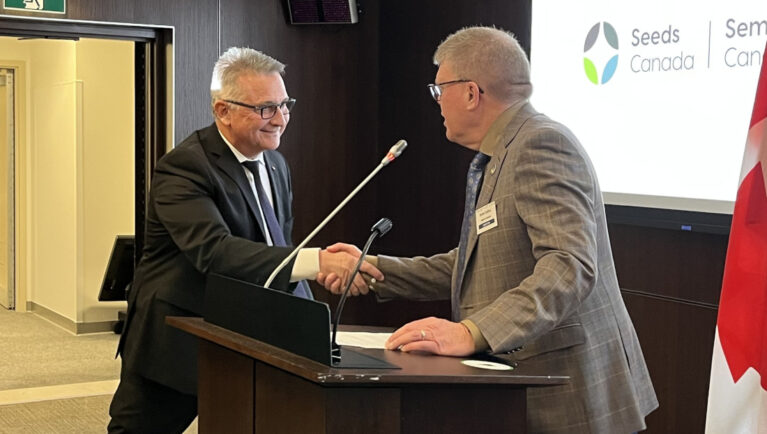
The Canadian Agri-Food Policy Institute (CAPI) and Seeds Canada have recently delivered a stark warning to policymakers, highlighting that Canada’s seed and innovation systems are slipping just as other nations accelerate their agricultural advancements. “Innovation is what got us to where we are today, and it’s what will get us to where we need to be tomorrow,” says CAPI’s Tyler McCann. “But we now have to ask if Canadian ag innovation is in a crisis. Increasingly, the evidence says yes.”
Lauren Comin, Seeds Canada policy director, is even more direct: regulation is stalling innovation, and Canada’s rules for seed and plant breeding are no longer suited to today’s competitive pace. “Our regulatory system, particularly for seed, is extremely risk-averse,” she says. “In some cases, it discourages innovation outright.”
Canada’s decline from a global leader in agricultural R&D is evident in the data. Public agricultural R&D spending has declined significantly, dropping from approximately $0.86 billion in 2013 to $0.68 billion in 2022—the lowest among the top seven OECD agricultural producers. Research intensity has also slipped: while much of Europe and high-income Asia invest about 4.5% of agricultural GDP in public ag R&D, Canada invests closer to 2%. “We used to be a leader. Now, depending on the metric, we’re just average—and trending the wrong way,” McCann says, citing CAPI’s new report.
The report identifies several key issues, including fragmented coordination, aging infrastructure, and a lack of investment in new technologies. These factors are contributing to a stagnant agricultural innovation landscape, one that is increasingly falling behind its global counterparts.
The stagnation in public agricultural R&D spending is particularly concerning. While high-income countries’ public investment has stalled, developing countries are gradually catching up. This shift in the global landscape means that Canada, once a pioneer in agricultural innovation, is now at risk of being left behind.
The challenges faced by Canada’s agricultural sector are not limited to R&D spending. The seed and plant-breeding systems are also struggling due to outdated regulations and a risk-averse approach. This has created a barrier to entry for innovative solutions that could improve crop yields, drought resistance, and overall food security.
The consequences of this stagnation are significant. As global competitors invest in agricultural innovation, Canada’s ability to remain competitive is at risk. This could have far-reaching implications for the country’s food system, its economy, and its global standing.
To address these challenges, policymakers must take decisive action. This includes increasing public agricultural R&D spending, modernizing regulations to encourage innovation, and investing in infrastructure and technology. By doing so, Canada can once again position itself as a leader in agricultural innovation, ensuring a sustainable and competitive future for its food system.
In conclusion, Canada’s agricultural innovation is facing a critical juncture. With R&D spending stagnating and seed reform efforts faltering, the country must act swiftly to avoid falling behind its global competitors. By prioritizing innovation and modernizing its agricultural systems, Canada can secure its position as a global leader and safeguard the future of its food system.








