
Britain should have voted against reparations
The moral and historical arguments for “reparatory justice” are bogus Source
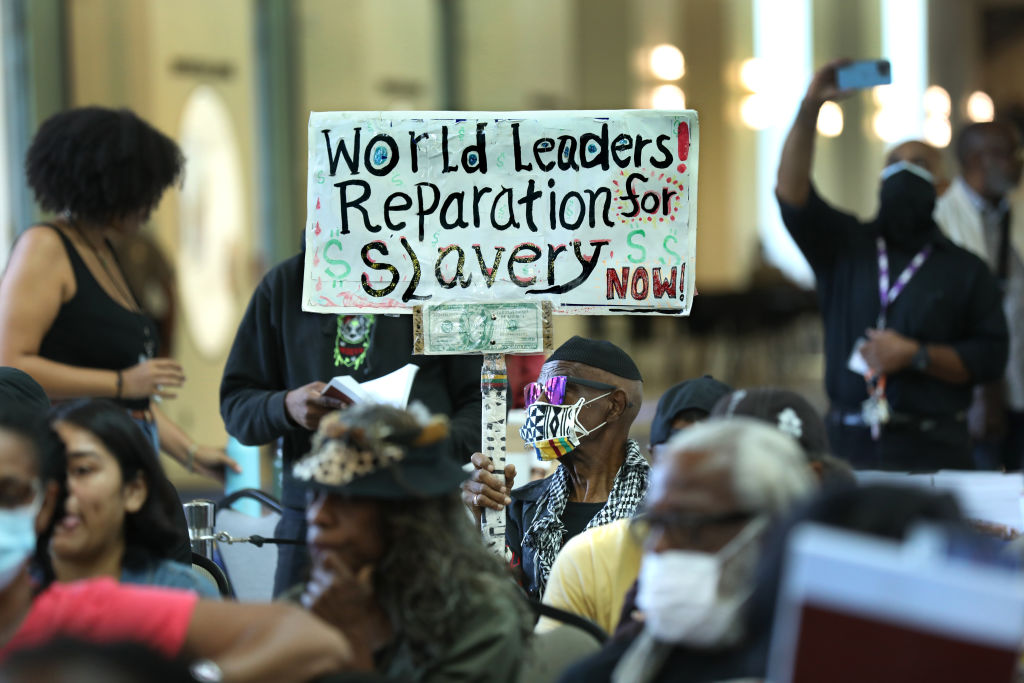
In recent years, the debate over reparations for historical wrongs has gained momentum, particularly in discussions about the transatlantic slave trade and its aftermath. Critics argue that nations like Britain, which played a significant role in the slave trade, should compensate descendants of enslaved individuals for the incalculable suffering and loss of human lives. However, a growing body of scholars and commentators contend that the moral and historical arguments for “reparatory justice” are not as robust as they are often portrayed.
The concept of reparatory justice often hinges on the idea that historical injustices, such as the transatlantic slave trade, must be addressed through financial compensation. Proponents of this view argue that reparations are necessary to redress the imbalances caused by centuries of exploitation and to acknowledge the systemic racism that persists in many societies today. They point to the ongoing economic disparities between former colonies and their former colonizers as evidence that reparations are a moral imperative.
Despite these arguments, critics argue that the moral and historical foundations for reparatory justice are flawed. One key issue is the difficulty of quantifying the value of human suffering and loss. How can one assign a monetary value to the trauma, broken families, and lost lives caused by the slave trade? Critics argue that reparations, in this case, would be an inadequate and reductive response to such profound injustices.
Furthermore, the historical arguments for reparatory justice are often based on a simplistic view of history. The transatlantic slave trade was not a monolithic event but a complex, multi-faceted system that involved numerous actors, including African kingdoms, European traders, and enslaved individuals themselves. Reparations, in this context, might inadvertently absolve historical agents of their responsibility or even perpetuate a narrative that blames only one party for the injustices of the past.
Another concern is the potential for reparations to exacerbate existing tensions and divisions. In some cases, reparations could be seen as an attempt to redistribute wealth from one nation to another, which might fuel resentment and further entrench economic disparities. Additionally, the focus on financial compensation might divert attention from other, more effective ways of addressing systemic inequalities, such as education, healthcare, and economic development initiatives.
Moreover, the idea of reparatory justice often assumes a linear causation between historical events and contemporary inequalities. In reality, the relationship between the past and the present is far more complex, shaped by a myriad of factors, including colonialism, neocolonialism, globalization, and domestic policies. Reparations, therefore, may not adequately address the root causes of systemic injustices.
In the case of Britain, the debate over reparations has been particularly contentious. Critics argue that the country has already made significant efforts to address its historical role in the slave trade, including through the establishment of the National Maritime Museum's “Slave Trade” gallery and various educational initiatives. They contend that further reparations would be anachronistic and misguided, as they would not effectively address the complexities of historical injustice or the systemic issues that persist today.
In conclusion, while the call for reparatory justice is rooted in a desire to address historical injustices and systemic racism, the moral and historical arguments in favor of reparations are not as compelling as they might seem. The complexities of history, the challenges of quantifying human suffering, and the potential for reparations to exacerbate existing tensions all suggest that a more nuanced approach is necessary. Ultimately, the path forward will require a balanced consideration of the past, the present, and the future, as well as a commitment to addressing systemic inequalities through a range of interconnected strategies.









