
Home TechnologyBrain inspired machines are better at math than ex...
Technology⭐ Featured

Brain inspired machines are better at math than expected

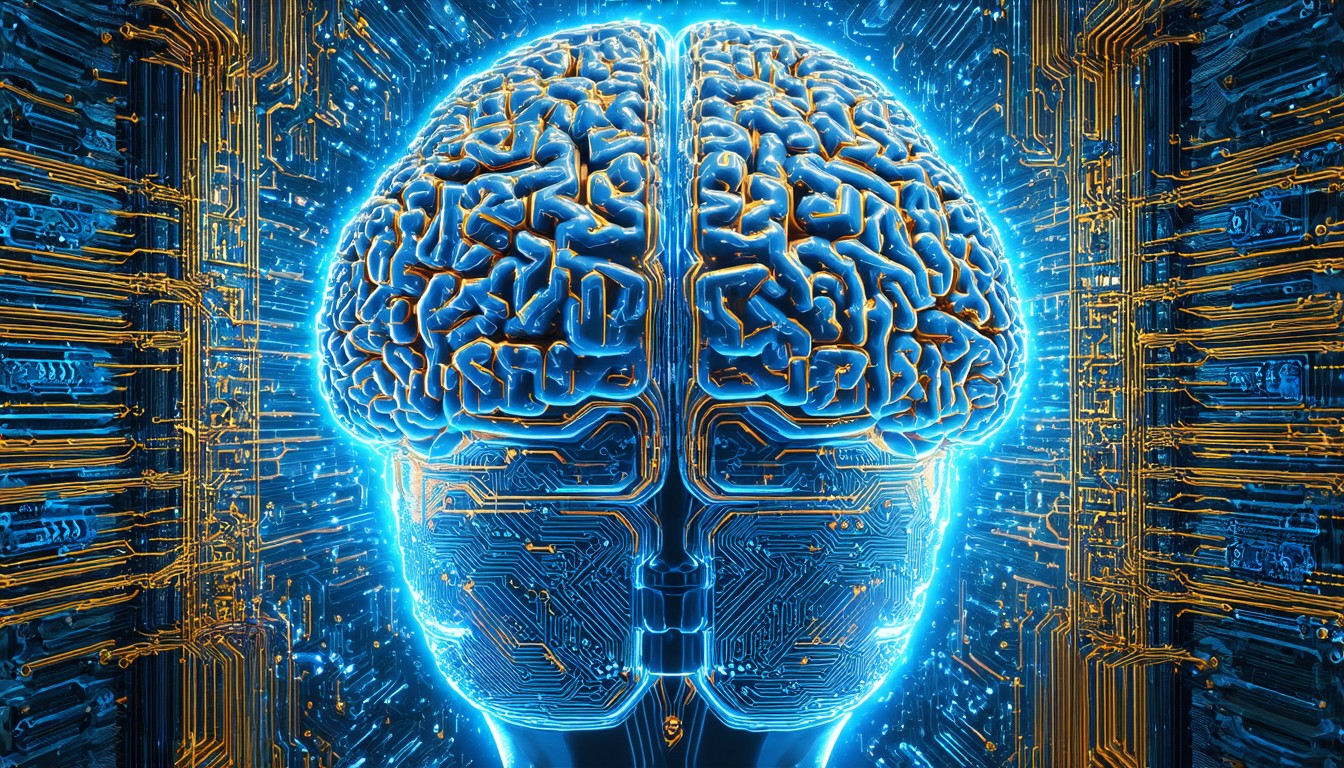
Neuromorphic computers modeled after the human brain can now solve the complex equations behind physics simulations — something once thought possible only with energy-hungry supercomputers. The breakthrough could lead to powerful, low-energy supercomputers while revealing new secrets about how our brains process information.
7 April 2026 at 07:26 am
1 views
Brain inspired machines are better at math than expected

In a groundbreaking development, researchers have demonstrated that neuromorphic computers, which are designed to mimic the human brain's structure and function, are capable of solving complex equations used in physics simulations. This achievement was once believed to be the exclusive domain of energy-intensive supercomputers, and the implications of this breakthrough are far-reaching, potentially revolutionizing computing technology and deepening our understanding of the brain's inner workings.

Neuromorphic computers, also known as brain-inspired machines, are built using artificial neural networks that emulate the way neurons in the human brain process information. These systems are designed to be highly energy-efficient, a critical advantage in an era where the demand for computational power continues to grow exponentially. By leveraging the brain's natural efficiency, these machines can perform complex calculations with significantly less energy consumption compared to traditional supercomputers.

The ability of neuromorphic computers to tackle physics simulations, which involve intricate mathematical models, was previously thought to require immense computational resources. These simulations are essential for advancing fields such as materials science, climate modeling, and even drug discovery. However, the energy demands of such simulations have often limited their scalability and practicality.

The recent breakthrough in neuromorphic computing has shown that these brain-inspired machines can now handle these complex equations with remarkable efficiency. This capability opens up new possibilities for creating powerful, low-energy supercomputers that can solve problems currently beyond the reach of traditional computing systems. Such advancements could lead to significant breakthroughs in various scientific disciplines, enabling researchers to model and understand complex systems with unprecedented accuracy and speed.

Moreover, the success of neuromorphic computers in solving physics simulations provides valuable insights into the brain's computational strategies. By studying how these machines process information, scientists can gain a deeper understanding of the neural mechanisms that underlie human cognition and learning. This knowledge could, in turn, inform the development of more sophisticated artificial intelligence systems that are capable of performing tasks that currently exceed the capabilities of traditional computers.

The potential applications of neuromorphic computing are vast and diverse. From enhancing autonomous systems in transportation and robotics to improving medical diagnostics and personalized healthcare, these brain-inspired machines hold the promise of transforming numerous industries. Additionally, their energy efficiency makes them a compelling solution for edge computing, where devices operate on limited power supplies, such as in the Internet of Things (IoT) networks.

However, there are still challenges to overcome before neuromorphic computers can fully realize their potential. One major hurdle is the need for more advanced algorithms and architectures that can fully exploit the unique capabilities of these brain-inspired systems. Researchers are actively working on developing new methodologies that can harness the full power of neuromorphic computing, pushing the boundaries of what is possible.

In conclusion, the ability of neuromorphic computers to solve complex physics simulations with remarkable efficiency represents a significant leap forward in the field of computing. This breakthrough not only offers a pathway to powerful, low-energy supercomputers but also provides valuable insights into the brain's computational processes. As research continues to advance, the integration of brain-inspired machines into various industries could lead to transformative innovations that reshape the future of technology and our understanding of the human mind.


📰 Related News
Ekaya Banaras Founder Palak Shah’s ₹40 Lakh Billboard Mistake Became a Masterclass in Startup Marketing
Ekaya Banaras founder Palak Shah recently opened up about one of the most expensive mistakes she made while building her luxury textile brand. During the early years of the company, Shah rented a premium billboard near Delhi’s DLF Emporio to increase brand visibility. However, after forgetting to cancel the campaign, the hoarding reportedly continued running for months — resulting in losses of nearly ₹40 lakh. The incident has now become a viral example of how small operational oversights can turn into costly business lessons for startups and entrepreneurs.
28 May
Betting On AI: Jensen Huang And NVIDIA’s Rise To The Top
Before AI was inevitable, it was a gamble—and Jensen Huang went all in.
14 Apr
Red Hat OpenShift sandboxed containers 1.12 and Red Hat build of Trustee 1.1 bring confidential computing to bare metal and AI workloads
Red Hat is excited to announce the release of Red Hat OpenShift sandboxed containers 1.12 and Red Hat build of Trustee 1.1, marking a major leap forward in our confidential computing journey. These releases graduate confidential containers on bare metal from …
14 Apr
Large AI firms hoovering maximum funding, not enough for smaller startups: Y Combinator’s Ankit Gupta
YC Startup School: India’s talent pool across colleges and universities are key for building next-gen startups, which is what YC is looking to tap into. It wants to target entrepreneurs building for global markets, focussed on fintech, consumer, B2B, and ecom…
14 Apr
TSMC likely to book fourth straight quarter of record profit on insatiable AI demand
TSMC-RESULTS/ (PREVIEW, PIX):PREVIEW-TSMC likely to book fourth straight quarter of record profit on insatiable AI demand
14 Apr
TSMC likely to book fourth straight quarter of record profit on insatiable AI demand
Any profit result ‌above T$505.7 billion would mark the company's highest-ever quarterly net income ​and its ninth consecutive quarter of profit growth
14 Apr
TSMC likely to book fourth straight quarter of record profit on insatiable AI demand
On Thursday, ​TSMC is expected to report a net profit of $17.1 billion for the quarter, according to an LSEG SmartEstimate compiled from 19 analysts. The war in the Middle East threatens to disrupt the supply of production materials for semiconductors such as…
14 Apr
If we can’t kick the habit, how do we manage AI’s energy needs?
One can only hope that OpenAI’s Sam Altman was joking when he sought to justify the immense energy consumption of artificial intelligence
14 Apr
What caused Nvidia Blackwell GPU prices to spike? #tech
Blackwell GPU hourly “rent” surges on agentic AI demand A compute pricing index tracking hourly costs for Nvidia Blackwell GPUs shows a sharp climb: hourly rental hit $4.08 , up 48% from $2.75 just two months earlier. The reported driver is rising demand tied…
14 Apr
Anthropic Releases Claude Mythos Preview with Cybersecurity Capabilities but Withholds Public Access
Anthropic has introduced Claude Mythos Preview, its most advanced AI model, improving significantly in reasoning, coding, and cybersecurity. Unlike previous releases, it will not be publicly available. Access is limited to a consortium of tech companies throu…
14 Apr







