BrahMos 800 km boost expands India’s naval strike reach, squeezes Pakistan’s maritime space in Arabian sea
New Delhi: India’s rapid development of the extended-range BrahMos supersonic cruise missile is reshaping the maritime balance in the Arabian Sea. With trials progressing smoothly and induction targeted for the Indian Navy by 2027–2028, the 800 km variant promises a game-changing standoff capability that directly challenges Pakistan’s strategy of dispersing naval assets away from vulnerable forward bases. Currently, the BrahMos equips dozens of Indian warships, including advanced destroyers and frigates, in both anti-ship and land-attack roles. Its speed of Mach 2.8–3, combined with a sea-skimming flight profile and complex terminal manoeuvres, already makes it one of the most difficult threats for any regional navy to counter. The upcoming 800 km version, enabled by a modified ramjet engine and increased fuel capacity, nearly doubles the missile’s effective range while retaining its hallmark precision and survivability. Notably, existing naval launchers can be upgraded through relatively simple software and fire-control adjustments, allowing a swift transition without major hardware overhauls. Shrinking Pakistan’s strategic depth For Pakistan, this development significantly erodes critical sanctuary options. Bases such as Ormara, developed to provide depth and reduce exposure to strikes from the Indian mainland or forward coastal positions, were intended to offer safer berthing for submarines and surface combatants during periods of heightened tension. Located roughly 600–700 km from key Indian naval operating areas along the Gujarat and Maharashtra coasts, these bases are already within the extended reach of current BrahMos deployments. Also Read: India advances indigenous project Kusha to match Russian S-400 missile system, strengthen air defence
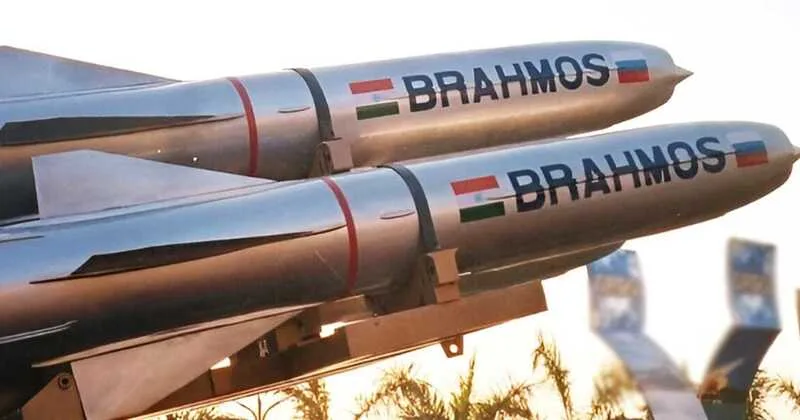
India's rapid development of the extended-range BrahMos supersonic cruise missile is reshaping the maritime balance in the Arabian Sea. With trials progressing smoothly and induction targeted for the Indian Navy by 2027–2028, the 800 km variant promises a game-changing standoff capability that directly challenges Pakistan's strategy of dispersing naval assets away from vulnerable forward bases. Currently, the BrahMos equips dozens of Indian warships, including advanced destroyers and frigates, in both anti-ship and land-attack roles. Its speed of Mach 2.8–3, combined with a sea-skimming flight profile and complex terminal manoeuvres, already makes it one of the most difficult threats for any regional navy to counter. The upcoming 800 km version, enabled by a modified ramjet engine and increased fuel capacity, nearly doubles the missile's effective range while retaining its hallmark precision and survivability. Notably, existing naval launchers can be upgraded through relatively simple software and fire-control adjustments, allowing a swift transition without major hardware overhauls.
Shrinking Pakistan’s strategic depth
For Pakistan, this development significantly erodes critical sanctuary options. Bases such as Ormara, developed to provide depth and reduce exposure to strikes from the Indian mainland or forward coastal positions, were intended to offer safer berthing for submarines and surface combatants during periods of heightened tension. Located roughly 600–700 km from key Indian naval operating areas along the Gujarat and Maharashtra coasts, these bases are already within the extended reach of current BrahMos deployments.
With the induction of the 800 km naval variant, Indian warships will be able to launch precision strikes from even deeper within the Arabian Sea, well beyond the horizon and outside the effective range of Pakistan's coastal defenses. This capability not only threatens the security of Pakistan's maritime assets but also undermines the strategic depth that has historically been a cornerstone of its naval strategy.
The BrahMos missile system, developed in collaboration between India and Russia, has been a significant upgrade for the Indian Navy. Its ability to strike with high precision and speed has already demonstrated its effectiveness in various exercises and operations. The upcoming 800 km version will further enhance this capability, allowing the Indian Navy to project power across greater distances and with greater confidence.
For Pakistan, the prospect of having its naval assets within the reach of extended-range BrahMos poses a significant challenge. The country has traditionally relied on dispersing its naval forces to maintain strategic depth and avoid direct confrontation with India. However, the new missile variant threatens to negate this advantage, forcing Pakistan to reconsider its naval strategy and possibly invest in more advanced defensive systems or alternative sanctuary locations.
The development of the BrahMos 800 km variant also highlights India's growing naval capabilities and its commitment to maintaining a strong maritime presence in the region. As the missile system is set to be inducted into the Indian Navy within the next few years, it is likely to have a significant impact on the balance of power in the Arabian Sea and beyond.
In conclusion, the extended-range BrahMos cruise missile is set to reshape the maritime landscape in the Arabian Sea, posing a significant challenge to Pakistan's naval strategy and strategic depth. With the Indian Navy poised to induce the 800 km variant by 2027–2028, the region can expect a more assertive Indian presence and a heightened sense of competition in the maritime domain. As both countries continue to develop their naval capabilities, the dynamics of the India-Pakistan rivalry are likely to evolve, with the BrahMos missile playing a pivotal role in shaping this evolving landscape.