Border Management Challenges With Increased Mercenary Movements
Beyond the FMR: Reevaluating Border Management With Myanmar in the Wake of Foreign Mercenary Movement The arrest of six foreign nationals on 13 March 2026 by the National Investigation Agency… The post Border Management Challenges With Increased Mercenary Movements appeared first on India Narrative .
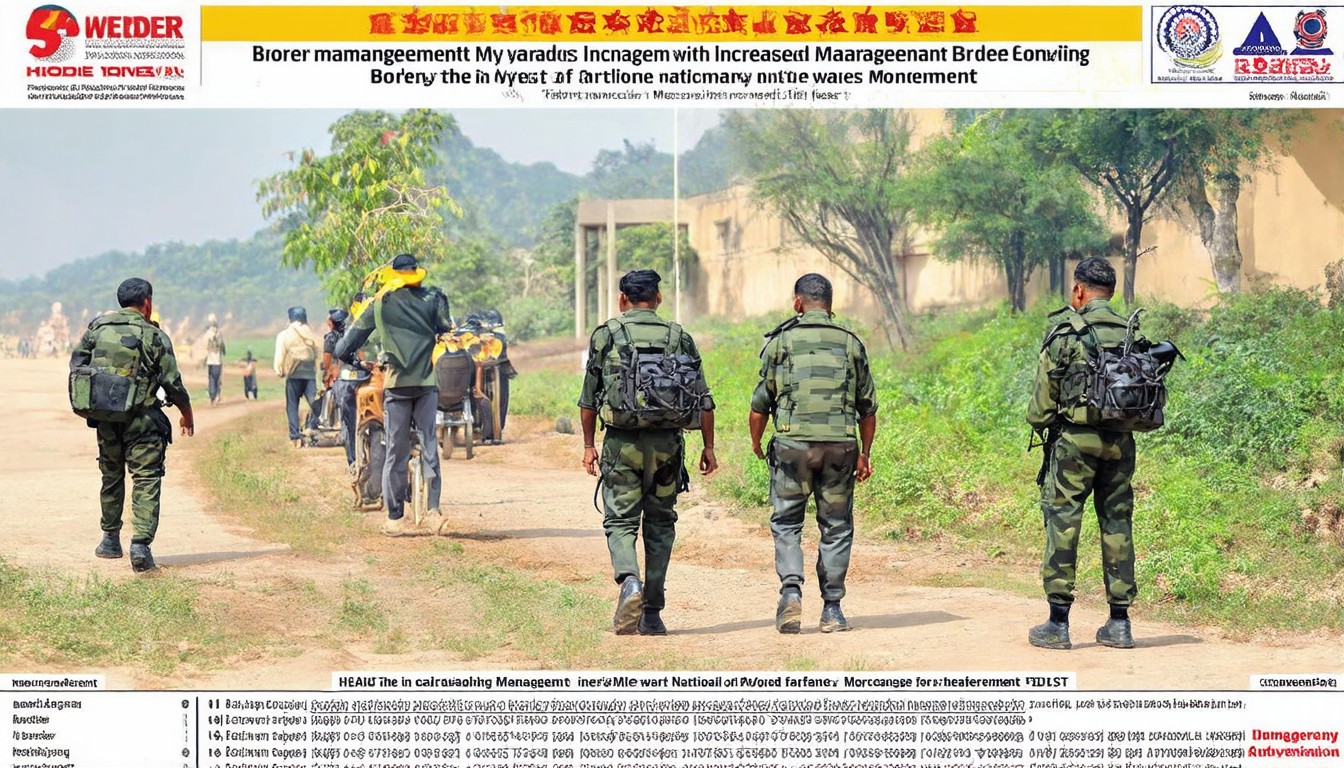
The arrest of six foreign nationals on 13 March 2026 by India's National Investigation Agency (NIA) has sparked renewed discussions about the challenges posed by increased mercenary movements along the Indo-Myanmar border. Initially, the incident was seen as a potential threat to India's security, with speculation that the arrested individuals were training Northeast Indian insurgent groups. However, Union Home Minister Amit Shah later clarified that the foreign nationals—including one US national and several Ukrainian nationals—did not pose any threat to the country. Despite this assurance, the incident highlights the vulnerabilities in border management, particularly in the Northeast region, which serves as a crucial transit point for mercenaries, insurgents, drug smugglers, and other illegal actors.
The arrested individuals, including US national Matthew Aaron Van Dyke and Ukrainian nationals Maksym Honcharuk, Petro Hubra, Ivan Sukmanovskyi, Marian Stefaniv, Taras Slyviak, and Viktor Kaminsky, were apprehended at various airports, including Lucknow and New Delhi. While the details of their movement into Northeast India remain undisclosed, it is believed that they arrived in Guwahati by air and then traveled to Mizoram by road. Notably, they were not in possession of the mandatory Restricted Area Permit (RAP) required to visit Mizoram, underscoring the ease with which foreign nationals can enter and traverse the region.
The fact that these mercenaries were able to move freely through Myanmar via Mizoram raises concerns about the inadequate management of the 1,643-kilometre Indo-Myanmar border. This border, which is one of the longest and most porous in the world, has long been a point of contention between India and Myanmar. The region's complex geography, including its dense forests and rugged terrain, has historically made it difficult for authorities to maintain effective oversight. Additionally, the border region is home to numerous ethnic groups, some of which have long-standing grievances against both Indian and Myanmar governments, further complicating border security efforts.
The incident has also brought to light the potential involvement of vested foreign powers in supporting insurgent activities in the Northeast. Some news channels reported that the arrested mercenaries were sponsored by foreign entities to train Indian insurgent groups. The most serious allegation was that they were importing large consignments of drones into India for further dispatch to Myanmar insurgents fighting the military junta. While the Home Minister has dismissed these claims, the NIA's ongoing investigation suggests that such activities could pose a significant threat to regional stability.
The challenges posed by mercenary movements along the Indo-Myanmar border are not new. For years, the region has been a hub for illegal activities, including drug smuggling, human trafficking, and arms dealing. The influx of foreign mercenaries, however, adds a new layer of complexity to these existing issues. The ability of these individuals to move freely through the border region without significant impediment raises questions about the effectiveness of border management strategies and the need for enhanced cooperation between India and Myanmar.
In response to these challenges, Indian authorities have stepped up their efforts to improve border security. This includes deploying additional troops and investing in advanced surveillance technology. However, the sheer scale of the border and the complexities of the region's political and social landscape make it a daunting task. The recent arrest of the foreign nationals serves as a stark reminder of the need for a comprehensive and coordinated approach to border management, one that addresses both the immediate threats posed by mercenaries and the broader challenges of regional security.
Ultimately, the Indo-Myanmar border remains a critical flashpoint in the broader context of South Asian security. The challenges posed by mercenary movements and related illegal activities are not limited to India and Myanmar alone but have implications for the entire region. As such, the need for effective border management and regional cooperation cannot be overstated. The recent incident serves as a wake-up call, urging both governments and international stakeholders to reevaluate their strategies and prioritize the security of this vital border region.