
Bombing for Freedom
The idea that bombing civilians will create the conditions for “regime change” is more than a century old. It has never worked, and it won’t work in Iran, because when people are expending all their energy trying to make it to the next day, they don’t have any left over for rebellion.
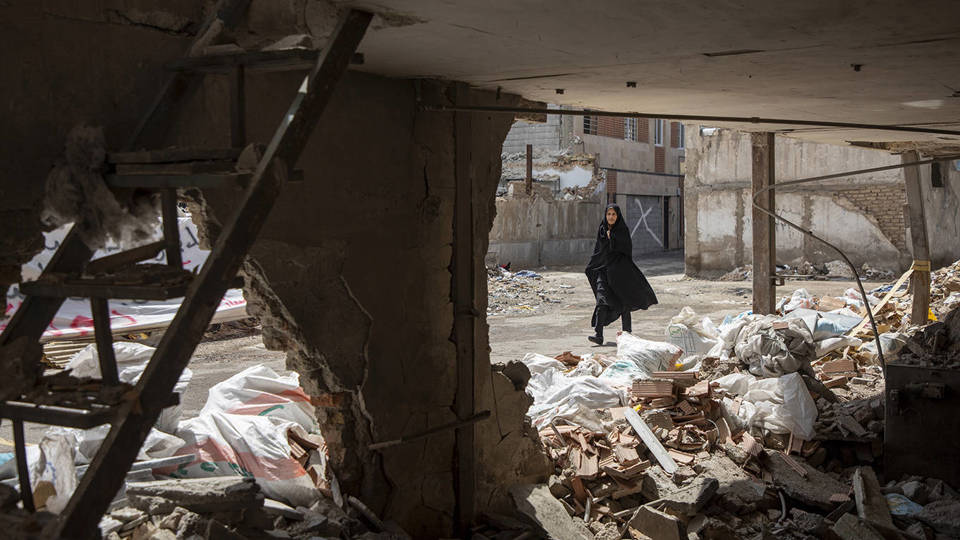
The concept of using bombing as a tool for regime change has a troubled history, stretching back over a century. Proponents of this strategy argue that by targeting civilian populations, they can weaken a government's hold on power, sparking widespread unrest and eventually leading to its collapse. However, critics, including many historians and political analysts, contend that this approach has consistently failed to achieve its goals. The case of Iran, currently under significant scrutiny, serves as a stark reminder of why bombing civilians is not a viable path to achieving political change.
The origins of this strategy can be traced back to World War I, when British forces conducted aerial bombing campaigns against Ottoman civilian populations in an effort to undermine the empire's stability. The rationale was that by disrupting civilian life, the Ottomans would be forced to divert resources away from the war effort, ultimately weakening their ability to sustain the conflict. While this tactic may have had some short-term effects, it did not lead to the desired regime change.
Fast forward to the 20th century, and similar strategies were employed in various conflicts, including the Vietnam War and the Iraq War. In each case, the idea was that bombing civilians would provoke public outrage, destabilize the government, and create conditions for rebellion. Yet, in Vietnam, the bombing campaign, known as Operation Rolling Thunder, failed to break the North Vietnamese will to resist, and in Iraq, the 2003 invasion and subsequent bombing campaigns did not lead to the swift overthrow of Saddam Hussein's regime, instead fueling widespread sectarian violence and prolonging the conflict.
The underlying issue with this approach is that bombing civilians often results in the opposite of the intended effect. Instead of inspiring widespread rebellion, it creates a sense of unity among the targeted population, as they rally behind their government in the face of external aggression. Moreover, the psychological toll of constant bombing can lead to a deep-seated resentment toward the attacking forces, further entrenching the regime's legitimacy.
In the case of Iran, the idea of using bombing as a means to achieve regime change is particularly problematic. The country's population has already endured years of economic sanctions and political unrest, and many Iranians are struggling to meet their basic needs. When people are focused on survival—trying to secure food, shelter, and basic necessities—they simply do not have the energy or resources to engage in sustained political activism. Bombing campaigns would only exacerbate these hardships, pushing the population further into despair and making it even more difficult to mobilize against the regime.
Furthermore, Iran's government has a strong hold on its citizens, with a well-established network of security forces and a history of suppressing dissent. Bombing campaigns would likely provoke a harsh response from the Iranian government, leading to increased repression and further destabilizing the country. This could result in a cycle of violence and retaliation, with no clear path to resolution.
The failure of past bombing campaigns to achieve regime change should serve as a cautionary tale. Instead of relying on destructive and counterproductive strategies, it is crucial to consider alternative approaches that prioritize dialogue, economic reform, and addressing the root causes of political unrest. By focusing on these areas, there may be a greater chance of fostering genuine change within Iran, without causing unnecessary suffering to its people.
In conclusion, the notion that bombing civilians can lead to regime change is a flawed and dangerous strategy. Its history of failure is clear, and it is unlikely to succeed in Iran or any other context. As we look for ways to address political instability, it is essential to adopt methods that prioritize the well-being of civilians and promote sustainable, long-term solutions. Only then can we hope to create the conditions for genuine change, without exacerbating the very problems we seek to resolve.









