
Bombing for Freedom
The idea that bombing civilians will create the conditions for “regime change” is more than a century old. It has never worked, and it won’t work in Iran, because when people are expending all their energy trying to make it to the next day, they don’t have any left over for rebellion.
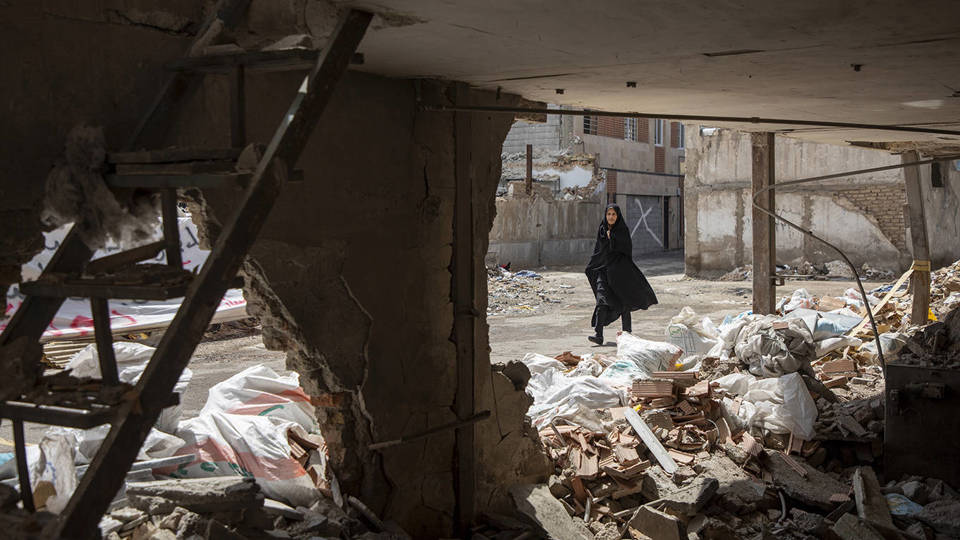
The concept of using bombing as a means to achieve regime change has a troubled history, stretching back over a century. Proponents of this strategy argue that by targeting civilian populations, they can weaken a government's hold on power, sparking widespread unrest and eventually leading to its collapse. However, critics, including many historians and political analysts, contend that this approach has consistently failed to achieve its goals, and it is unlikely to succeed in Iran.
The origins of this strategy can be traced back to World War I, when British forces bombarded the Ottoman Empire's civilian populations in an effort to destabilize the government. The idea was that by causing widespread destruction and suffering, the civilian population would turn against their leaders, leading to a power vacuum. This approach, however, backfired, as it only strengthened the resolve of the targeted population and solidified the leadership's grip on power.
Similar strategies have been employed in various conflicts since then, including the Vietnam War and the Iraq War. In each case, the bombing of civilian areas was justified as a necessary step to weaken the enemy government. Yet, in all instances, the results have been mixed at best. In Vietnam, the extensive bombing campaign, known as Operation Rolling Thunder, failed to break the North Vietnamese resistance and ultimately contributed to the prolongation of the conflict. In Iraq, the 1991 Gulf War and the 2003 invasion both involved significant civilian bombing, yet neither successfully toppled the government or led to a stable, democratic outcome.
The core issue with this approach lies in its fundamental flaw: it assumes that a bombing campaign will inspire civilians to rise up against their government. In reality, however, the devastation caused by such campaigns leaves civilians with little energy or resources to engage in political activism. When people are struggling to meet their basic needs—such as finding food, shelter, and safety—they are unlikely to prioritize political change. Instead, they may become more likely to support their government, perceiving it as the only stable authority in their lives.
This dynamic is particularly relevant in the context of Iran. The country has a complex political landscape, with a theocratic government that has maintained power for decades. While there are undoubtedly grievances among the population, the idea that bombing will provoke a widespread uprising is unrealistic. Iran's population has experienced significant hardships, including economic sanctions and social unrest, but these challenges have not yet led to a regime change. Bombing would only exacerbate these issues, pushing civilians further into desperation and making it even more difficult for them to contemplate rebellion.
Moreover, the risks associated with such a strategy are significant. History has shown that bombing campaigns often lead to unintended consequences, such as the radicalization of populations or the emergence of new, more extreme factions. In Iran, this could result in a more entrenched government or the rise of militant groups that exploit the chaos. Additionally, the international community's reaction to such an action could be highly negative, potentially isolating the perpetrators and undermining their credibility.
In conclusion, the notion that bombing civilians can lead to regime change is a relic of a bygone era, one that has consistently proven ineffective. The human cost of such campaigns is immense, and the likelihood of achieving the desired outcome is slim. As we look to the future, it is crucial to reconsider our approaches to conflict resolution and governance, focusing instead on diplomacy, economic development, and addressing the root causes of unrest. For Iran, and for any other country facing political challenges, a more nuanced and humane strategy is needed to foster genuine change and improve the lives of its people.









