
Bombing for Freedom
The idea that bombing civilians will create the conditions for “regime change” is more than a century old. It has never worked, and it won’t work in Iran, because when people are expending all their energy trying to make it to the next day, they don’t have any left over for rebellion.
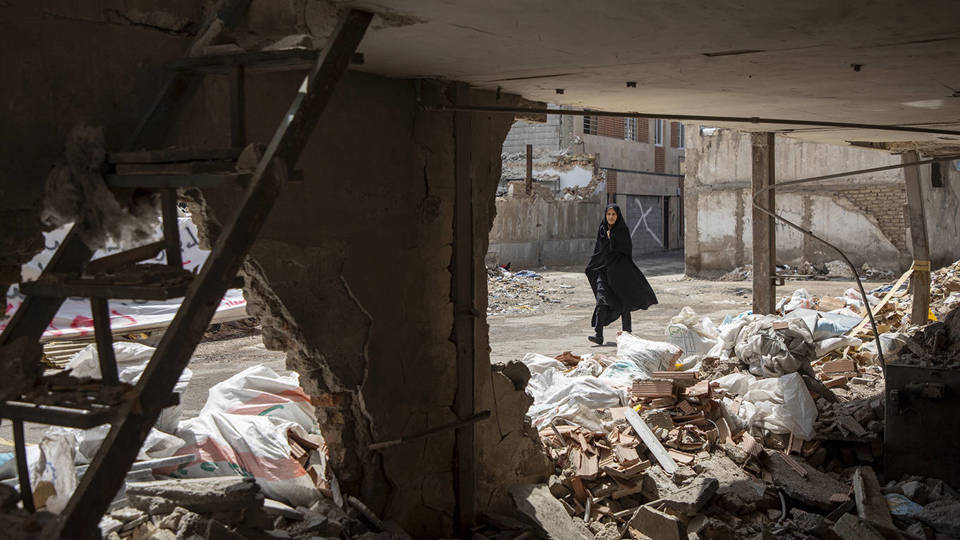
The concept of using bombing to achieve regime change has a troubled history, rooted in the early 20th century. Proponents of this strategy argue that by targeting civilian populations, they can weaken a government's hold on power, sparking widespread unrest and eventual collapse. However, critics, including many historians and political analysts, contend that this approach has consistently failed to achieve its goals. The latest iteration of this debate has focused on Iran, where the possibility of airstrikes targeting civilians has been discussed as a means to undermine the country's theocratic regime.
The origins of this strategy can be traced back to World War I, when British forces bombarded the Ottoman Empire's civilian populations in an attempt to destabilize the government. The idea was that by causing widespread destruction and suffering, the population would lose faith in their leaders, leading to a power vacuum. However, this approach did not result in the desired regime change, and the Ottoman Empire continued to fight until the end of the war.
Similarly, during World War II, Allied bombing campaigns targeted civilian populations in Germany and Japan, aiming to cripple their war efforts and weaken support for their authoritarian regimes. While these bombings caused immense human suffering, they did not directly lead to the collapse of the Nazi or Japanese governments. Instead, the war ended with the use of nuclear weapons and the eventual surrender of both nations.
In more recent history, the United States has employed airstrikes targeting civilians in various conflicts, including Vietnam and Iraq. In both cases, the stated goal was to weaken the opposing government and create conditions for change. However, these campaigns often resulted in increased civilian casualties and further entrenchment of the targeted regimes.
Critics argue that bombing civilians not only fails to achieve regime change but also has the opposite effect. When populations are forced to prioritize survival over political activism, they become less likely to engage in rebellion. The constant struggle to meet basic needs, such as food and shelter, leaves little room for organizing protests or challenging the status quo. This phenomenon has been observed in numerous conflicts, including the Syrian Civil War, where prolonged airstrikes and ground offensives have led to a humanitarian crisis, rather than a political one.
In the case of Iran, the potential for airstrikes targeting civilians has raised concerns among experts. The country's population has already endured years of economic sanctions and political repression, which have already strained their resources. Introducing airstrikes into the mix would likely exacerbate these issues, pushing the population further into desperation.
Moreover, Iran's government has a strong hold on its citizens, supported by a powerful military and security apparatus. Bombing civilians would likely provoke a strong response, leading to further escalation and potential military conflict. This could result in a protracted and costly war, with no guarantee of regime change.
Instead of relying on bombing campaigns, some analysts suggest that alternative approaches, such as economic sanctions, diplomatic pressure, or internal reforms, may be more effective in achieving regime change. These methods require time and patience, but they also avoid the collateral damage and human suffering that come with indiscriminate airstrikes.
In conclusion, the strategy of bombing civilians to achieve regime change has a history of failure, and there is no indication that it would succeed in Iran. The human cost of such an approach is immense, and the likelihood of achieving the desired outcome is minimal. As the world continues to grapple with authoritarian regimes, it is crucial to reevaluate these outdated tactics and consider more effective, humane alternatives.









