
Blending ritual with rave: Buddhism Expo in South Korea draws 250k visitors
The 2026 Seoul International Buddhism Expo drew 250,000 visitors over four days.
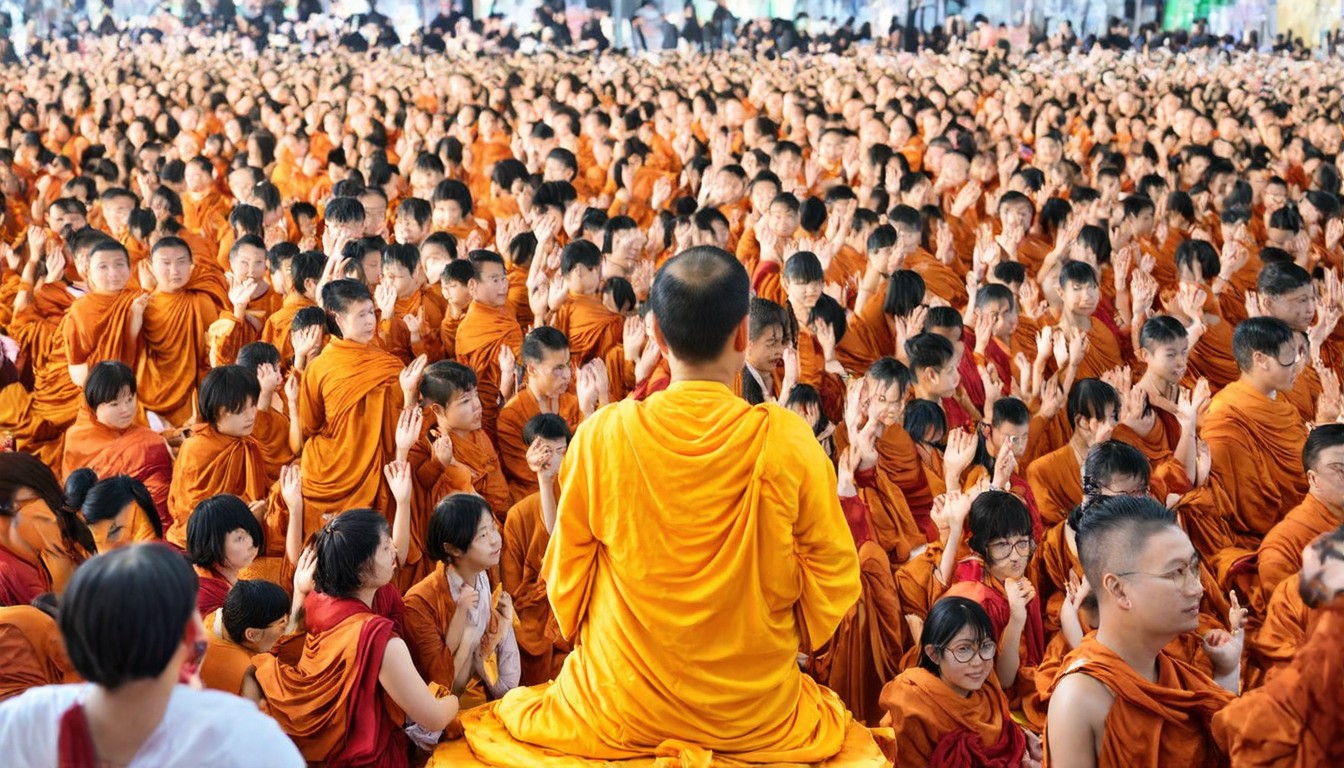
The 2026 Seoul International Buddhism Expo, a unique blend of spirituality and modernity, drew an impressive 250,000 visitors over its four-day run. Held in the bustling capital of South Korea, the event showcased the dynamic intersection of Buddhism with contemporary culture, drawing attendees from across the globe.
The expo, which took place in the heart of Seoul, was a testament to the enduring appeal of Buddhism as a spiritual practice and its evolving role in modern society. Organizers aimed to highlight the religion's rich history while also exploring its relevance in the 21st century. The event featured a diverse array of activities, from traditional meditation sessions to cutting-edge technology demonstrations that aimed to connect the ancient teachings of Buddhism with the digital age.
One of the most striking aspects of the expo was its innovative approach to engaging younger audiences. The organizers recognized that attracting the next generation of Buddhists required a fresh, dynamic presentation of the religion. As a result, the expo included interactive installations, live music performances, and even a "Buddhist rave" that combined meditation with electronic dance music. This unique fusion of ritual and rave attracted a significant number of young people, many of whom were first-time attendees to a Buddhism-focused event.
In addition to its cultural and spiritual offerings, the expo also served as a platform for academic discourse. Scholars and researchers from around the world gathered to discuss the future of Buddhism in an increasingly secularized society. Panels explored topics ranging from the role of Buddhism in mental health to its impact on global peace and sustainability. These discussions highlighted the expo's ambition to not only entertain but also to inspire critical thinking and dialogue about the religion's future.
The expo's success was also a reflection of South Korea's growing interest in Buddhism. While the country has a long history of Buddhist influence, it has traditionally been dominated by Christianity. However, in recent years, there has been a noticeable resurgence of interest in Buddhism, driven in part by a desire for mindfulness and spiritual well-being in an increasingly fast-paced society. The expo provided a unique opportunity for Koreans to reconnect with their Buddhist heritage and explore its potential as a modern spiritual practice.
Visitors to the expo were drawn from a wide range of backgrounds, including both devout Buddhists and curious onlookers. Many reported leaving the event with a renewed appreciation for the religion's teachings, while others expressed excitement about the ways in which it was being adapted to meet the needs of contemporary society. The expo's success suggests that Buddhism, with its emphasis on mindfulness, compassion, and interconnectedness, has a vital role to play in addressing the challenges of the 21st century.
In conclusion, the 2026 Seoul International Buddhism Expo was a remarkable event that successfully bridged the gap between tradition and modernity. By blending ritual with rave, meditation with technology, and academia with culture, the expo demonstrated the adaptability and relevance of Buddhism in today's world. With 250,000 visitors from around the globe, it became a powerful symbol of the religion's enduring appeal and its potential to inspire new generations of practitioners. As the expo drew to a close, many attendees expressed hope that it would pave the way for further dialogue and understanding between Buddhism and the modern world.








