
Home TechnologyBill to ban sale of key AI chipmaking equipment to...
Technology⭐ Featured

Bill to ban sale of key AI chipmaking equipment to China introduced in House

A bipartisan group of senators introduced a bill that would severely limit the sale of advanced semiconductor machinery to China used for AI systems.
7 April 2026 at 04:51 am
1 views
Bill to ban sale of key AI chipmaking equipment to China introduced in House

A bipartisan group of senators has introduced a bill aimed at restricting the sale of advanced semiconductor machinery to China, a move that could significantly impact the country's ability to develop and scale its artificial intelligence (AI) capabilities. The legislation, which has been described as a bid to curb China's technological advancements in AI, targets the export of key equipment used in the production of semiconductors, a critical component of modern AI systems.

The bill, which has garnered support from both Democrats and Republicans, is a direct response to growing concerns about China's rapid development of AI technology and its potential to challenge U.S. leadership in the field. Critics argue that by limiting access to advanced manufacturing equipment, the U.S. can slow down China's progress and maintain a competitive edge in the global AI race.

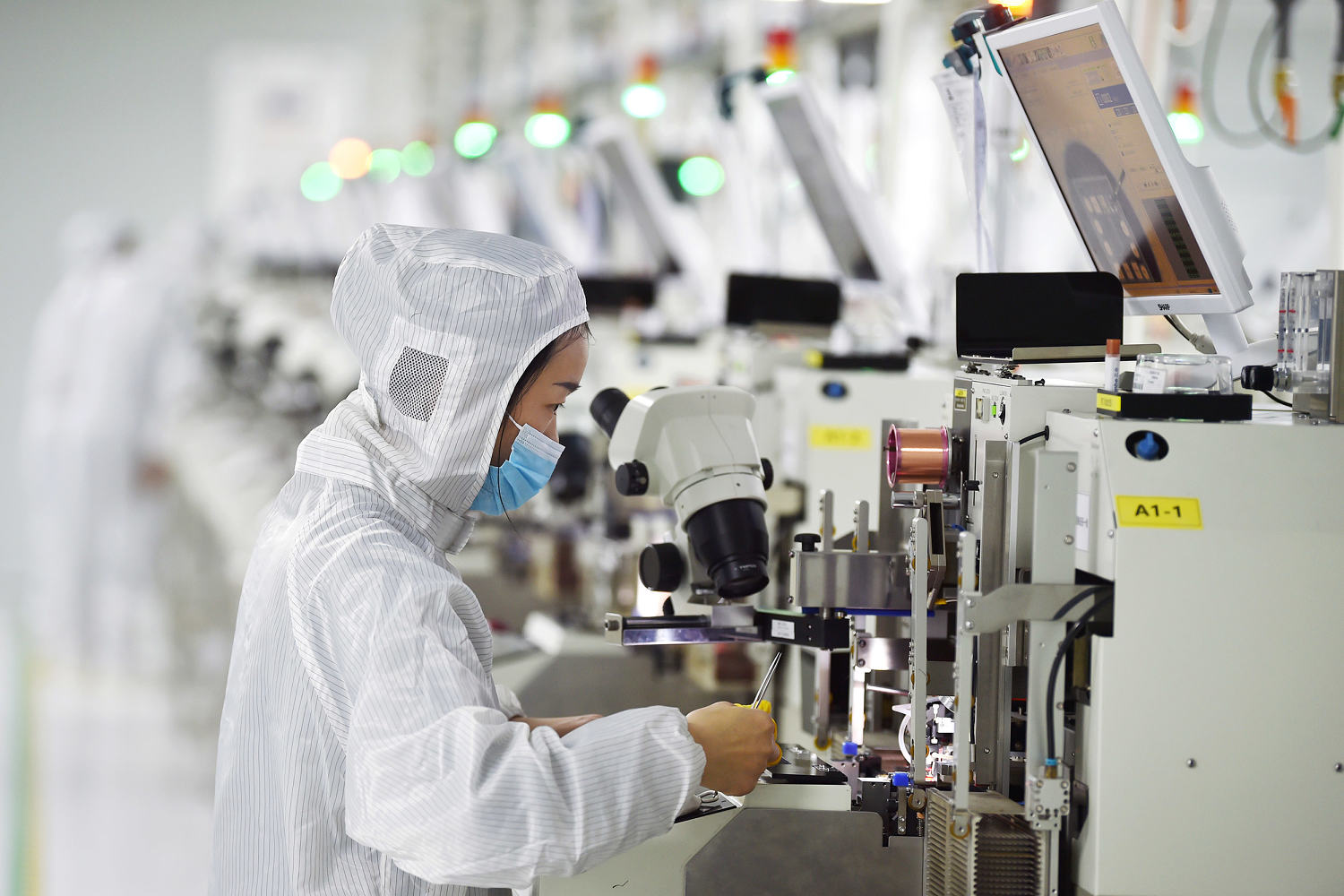
The proposed restrictions would primarily affect the export of machinery used in the fabrication of semiconductors, such as photolithography systems and electron-beam lithography tools. These technologies are essential for producing high-performance chips that power AI systems, and their controlled export could hinder China's ability to produce cutting-edge hardware.

The move comes as China has been aggressively investing in its AI sector, with the government setting ambitious goals to become a global leader in the field by 2030. In recent years, Chinese companies like SMIC and Fujian Semiconductor have made significant strides in semiconductor production, raising concerns among U.S. policymakers about the potential security risks associated with China's rapid technological advancements.

The introduction of the bill follows a series of similar measures taken by the U.S. government to restrict the export of sensitive technologies to China. In 2020, the Trump administration imposed a ban on the sale of advanced semiconductor equipment to Huawei, citing national security concerns. Since then, the Biden administration has continued to enforce strict export controls, particularly targeting Chinese companies involved in the development of AI and high-performance computing technologies.

Supporters of the new bill argue that it is necessary to protect U.S. national security and maintain technological leadership. They contend that by limiting China's access to advanced manufacturing equipment, the U.S. can prevent the country from gaining an unfair advantage in the AI field, which could have significant implications for global economic and geopolitical power dynamics.

However, critics of the bill warn that it could lead to a trade war and harm U.S. companies that rely on exporting their products to China. They argue that such restrictions could also push China to develop its own manufacturing capabilities, potentially leading to a self-sustaining domestic industry that could circumvent the export bans.

Despite these concerns, the bipartisan support for the bill suggests that lawmakers are prioritizing national security over economic considerations. The legislation will now be scrutinized by the House Committee on Foreign Affairs, where it will undergo further debate and potentially face amendments before moving forward in the legislative process.

In the meantime, the semiconductor industry is closely monitoring the developments, as the outcome of the bill could have a significant impact on global supply chains and the competitive landscape in the AI and semiconductor markets. As the debate continues, it remains to be seen whether the U.S. will succeed in curbing China's access to advanced manufacturing equipment or if the country will find alternative pathways to advance its AI capabilities.

The introduction of the bill highlights the ongoing tensions between the U.S. and China in the realm of technology and innovation. As both nations vie for dominance in the AI sector, the stakes have never been higher, and the actions taken by policymakers in Washington could shape the trajectory of the global AI race for years to come.


šŸ“° Related News
Ekaya Banaras Founder Palak Shah’s ₹40 Lakh Billboard Mistake Became a Masterclass in Startup Marketing
Ekaya Banaras founder Palak Shah recently opened up about one of the most expensive mistakes she made while building her luxury textile brand. During the early years of the company, Shah rented a premium billboard near Delhi’s DLF Emporio to increase brand visibility. However, after forgetting to cancel the campaign, the hoarding reportedly continued running for months — resulting in losses of nearly ₹40 lakh. The incident has now become a viral example of how small operational oversights can turn into costly business lessons for startups and entrepreneurs.
28 May
Betting On AI: Jensen Huang And NVIDIA’s Rise To The Top
Before AI was inevitable, it was a gamble—and Jensen Huang went all in.
14 Apr
Red Hat OpenShift sandboxed containers 1.12 and Red Hat build of Trustee 1.1 bring confidential computing to bare metal and AI workloads
Red Hat is excited to announce the release of Red Hat OpenShift sandboxed containers 1.12 and Red Hat build of Trustee 1.1, marking a major leap forward in our confidential computing journey. These releases graduate confidential containers on bare metal from …
14 Apr
Large AI firms hoovering maximum funding, not enough for smaller startups: Y Combinator’s Ankit Gupta
YC Startup School: India’s talent pool across colleges and universities are key for building next-gen startups, which is what YC is looking to tap into. It wants to target entrepreneurs building for global markets, focussed on fintech, consumer, B2B, and ecom…
14 Apr
TSMC likely to book fourth straight quarter of record profit onĀ insatiable AI demand
TSMC-RESULTS/ (PREVIEW, PIX):PREVIEW-TSMC likely to book fourth straight quarter of record profit onĀ insatiable AI demand
14 Apr
TSMC likely to book fourth straight quarter of record profit onĀ insatiable AI demand
Any profit result ā€Œabove T$505.7 billion would mark the company's highest-ever quarterly net income ​and its ninth consecutive quarter of profit growth
14 Apr
TSMC likely to book fourth straight quarter of record profit on insatiable AI demand
On Thursday, ​TSMC is expected to report a net profit of $17.1 billion for the quarter, according to an LSEG SmartEstimate compiled from 19 analysts. The war in the Middle East threatens to disrupt the supply of production materials for semiconductors such as…
14 Apr
If we can’t kick the habit, how do we manage AI’s energy needs?
One can only hope that OpenAI’s Sam Altman was joking when he sought to justify the immense energy consumption of artificial intelligence
14 Apr
What caused Nvidia Blackwell GPU prices to spike? #tech
Blackwell GPU hourly ā€œrentā€ surges on agentic AI demand A compute pricing index tracking hourly costs for Nvidia Blackwell GPUs shows a sharp climb: hourly rental hit $4.08 , up 48% from $2.75 just two months earlier. The reported driver is rising demand tied…
14 Apr
Anthropic Releases Claude Mythos Preview with Cybersecurity Capabilities but Withholds Public Access
Anthropic has introduced Claude Mythos Preview, its most advanced AI model, improving significantly in reasoning, coding, and cybersecurity. Unlike previous releases, it will not be publicly available. Access is limited to a consortium of tech companies throu…
14 Apr







