Bharat Bhagya Vidhata Review: Kangana Ranaut on 26/11
Kangana Ranaut’s documentary ‘Bharat Bhagya Vidhata’ highlights overlooked acts of bravery during the 2008 Mumbai terror attacks, offering a fresh perspective on the 26/11 tragedy.
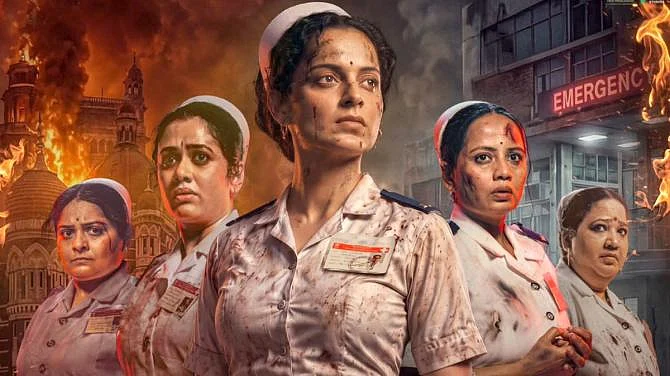
Kangana Ranaut’s latest directorial venture, ‘Bharat Bhagya Vidhata’, turns the lens on the 2008 Mumbai terror attacks, focusing on acts of courage that have remained in the shadows of the 26/11 narrative. The documentary, released this week, seeks to reclaim the stories of ordinary citizens and first responders whose bravery was eclipsed by the scale of the coordinated assault. The film arrives at a time when the 26/11 attacks, which killed 166 people and injured hundreds, are still a raw wound in India’s collective memory.
Ranaut, known for her outspoken views and cinematic ambition, has positioned the documentary as a corrective to what she sees as a selective retelling of the tragedy. ‘Bharat Bhagya Vidhata’ does not rehash the familiar timeline of the attacks—the siege of the Taj Mahal Palace Hotel, the Nariman House, or the Chhatrapati Shivaji Terminus. Instead, it narrows its focus to individuals who displayed extraordinary resolve under fire, many of whom have never been publicly recognized.
The documentary draws on interviews with survivors, family members, and eyewitnesses, weaving together accounts that challenge the dominant media portrayal of the event. Ranaut’s approach is intimate, often lingering on personal details that underscore the human cost of the attacks. Critics have noted that the film’s strength lies in its refusal to sensationalize. The director avoids graphic reenactments, relying instead on archival footage and first-person testimony to build a narrative of resilience.
The result is a somber, reflective work that prioritizes memory over spectacle. Ranaut has described the project as a tribute to the “unsung heroes” of 26/11, a category that includes hotel staff who guided guests to safety, police officers who fought without adequate weapons, and ordinary Mumbai residents who opened their homes to strangers. The documentary has already sparked debate about how India remembers the attacks. Some commentators have praised Ranaut for filling a gap in public discourse, while others question whether the film’s political undertones risk overshadowing its humanitarian message.
‘Bharat Bhagya Vidhata’ is Ranaut’s second documentary after ‘Emergency’, which focused on India’s 1975–77 political crisis. Both films reflect her growing interest in historical revisionism and her willingness to challenge mainstream narratives. The release comes amid a broader cultural reckoning with the legacy of 26/11. In recent years, survivors and families of victims have called for a more nuanced understanding of the attacks, one that moves beyond the hero-villain binary often seen in popular media.
Ranaut’s film may not settle those debates, but it adds a new voice to the conversation. By centering the overlooked, ‘Bharat Bhagya Vidhata’ asks its audience to reconsider what heroism looks like in the face of terror.