
Between politics and academics: Xu Guansan’s translation of Evolution in Action in the Cold War Hong Kong
.
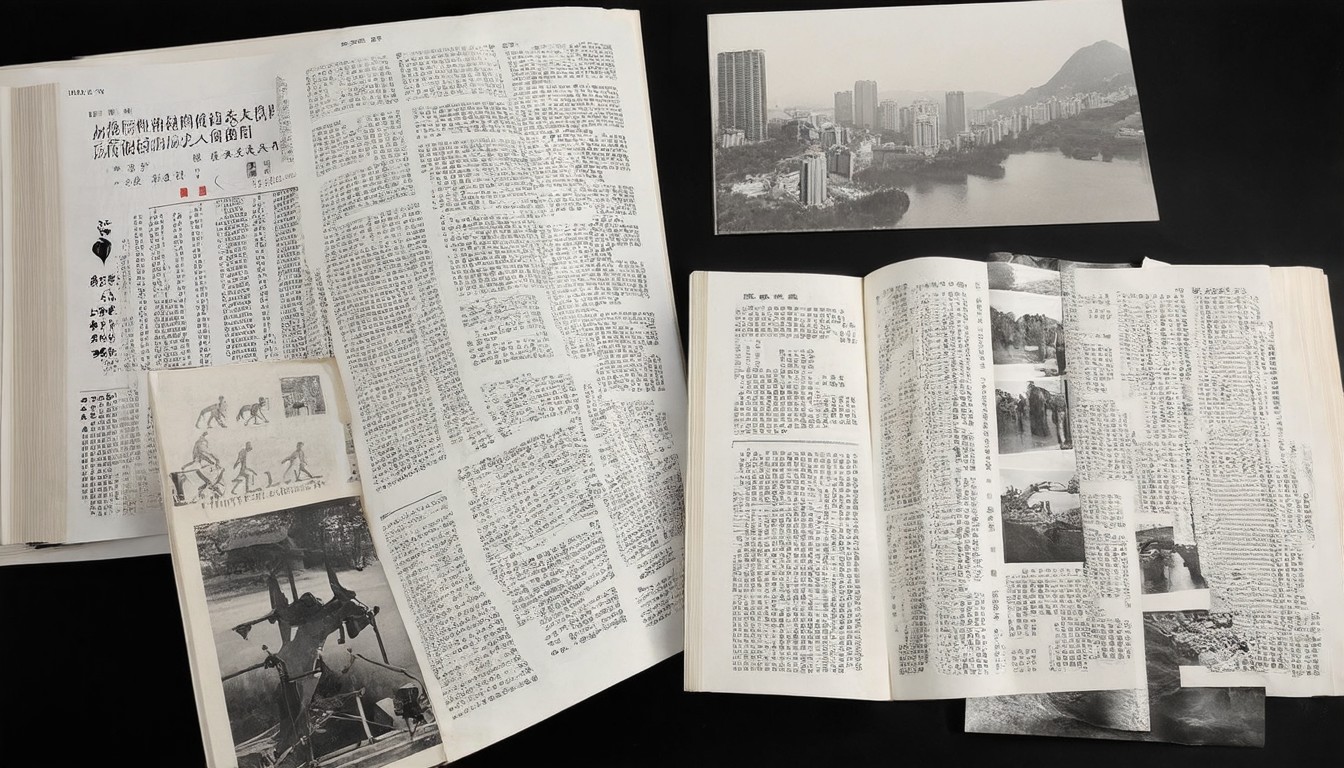
In the shadow of Cold War tensions, Hong Kong became a unique crucible for intellectual exchange, where political realities and academic pursuits intertwined. One such intersection unfolded in the early 1960s, when Xu Guansan, a scholar and translator, embarked on a project that would shape the understanding of evolution in Hong Kong's academic community. His translation of "Evolution in Action," a seminal work by Julian Huxley, not only introduced Hong Kong's scholars to the latest evolutionary theories but also became a subtle reflection of the political climate of the time.
Xu Guansan, a native of Shanghai, had fled to Hong Kong in the late 1940s, escaping the turmoil of the Chinese Civil War. In Hong Kong, he immersed himself in the city's vibrant intellectual scene, which was marked by a blend of traditional Chinese scholarship and Western thought. His academic background in biology and his passion for translation made him an ideal candidate to bring Huxley's work to a Chinese-speaking audience. The choice of "Evolution in Action" was significant, as it was not only a comprehensive exploration of evolutionary biology but also a response to the prevailing political ideologies of the era.
Julian Huxley's "Evolution in Action" was published in 1953, a time when the Cold War was intensifying, and ideological battles were being fought not only on the battlefield but also in the realm of ideas. Huxley, a prominent figure in the modern synthesis of evolutionary theory, sought to reconcile Darwinian evolution with the emerging field of molecular biology. His work emphasized the unity of life and the role of evolution in shaping the natural world. In the context of Cold War Hong Kong, where ideas were closely monitored and sometimes suppressed, Xu Guansan's translation became a beacon of intellectual freedom.
Xu's translation was meticulous and scholarly, ensuring that the nuances of Huxley's arguments were preserved. He worked closely with other Hong Kong-based biologists and philosophers to ensure that the translation was both accurate and accessible to a diverse audience. This included not only academics but also the general public, many of whom were eager to engage with cutting-edge scientific ideas. The translation was published in 1962, a year that would come to symbolize the height of Cold War tensions, as the Cuban Missile Crisis unfolded.
The translation of "Evolution in Action" had profound implications for Hong Kong's academic landscape. It sparked debates among scholars about the role of evolution in understanding human societies and the environment. In a city where political ideologies were often at odds, these debates took on an added dimension. Some scholars saw evolutionary theory as a tool to challenge traditional Confucian values, while others viewed it as a means to promote a more scientific worldview. The translation also served as a bridge between Hong Kong's academic community and the broader scientific discourse in the West.
Xu Guansan's work was not without its challenges. As Hong Kong navigated its complex political status, the translation was subject to scrutiny. Some conservative circles viewed Huxley's work as a threat to traditional values, while others saw it as a reflection of Western influence. Despite these challenges, the translation gained traction, and Xu's efforts were recognized by the academic community. His work not only advanced the understanding of evolution in Hong Kong but also highlighted the city's role as a melting pot of ideas during a tumultuous period in global history.
In the years that followed, Xu Guansan continued to contribute to the intellectual life of Hong Kong through his translations and academic pursuits. His translation of "Evolution in Action" remains a testament to the power of ideas in bridging political divides and fostering intellectual growth. In a city where the Cold War's shadows loomed large, Xu's work served as a reminder that academics and politics, while intertwined, could also inspire a shared pursuit of knowledge.
Today, the legacy of Xu Guansan's translation endures, not only in the academic circles of Hong Kong but also in the broader context of Cold War intellectual history. It stands as a symbol of the resilience of ideas in the face of political strife and a testament to the enduring relevance of evolutionary theory in understanding the complexities of the natural and social worlds. As Hong Kong continues to evolve, the story of Xu Guansan and his translation serves as a reminder of the city's unique role in the global exchange of ideas during a time of great upheaval.








