‘Bengal Most Polarised State’: SC Says Malda Judicial Officers’ Gherao Was Preplanned
CJI Surya Kant said the gherao of officials carrying out SIR work was a “brazen attempt to challenge the authority of the court”.
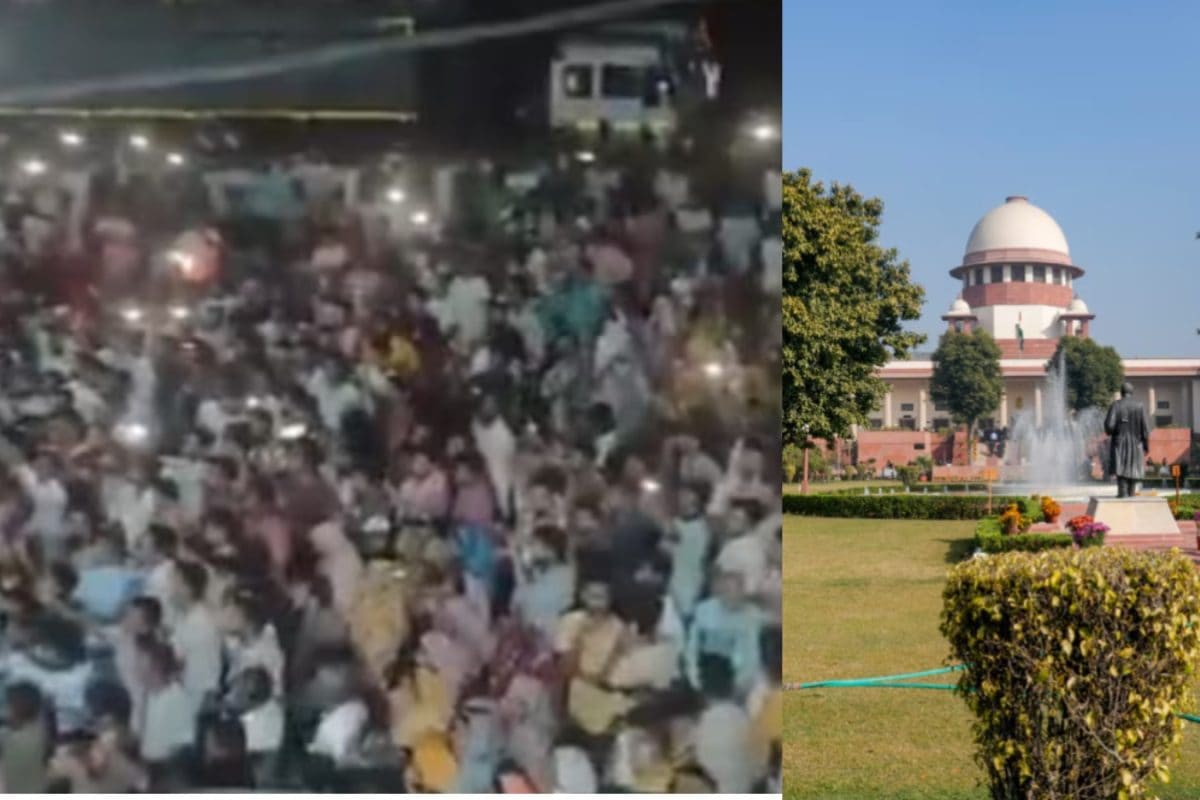
The Supreme Court of India has recently issued a stark warning about the escalating tensions in the state of Bengal, labeling it as the "most polarised state" in the country. Chief Justice of India, Surya Kant, delivered this statement in the context of a recent gherao, or protest, against judicial officers in the Malda district. The gherao, which targeted officials involved in the implementation of the Supreme Court's order to conduct a survey (SIR) in the region, was described by the CJI as a "brazen attempt to challenge the authority of the court."
The incident in Malda, a district in the state of West Bengal, highlights the deep-seated political and social divisions within the region. The protest, which involved local activists and political groups, aimed to obstruct the judicial officers' efforts to carry out the SIR. The Supreme Court's order for the survey was intended to assess the socio-economic conditions of the area and identify potential issues that could be addressed through targeted interventions.
In his remarks, Chief Justice Surya Kant emphasised the importance of upholding the judiciary's independence and authority. He warned that such acts of defiance would not be tolerated and could lead to severe consequences. The CJI's comments underscore the growing concerns about the judiciary's ability to function effectively in an environment marked by political interference and communal tensions.
The gherao in Malda is not an isolated incident. Similar protests have been reported in other parts of Bengal, where political and social polarisation has reached unprecedented levels. The state has long been a battleground for political rivalries, with the Bharatiya Janata Party (BJP) and the Trinamool Congress (TMC) vying for power. This intense political competition has often spilled over into the judicial sphere, with political groups attempting to influence judicial appointments and decisions.
The Supreme Court's decision to conduct the SIR in Malda was a direct response to these challenges. The survey was seen as a necessary step to ensure that the judiciary could function impartially and independently, despite the prevailing political climate. However, the protest against the judicial officers working on the SIR has raised concerns about the safety and security of the judiciary in Bengal.
The CJI's statement about the gherao being a "preplanned" event suggests that there was active involvement of political groups in organising the protest. This raises questions about the role of political parties in undermining the judiciary's authority and independence. The judiciary's ability to function effectively is crucial for maintaining the rule of law and ensuring that justice is administered fairly and impartially.
The Supreme Court's warning about the polarisation in Bengal is a stark reminder of the challenges faced by the judiciary in India. The judiciary's independence is a cornerstone of a democratic society, and any attempts to challenge its authority must be met with firm action. The incident in Malda serves as a wake-up call for all stakeholders, including political parties, to respect the judiciary's role and ensure that it can function without interference.
In the aftermath of the gherao, the judicial officers involved in the SIR have been provided with increased security measures to ensure their safety. However, the broader issue of political interference in the judiciary remains unresolved. The Supreme Court's warning about Bengal's polarisation is a call for all parties to work together to protect the judiciary's independence and uphold the rule of law.
The situation in Bengal is a microcosm of the larger challenges faced by the judiciary in India. Political interference, communal tensions, and social polarisation have become increasingly common, threatening the judiciary's ability to function effectively. The CJI's comments about the gherao in Malda highlight the urgent need for concerted efforts to protect the judiciary's independence and ensure that it can continue to uphold the rule of law in the country.
In conclusion, the Supreme Court's labeling of Bengal as the "most polarised state" in India is a serious warning about the challenges faced by the judiciary in the region. The gherao of judicial officers in Malda, described by the CJI as a "brazen attempt to challenge the authority of the court," underscores the need for immediate action to protect the judiciary's independence and ensure that it can function effectively in an environment marked by political and social polarisation. The incident serves as a reminder of the critical role of the judiciary in maintaining the rule of law and the importance of safeguarding its independence from political interference.