
Before Waging War, Consult Historians First
The post Before Waging War, Consult Historians First appeared first on NOEMA .
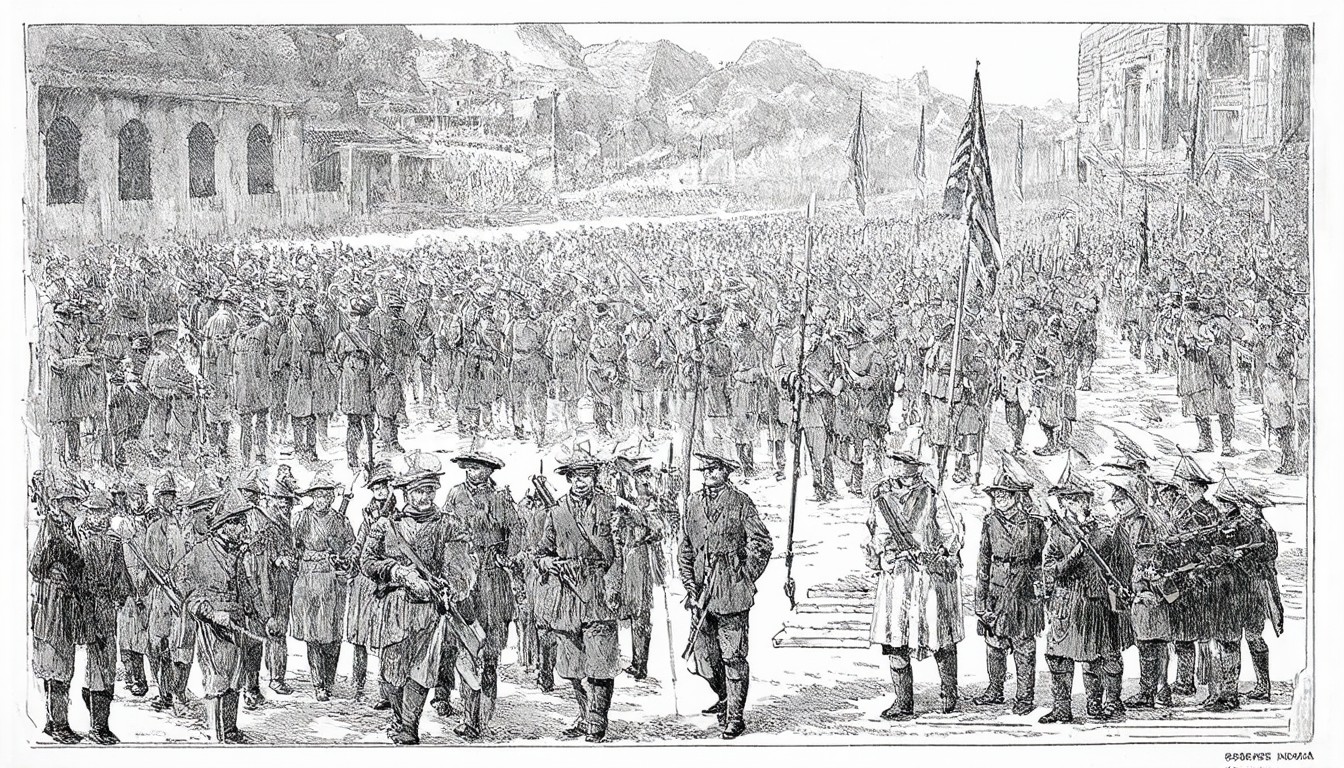
Before Waging War, Consult Historians First
From the time of Thucydides and the Peloponnesian Wars through the advent of World War I to Vietnam, Afghanistan, Iraq, and now Iran, historians have had a better grasp of the confounding crosscurrents and unintended consequences likely to result from armed conflicts than the over-confident leaders who prosecute them. In a recent essay in The Free Press titled “This Is How The Iran War Goes Global,” the conservative historian Niall Ferguson recounts once again the lessons of “applied history” that decision-makers in Washington would be wise to heed now that they have leapt headlong into the fog of war.
Ferguson begins his exhaustive inventory of historical failures to anticipate the undesired outcomes of military campaigns by noting that, while the war with Iran will go down in history as the first “AI war,” replete with drones and automated precision targeting, it is the physical geographical feature of the Strait of Hormuz that will be more determinative. “Nowhere is the law of unintended consequences more binding than when crucial commercial choke points become casualties of war,” he writes. “Although it is fashionable nowadays to focus on financial choke points that can be exploited by sanctions, the oldest choke points are natural geographical features such as the Strait of Hormuz, the Black Sea Straits, and the Strait of Malacca, as well as man-made trade corridors such as the Suez and Panama Canals. These waterways often become critical in times of war.”
Churchill’s Curse
In a comparison that will surely rankle an administration that is already accusing the mainstream media of being unpatriotic in their war coverage, Ferguson brings up the widespread economic disruption caused by the British campaign against the Ottomans in 1914-15 and Winston Churchill’s disastrous assault on the Gallipoli Peninsula when he sought to force open the Dardanelles Strait leading to the Black Sea that the Ottomans had closed down. As the celebrated historian points out, the first major consequence of this failed campaign was the economic devastation it wrought on the British economy, as the blockade of the Dardanelles disrupted trade routes and led to a shortage of food and fuel.
Furthermore, the decision to wage war in this region without proper historical context led to a chain of events that ultimately contributed to the collapse of the Ottoman Empire and the redrawing of the map of the Middle East. The consequences of this conflict extended far beyond the battlefield, as the geopolitical shifts set the stage for future tensions and conflicts in the region.
The lessons of history are not limited to the military and strategic aspects of warfare. Ferguson emphasizes that understanding the historical context of a region can provide valuable insights into its political, economic, and social dynamics. By consulting historians before waging war, leaders can gain a deeper understanding of the potential unintended consequences of their actions and make more informed decisions.
The Strait of Hormuz: A Modern-Day Dardanelles?
As Ferguson warns, the Strait of Hormuz serves as a critical chokepoint for global oil supplies, with approximately 30% of the world’s oil passing through this narrow waterway. The potential disruption of this vital trade route could have severe implications for global economies, leading to skyrocketing oil prices and widespread energy crises.
Moreover, the involvement of major powers in the region, such as the United States and Iran, adds an additional layer of complexity to the situation. The historical context of past conflicts, such as the Iran-Iraq War in the 1980s, highlights the risks of escalating tensions in the region and the potential for a broader conflict to spill over into neighboring countries.
The lessons of history are not just about avoiding past mistakes but also about understanding the complex interplay of geopolitical factors that shape the course of events. By heeding the advice of historians, leaders can better anticipate the unintended consequences of their actions and make more informed decisions that take into account the broader historical context.
In conclusion, the lessons of history offer valuable insights into the potential pitfalls and unintended consequences of armed conflict. As Ferguson argues, consulting historians before waging war can provide decision-makers with the necessary context and understanding to make more informed decisions. In an era where the stakes of global conflicts are higher than ever, it is crucial for leaders to learn from the past and avoid repeating the mistakes of the past. By doing so, they can help to mitigate the risks of conflict and work towards a more stable and peaceful world.









