
Babri politics makes Murshidabad Bengal’s most volatile poll battleground
Beldanga: Three adjoining assembly seats in West Bengal’s Murshidabad district have turned into the most volatile theatre of the 2026 poll battle, with the proposed Babri Masjid-style mosque at Rejinagar reshaping loyalties, hardening religious identities and threatening to fracture the minority vote, the TMC’s bedrock. Bharatpur, Rejinagar and Beldanga form a contiguous arc around the … Get the latest updates in Hyderabad City News , Technology , Entertainment , Sports , Politics and Top Stories on WhatsApp & Telegram by subscribing to our channels. You can also download our app for Android and iOS .
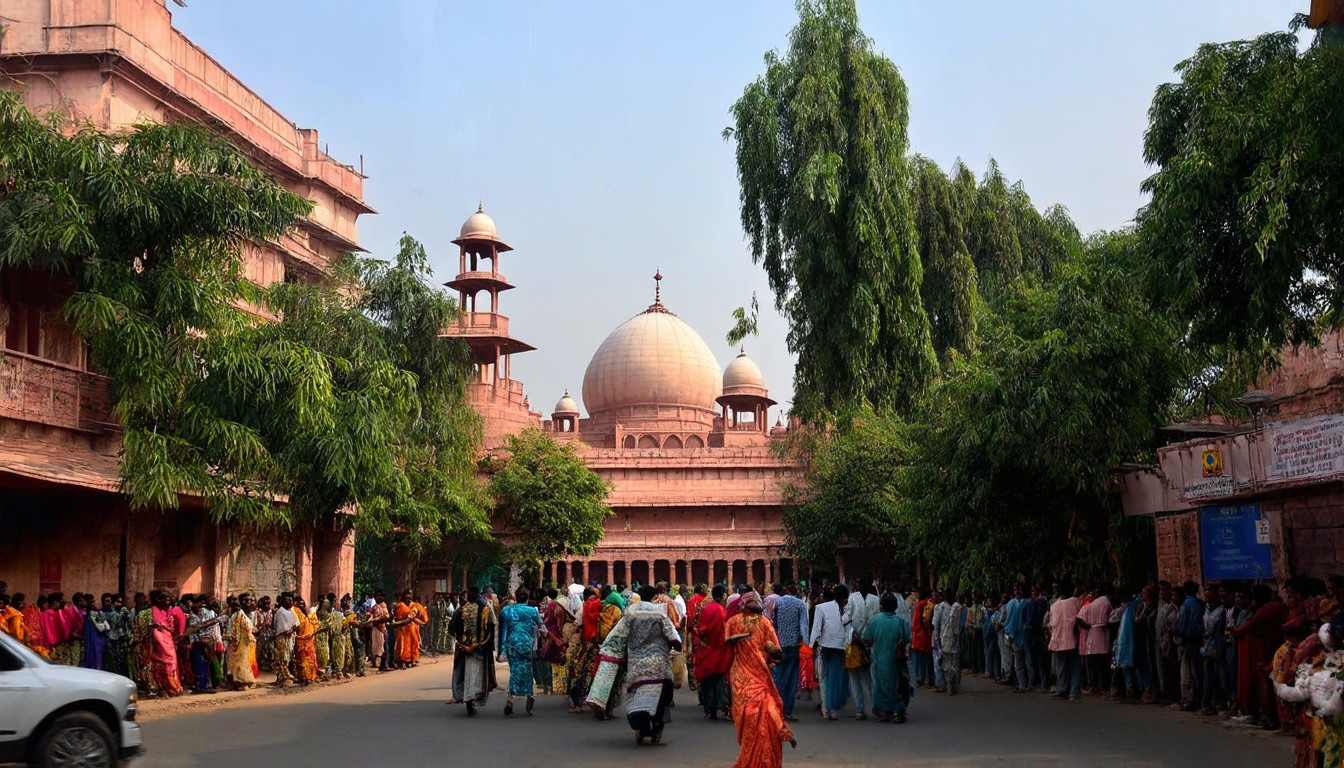
In the lead-up to the 2026 assembly elections in West Bengal, the Murshidabad district has emerged as one of the most volatile battlegrounds, with three adjoining assembly seats—Bharatpur, Rejinagar, and Beldanga—becoming the epicenter of political tension. The catalyst for this unrest is the proposed Babri Masjid-style mosque at Rejinagar, which has reshaped loyalties, hardened religious identities, and threatened to fracture the minority vote that forms the bedrock of the Trinamool Congress (TMC).
The mosque, which was laid the foundation stone for by suspended TMC MLA Humayun Kabir—now the founder of the Aam Janata Unnayan Party (AJUP)—on December 6 last year, has transformed from a local act of defiance into a political symbol with far-reaching implications. The site, located in a contiguous arc around Bharatpur, Rejinagar, and Beldanga, has become the emotional pivot of the election in this region.
The question that dominates every campaign, conversation, and political calculation in this area is whether the "Babri" appeal can consolidate Muslim voters behind Kabir or if it will trigger a counter-consolidation among the Hindus. The first Eid prayers held at the site in March drew crowds from Murshidabad, Nadia, and North 24 Parganas, highlighting the mosque's growing significance. Daily arrivals of trucks carrying bricks and cement, along with overflowing donation boxes, underscore the project's momentum. Social media has further amplified the mosque's political symbolism, with videos of supporters carrying bricks on their heads transforming the under-construction mosque into a potent political tool.
For the Bharatiya Janata Party (BJP), the imagery of the mosque is politically invaluable. "Every brick being carried in the name of Babri is helping consolidate Hindu votes in this belt. People see it as another example of appeasement politics," a senior BJP leader from Murshidabad stated. Party leaders cite the project as proof of "appeasement politics" and argue that it is fueling anger among Hindus in nearby pockets, where a considerable number of voters belong to the majority community.
The TMC, on the other hand, fears that Kabir's alliance with the All India Trinamool Congress (MIM) could further exacerbate tensions and fracture the minority vote. As the election campaign intensifies, the proposed mosque at Rejinagar continues to cast a long shadow over the political landscape of Murshidabad, with its potential to sway the balance of power in the region. The stakes are high, and the outcome of the 2026 elections in these three assembly seats could serve as a barometer of the broader political dynamics in West Bengal.









