
Artificial neurons that behave like real brain cells
USC researchers built artificial neurons that replicate real brain processes using ion-based diffusive memristors. These devices emulate how neurons use chemicals to transmit and process signals, offering massive energy and size advantages. The technology may enable brain-like, hardware-based learning systems. It could transform AI into something closer to natural intelligence.
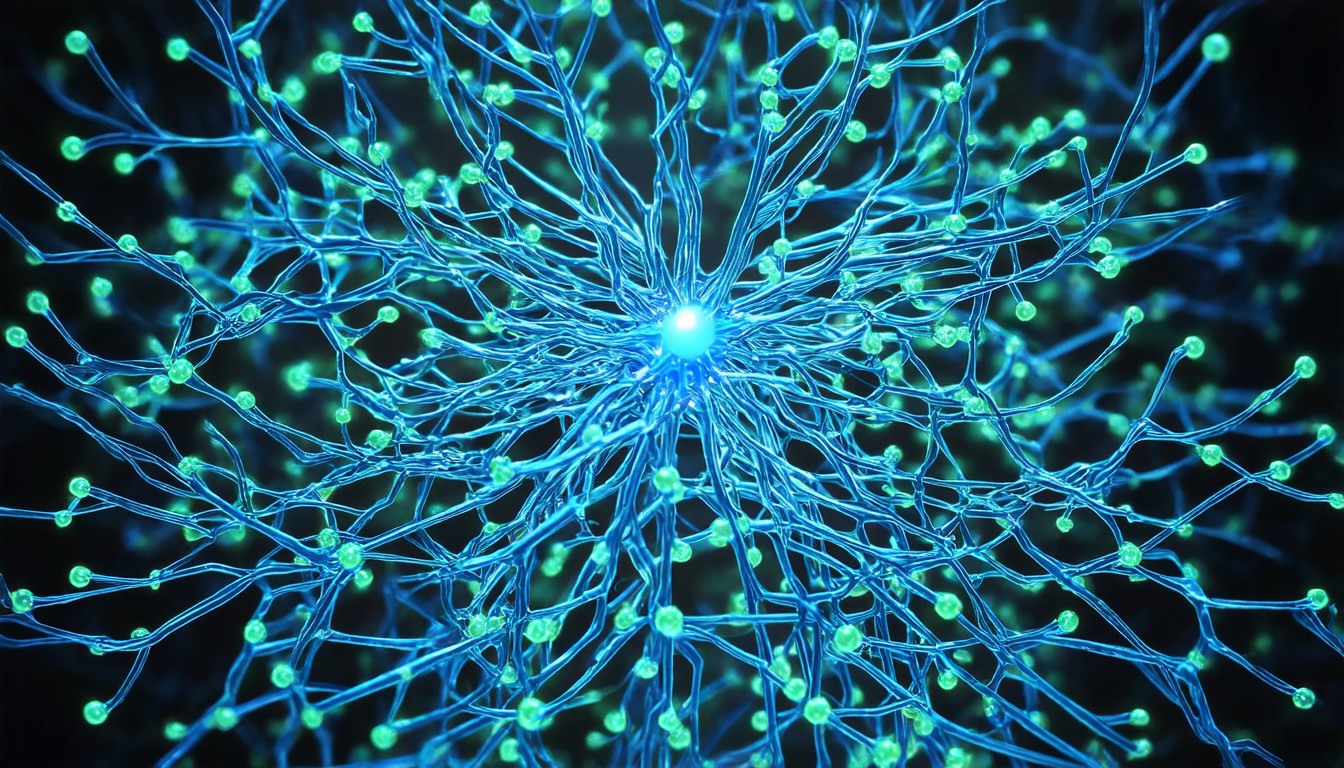
USC researchers have made a groundbreaking breakthrough in artificial intelligence by developing artificial neurons that mimic the behavior of real brain cells. These innovative neurons are built using ion-based diffusive memristors, a technology that allows them to replicate the chemical processes by which neurons transmit and process signals. This development offers significant advantages in terms of energy efficiency and size, paving the way for the creation of brain-like, hardware-based learning systems. Such systems could potentially transform AI into something far closer to natural intelligence, revolutionizing the field of artificial intelligence.
The research, conducted at the University of Southern California, focuses on the fundamental mechanisms of biological neurons. In the human brain, neurons communicate through the release and diffusion of ions, which are charged particles that carry electrical signals. These ions flow across the synaptic cleft, the small gap between neurons, and trigger the release of neurotransmitters, which further modulate the signal. The new artificial neurons, inspired by this process, use ion-based diffusive memristors to emulate this behavior.
Memristors are two-terminal electronic components that exhibit a resistance that depends on the amount of electric charge that has passed through them. By incorporating ions into the memristor's structure, the researchers have created a device that can mimic the dynamic and adaptive nature of biological synapses. This ion-based approach allows the artificial neurons to process information in a manner that is more energy-efficient and compact than traditional electronic components.
One of the key advantages of this new technology is its potential to drastically reduce energy consumption. Traditional AI systems, particularly those based on deep learning, require substantial amounts of energy to process information. The ion-based diffusive memristors, however, operate at a much lower energy level, making them ideal for applications that require long-term operation on limited power sources, such as wearable devices or autonomous robots.
Moreover, the size of these artificial neurons is significantly smaller than conventional electronic components. This miniaturization opens up possibilities for the development of highly integrated and dense neural networks. Such networks could be embedded into a wide range of devices, from smartphones to medical implants, enabling advanced AI capabilities that are currently limited by the size and power constraints of existing hardware.
The potential applications of this technology are vast. By enabling brain-like learning systems, the researchers aim to create AI that can adapt and learn in ways that are more akin to natural intelligence. This could lead to breakthroughs in areas such as machine learning, robotics, and cognitive computing. For instance, AI systems powered by these artificial neurons might be able to learn from their environment more efficiently, making decisions based on real-time data, and even exhibit emergent behaviors that are not explicitly programmed into them.
The development of these artificial neurons also has implications for neuroscience research. By creating devices that mimic the behavior of real brain cells, scientists can gain a deeper understanding of the fundamental principles that underlie brain function. This knowledge could, in turn, inform the design of more advanced AI systems and lead to new insights into the nature of consciousness and cognition.
In conclusion, the USC researchers' creation of artificial neurons that replicate real brain processes using ion-based diffusive memristors represents a significant leap forward in the field of artificial intelligence. This innovative technology offers the promise of more energy-efficient, compact, and adaptive AI systems that could transform the way we interact with technology. As the research continues, it is likely to inspire further advancements in both AI and neuroscience, ultimately bringing us closer to achieving true artificial general intelligence.









