Artemis II Is Taking a Piece of the Wright Flyer and a Canceled 1970 Apollo Flag into Deep Space
A 10-pound flight kit connects Apollo and the Wright brothers to our lunar future.
The Artemis II mission, NASA's next step toward lunar exploration, is carrying a unique payload into deep space: a piece of the Wright Flyer and a canceled 1970 Apollo flag. This 10-pound flight kit serves as a symbolic link between the pioneers of aviation and the astronauts who first walked on the moon, bridging the past with the future of space exploration.
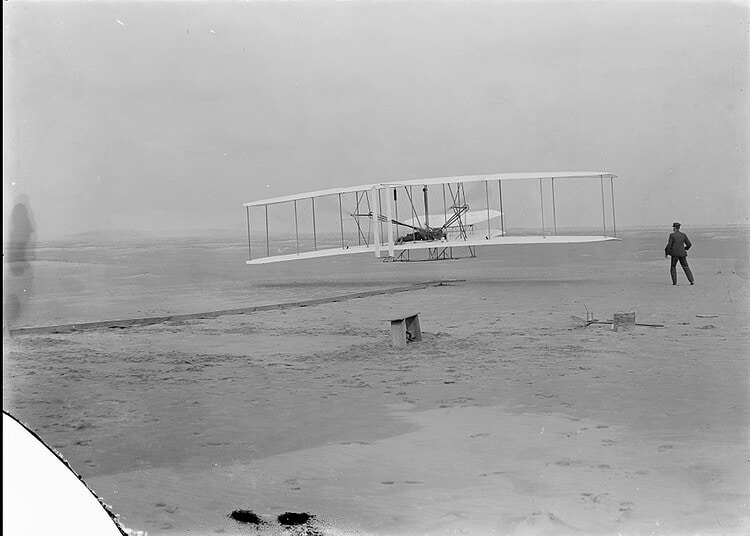
The Wright Flyer, the world's first successful airplane, was piloted by Orville and Wilbur Wright on December 17, 1903. The brothers' groundbreaking achievement marked the beginning of human flight, inspiring generations of aviators and engineers. Now, a fragment of this historic aircraft is being sent to the moon, symbolizing the continuity between terrestrial aviation and lunar exploration.
The inclusion of the Wright Flyer piece in the Artemis II payload underscores the profound connection between aviation and space travel. The technology developed for airplanes, such as engines and aerodynamics, laid the groundwork for rocket science. The Wright brothers' work not only transformed transportation on Earth but also paved the way for humanity's journey into space.
In addition to the Wright Flyer fragment, the Artemis II mission is carrying a canceled 1970 Apollo flag. This flag was intended for the Apollo 20 mission, which was ultimately canceled due to budget constraints. The flag, featuring the Apollo Lunar Module emblem and the American flag, represents the aspirations and ambitions of the space race era. By taking this flag into space, Artemis II honors the vision of the Apollo program while moving toward new lunar exploration goals.
The Artemis II mission, a crewed flight test of NASA's Orion spacecraft, is scheduled to launch in 2024. It will carry astronauts on a trajectory around the moon, marking the first time humans have traveled beyond Earth's orbit since the Apollo 17 mission in 1972. This mission is part of NASA's Artemis program, which aims to establish a sustainable presence on the moon by 2024 and lay the foundation for future missions to Mars.
The inclusion of the Wright Flyer fragment and the canceled Apollo flag in the Artemis II payload is more than just a symbolic gesture. It serves as a reminder of the shared heritage of aviation and space exploration. Both fields have been driven by innovation, courage, and a shared goal of pushing the boundaries of human achievement.
The Wright brothers' pioneering spirit and the Apollo program's ambition have inspired generations of explorers. By carrying these artifacts into space, Artemis II honors the legacy of those who came before while looking toward the future. The mission represents a continuation of the human quest for knowledge and discovery, as we strive to understand the universe and our place within it.
As the Artemis II spacecraft journeys toward the moon, it carries with it a tangible connection to the past. The Wright Flyer fragment and the canceled Apollo flag are reminders of the enduring spirit of exploration that has driven humanity forward. They symbolize the interconnectedness of our past, present, and future, as we venture deeper into the cosmos.
In the coming years, as NASA continues its efforts to return humans to the moon and beyond, these artifacts will serve as a constant reminder of the shared heritage of aviation and space exploration. They represent the collective vision of those who have worked tirelessly to expand the frontiers of human knowledge and capability.
The Artemis II mission, with its unique payload, is not just about sending astronauts to the moon. It is about celebrating the legacy of those who have shaped our understanding of flight and space, and about looking ahead to the next chapters in humanity's cosmic odyssey. As we gaze upon the stars, we are reminded that the journey has only just begun.