
Are low-quality listicles about to lose their edge in Google Search?
Google says it's aware of weak 'best of' lists and said it 'works to combat that kind of abuse' in Search and Gemini.
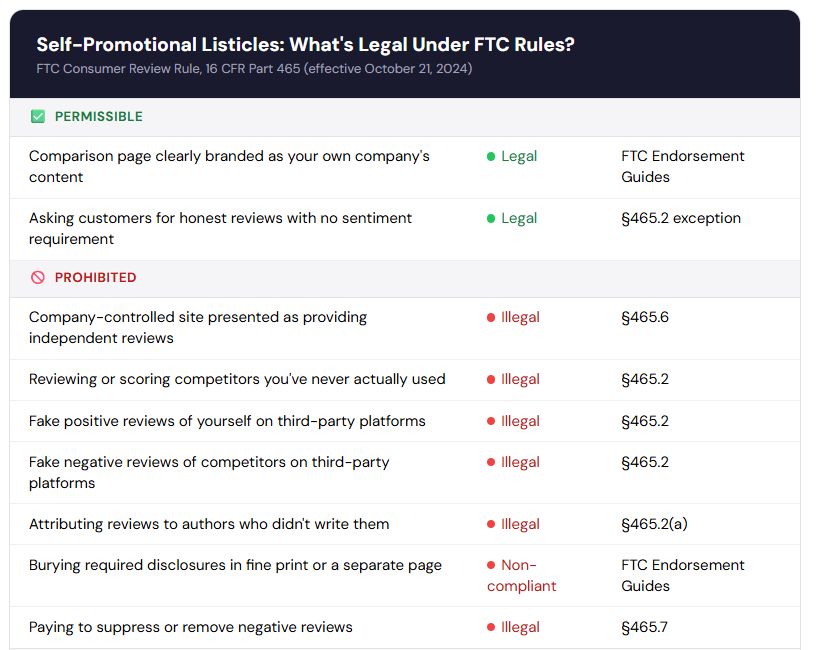
Google has recently taken a stand against low-quality listicles that manipulate search results and mislead users. These so-called "best of" lists, which often rank a brand's own products at the top, are not only a concern for search quality but may also violate the Federal Trade Commission (FTC) rules that came into effect in October 2024. This shift in focus has raised questions about the future of such content in Google Search and its impact on AI-generated answers.
The FTC's Consumer Review Rule (16 CFR Part 465) prohibits several deceptive practices tied to reviews and testimonials. These include presenting company-controlled content as independent reviews, publishing reviews of products or services never actually used, and attributing reviews to people who didn't write them. Penalties for violating these rules can reach up to $53,088 per violation, with each page counted separately.
The surge in "best X" and "Top 10 Y" listicles has been driven by search engine optimization (SEO) tactics over the past couple of years. These pages often perform well in search results and increasingly influence AI-generated answers. However, many modern listicles follow a pattern that raises red flags. A brand publishes a "best tools" list, includes competitors it hasn't tested, uses subjective or invented scoring systems, and ranks itself at the top. These listicles may imply independence or firsthand evaluation when neither exists.
While it is possible to publish comparison content that includes one's own product, the risk increases when the content implies objectivity while promoting the brand, presents reviews not based on real experience, or fails to clearly disclose material relationships.
Google is aware of the low-quality listicle trend and has stated that it applies protections against manipulation in both Search and Gemini, its AI-powered assistant. A Google spokesperson told The Verge that the company works to combat such abuse. This move comes as the FTC's new rules target deceptive practices, potentially leading to stricter enforcement against manipulative listicles.
In the past, at least one company faced legal action for publishing hundreds of "best of" pages that ranked its own services at the top and included fabricated competitor reviews. The Better Business Bureau later censured the company for unsubstantiated claims.
As the landscape of search results and AI-generated content evolves, the pressure on content creators to adhere to ethical standards is increasing. The FTC's new rules and Google's efforts to combat manipulation highlight the need for transparency and honesty in online content, ensuring that users are not misled by deceptive practices.









