
Anthropic Takes The Pentagon To Court This Week. Here’s What Could Happen.
Could Anthropic make its way back into a multi-billion dollar opportunity with the U.S. government? A federal judge could grant it temporary relief this week.
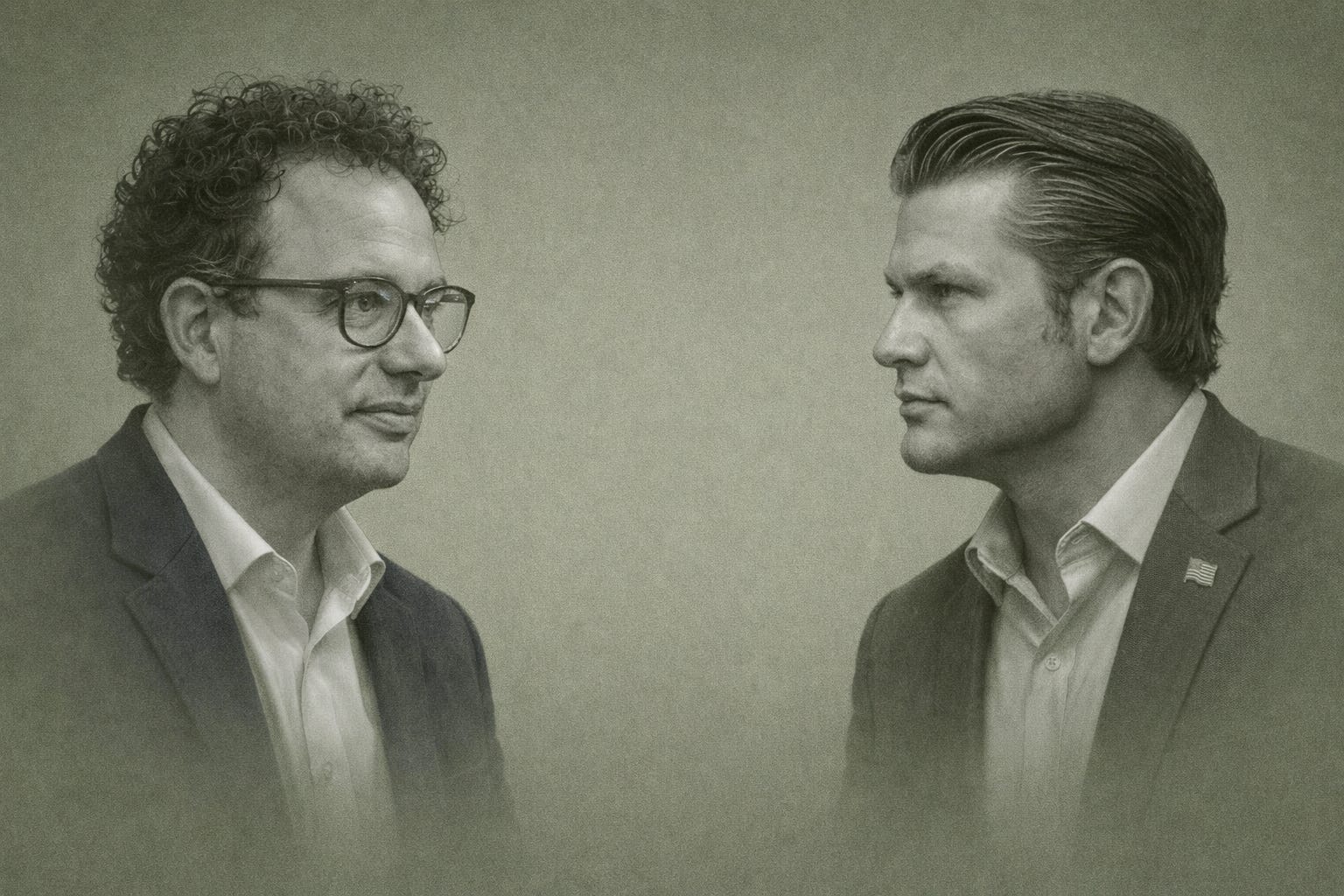
Anthropic, a leading AI company, is set to take on the U.S. government in a high-stakes legal battle this week. The case centers around a federal judge's decision to grant temporary relief to Anthropic, which has been placed under a supply-chain risk designation by the Pentagon. This designation stems from Anthropic's refusal to allow its Claude models to be used for domestic surveillance or autonomous warfare. The hearing, scheduled for Tuesday in California, could determine whether Anthropic retains access to a multi-billion dollar opportunity with the U.S. government.
The case is part of Anthropic's parallel lawsuits against the U.S. government, with one filed in California's northern district and another in Washington, D.C. As the legal battle unfolds, the Trump administration is reportedly exploring new ways to force companies to abandon their AI safety and privacy protocols. A recent report from The Lever detailed a proposal that would require AI vendors to make their technology available for "any lawful government purpose," even if a company objects.
Ahead of this week's hearing, filings from Anthropic, the government, and third parties provide insight into the legal arguments at play. Winning a preliminary injunction, which would freeze the government's order to remove Anthropic from all U.S. federal agencies, requires demonstrating four key factors: that Anthropic is likely to win the full case, that it would suffer irreparable harm without the injunction, that it has more to lose than the government if the preliminary injunction is denied, and that the injunction would be in the public's interest.
Anthropic's case hinges on four main arguments. First, the company asserts that its refusal to allow Claude for autonomous weapons and mass surveillance is protected by the First Amendment. Anthropic argues that its right to free speech and the right to refuse to participate in unethical activities are being violated. Second, the company claims that its Fifth Amendment protections were violated when the government blacklisted it without adequate notice or due process. Anthropic maintains that the sudden and arbitrary designation has caused significant harm to its business operations and reputation.
Third, Anthropic contends that Secretary of Defense Pete Hegseth exceeded his statutory authority by misusing a law reserved for foreign adversaries. The company argues that the National Defense Authorization Act (NDAA) was not intended to be applied to domestic entities and that the government's actions are an unjustified overreach of power. Finally, Anthropic argues that President Trump's government-wide directive to prioritize suppliers with strong AI capabilities is unconstitutional and discriminatory. The company asserts that the directive violates antitrust laws and creates an unfair competitive landscape.
The government, on the other hand, argues that Anthropic's refusal to cooperate poses a significant risk to national security. The Pentagon maintains that the supply-chain risk designation is necessary to protect the U.S. from potential AI-related threats. The government also contends that Anthropic's arguments lack merit and that the company's actions are driven by a desire to avoid regulatory scrutiny.
As the case progresses, the outcome will have far-reaching implications for the AI industry and the balance of power between government agencies and private companies. If Anthropic prevails, it could set a precedent for other companies facing similar challenges, while a government victory could lead to increased control over AI development and deployment. Regardless of the outcome, the case underscores the urgent need for clear legal frameworks to govern the use of AI and protect both national security and individual rights.
In the days leading up to the hearing, both sides have been actively preparing their arguments, with Anthropic emphasizing its commitment to ethical AI development and the government highlighting its responsibility to protect the nation from emerging threats. The case will likely draw significant attention from the tech industry, civil liberties groups, and national security experts, as all stakeholders watch closely for the judge's decision.
Ultimately, the outcome of this legal battle will shape the future of AI in the United States and around the world. It will determine whether companies have the right to prioritize ethical considerations over government demands and whether the government has the authority to override such decisions in the name of national security. As the case unfolds, it serves as a stark reminder of the complex interplay between technology, policy, and the rule of law in an increasingly interconnected world.









