Annamalai's New Movement: 1 Million Sign-ups in 10 Hours
K Annamalai, after resigning from the BJP over leadership differences, launched 'Idhu Namma Iyakkam,' which recorded an astonishing one million registrations within just ten hours, signaling a powerful new force in Indian politics.
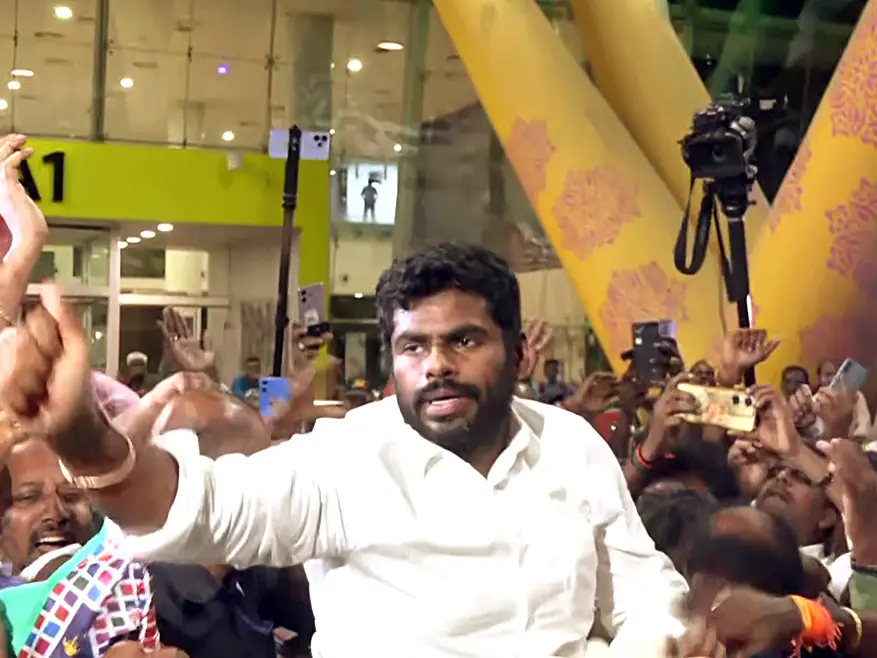
K Annamalai's recent political maneuver has sent ripples through the national political landscape. After tendering his resignation from the Bharatiya Janata Party (BJP), a prominent national party, Annamalai swiftly unveiled his own political initiative, "Idhu Namma Iyakkam" (This is Our Movement). The launch of this new outfit has immediately captured significant public attention, evidenced by an extraordinary surge in registrations. Within a mere ten hours of its inception, the movement reportedly amassed an impressive one million sign-ups, or "10 lakh" as it is commonly referred to in India, signaling a remarkable initial reception and potential for a formidable new force in the country's diverse political arena. This rapid accumulation of support highlights the dynamic nature of Indian politics and the readiness of the electorate to engage with fresh political narratives and leadership.
Annamalai's departure from the BJP, a party with which he had been associated, was attributed to fundamental disagreements with its leadership. The stated reason for his resignation revolved around differing perspectives concerning the political direction of a particular state. While the specifics of these differences remain largely within the internal discussions of the former party and its erstwhile leader, the decision to part ways suggests a significant divergence in strategic vision or ideological alignment. Such internal conflicts are not uncommon in large political organizations, where varying viewpoints on governance, policy implementation, and electoral strategy can often lead to a re-evaluation of political affiliations by individual leaders. His move marks a pivotal moment in his political career, transitioning from a party functionary to the architect of an independent political entity.
The formal inauguration of "Idhu Namma Iyakkam" was met with an immediate and enthusiastic response from the public. The movement's name itself, translating to "This is Our Movement," suggests an emphasis on grassroots participation and a sense of collective ownership, aiming to resonate directly with the aspirations of the common citizen. The registration drive, initiated shortly after the movement's announcement, quickly gained momentum. The reported figure of 10 lakh sign-ups within a mere ten-hour window is particularly striking. This rapid uptake of membership indicates a pre-existing level of public interest or perhaps a carefully orchestrated launch strategy that effectively tapped into a receptive demographic. Such a swift accumulation of support is often seen as a strong indicator of a movement's initial appeal and its potential to mobilize a significant base.
The sheer volume and speed of these registrations offer critical insights into the political climate. One million sign-ups in such a short span suggest more than just casual interest; it points towards a segment of the populace actively seeking alternative political platforms or expressing solidarity with Annamalai's vision. For any nascent political movement, achieving such a milestone so early can be a powerful psychological boost, both for its internal members and for projecting an image of strength and viability to external observers and potential allies. It also signals a challenge to established political orders, indicating that voters are open to new options and are willing to engage with leaders who promise a different approach to governance or state-level issues. This initial momentum is crucial for setting the tone for the movement's future trajectory.
The emergence of "Idhu Namma Iyakkam" is reflective of the dynamic and often fluid nature of Indian politics. The country's multi-party democratic system frequently witnesses the birth of new political outfits, driven by regional aspirations, ideological shifts, or the personal charisma of individual leaders. Leaders often embark on new political journeys for a multitude of reasons, with disagreements over strategic direction being a common catalyst, as was reportedly the case with Annamalai. Such divergences can stem from differing views on economic policies, social justice issues, regional development priorities, or even the party's overall approach to electoral campaigns. Forming a new movement allows for the articulation of a distinct political agenda and the cultivation of a support base that specifically resonates with that particular vision, free from the constraints of a larger, established party structure.
While the initial registration figures for "Idhu Namma Iyakkam" are undeniably impressive, the path ahead for any new political entity is fraught with challenges. Converting a large number of digital sign-ups into active, committed grassroots support requires sustained effort, robust organizational building, and effective communication strategies. The movement will need to articulate a clear and compelling manifesto, establish a strong presence across various regions, and build a credible leadership structure beyond its founder. Furthermore, navigating the complexities of electoral politics, fundraising, and coalition building will be critical for its long-term viability and its ability to translate popular sentiment into tangible political influence. The true test will lie in its capacity to sustain this early momentum and evolve into a formidable political force.
The swift rise of "Idhu Namma Iyakkam" and its immediate public traction underscore the evolving landscape of political engagement in India. In an era of increasing digital connectivity, the ability of new movements to rapidly mobilize support through online platforms is becoming a significant factor. Such developments contribute to a more competitive political environment, potentially encouraging established parties to re-evaluate their strategies and address public grievances more effectively. The emergence of new players also enriches the democratic discourse by introducing fresh perspectives and policy debates, ultimately offering voters a broader spectrum of choices and fostering a more vibrant and responsive political system. This event serves as a reminder that political landscapes are never static and are constantly shaped by the aspirations and decisions of leaders and citizens alike.
In conclusion, K Annamalai's decision to resign from the BJP and launch "Idhu Namma Iyakkam" marks a significant development in the Indian political narrative. The reported achievement of one million registrations within just ten hours of its launch has firmly placed this new movement in the spotlight, signaling a potentially impactful entry into the political fray. While the initial enthusiasm is a strong foundation, the journey ahead will undoubtedly demand strategic planning, consistent outreach, and a clear vision to convert this early momentum into sustained political influence. All eyes will now be on "Idhu Namma Iyakkam" as it endeavors to solidify its base and articulate its agenda in the competitive world of Indian state and national politics.