Home ScienceAn Ethical Future for Brain Organoids Takes Shape...
Science⭐ Featured

An Ethical Future for Brain Organoids Takes Shape

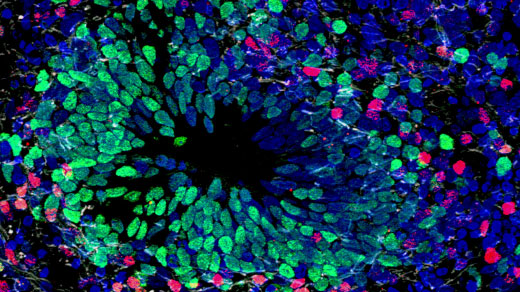
Collaborations in progress between ethicists and biologists seek to head off challenges raised by lab-grown “organoids” as they become increasingly similar to human brain tissue. The post An Ethical Future for Brain Organoids Takes Shape first appeared on Quanta Magazine
7 April 2026 at 09:02 am
1 views
An Ethical Future for Brain Organoids Takes Shape

As the field of neuroscience advances, so too does the potential for groundbreaking discoveries using lab-grown brain organoids. These tiny, three-dimensional structures, created by scientists to mimic human brain tissue, hold immense promise for understanding complex neurological conditions and developing new treatments. However, as these organoids become increasingly sophisticated, ethical concerns have begun to surface, prompting collaborations between ethicists and biologists to address potential challenges.

The allure of the brain lies in its complexity and its role as the core of human identity. It is the organ that shapes our thoughts, emotions, and memories, making it deeply personal and intrinsically human. This very nature of the brain has long posed ethical dilemmas for researchers. Historically, neuroscientists have relied on animal models or isolated human neurons, but these methods often fall short of capturing the full range of human brain functions.

The development of brain organoids offers a new avenue for studying the brain in a more controlled and ethical manner. By culturing human stem cells in specific conditions, scientists can create miniature versions of brain tissue that exhibit a range of neural functions. These organoids have already proven useful in researching conditions such as autism and epilepsy, providing insights into the underlying mechanisms of these disorders.

Despite these advancements, the ethical implications of using brain organoids are significant. As these structures become more similar to human brain tissue, questions arise about their status and the ethical responsibilities associated with them. Some argue that organoids, being artificially created and lacking consciousness, do not pose the same ethical challenges as human embryos or animals. Others contend that their growing complexity and potential for human-like functions warrant a closer examination of their ethical standing.

To address these concerns, a growing number of ethicists and biologists are collaborating to establish guidelines for the responsible use of brain organoids. These efforts aim to ensure that research on organoids is conducted in a manner that respects ethical principles while maximizing scientific potential.

One key area of focus is the transparency of research involving brain organoids. By openly sharing data and methodologies, the scientific community can build trust and foster a culture of accountability. Additionally, establishing clear protocols for the disposal and storage of organoids is crucial, as these tissues may contain sensitive genetic information.

Another important consideration is the potential for misuse of brain organoids. As research progresses, there is a risk that the technology could be exploited for unethical purposes, such as creating synthetic human brains for experimental purposes or even cloning. To mitigate these risks, robust regulatory frameworks are needed to guide research and development in this field.

Furthermore, the involvement of the public and stakeholders in the ethical discussions surrounding brain organoids is essential. By engaging with diverse perspectives, researchers can ensure that their work aligns with societal values and expectations. This inclusive approach will help build trust and acceptance for the use of brain organoids in scientific research.

In conclusion, the development of brain organoids represents a significant leap forward in our understanding of the human brain. As these structures become more sophisticated, it is imperative that ethical considerations are integrated into the research process. Through collaborations between ethicists and biologists, a framework for responsible brain organoid research can be established, ensuring that these groundbreaking tools are used in a manner that respects ethical principles and advances scientific knowledge.

The future of brain organoids holds immense potential for transforming our understanding of neurological disorders and paving the way for innovative treatments. By addressing ethical challenges proactively, the scientific community can harness the full potential of this technology while maintaining the integrity of human research. Ultimately, the goal is to create an ethical foundation for brain organoid research that honors the complexity and intricacy of the human brain, while fostering a culture of transparency, accountability, and public engagement.

📰 Related News
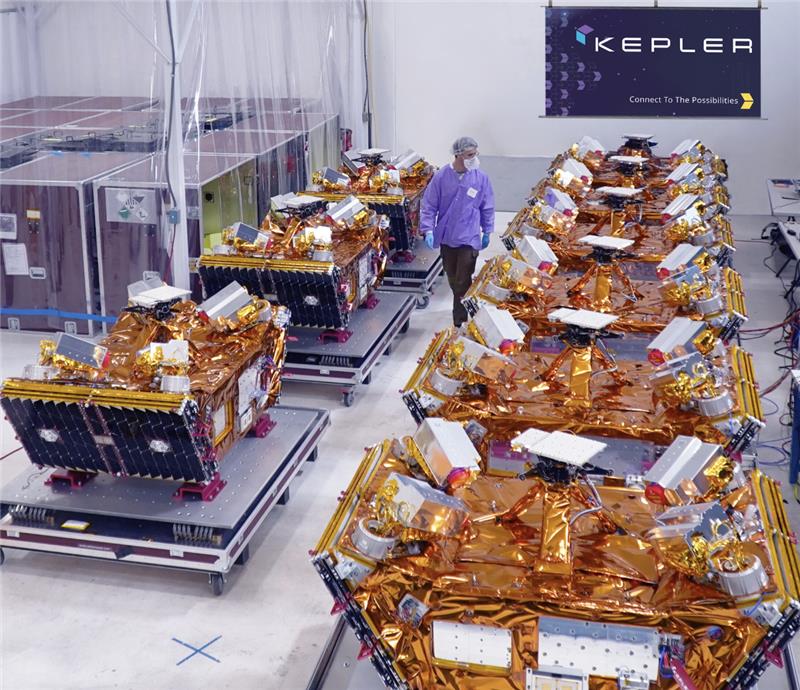
The largest orbital compute cluster is open for business | TechCrunch
Kepler Communications is flying 40 GPUs in Earth orbit. And its latest customer is Sophia Space.
14 Apr
‘Mideast conflict poses risks to Philippines growth’
The Philippine economy is expected to grow at a faster pace of 5.3 percent this year from last year’s 4.4 percent but the ongoing Middle East conflict is seen to pose risks, according to the Association of Southeast Asian Nations Plus 3 Macroeconomic Research Office.
7 Apr
AFBI welcomes DUP representatives to its research farm at Hillsborough
The Agri-Food and Biosciences Institute (AFBI) welcomed a number of DUP representatives to its research farm at Hillsborough on Friday.
7 Apr
A simple way to get more value from metrics
We spent one day 1 building a system that immediately found a mid 7 figure optimization (which ended up shipping). In the first year, we shipped mid 8 figures per year worth of cost savings as a result. The key feature this system introduces is the ability to query metrics data across all hosts and all services and over any period of time (since inception), so we've called it LongTermMetrics (LTM) internally since I like boring, descriptive, names. This got started when I was looking for a starter project that would both help me understand the Twitter infra stack and also have some easily quantifiable value. Andy Wilcox suggested looking at JVM survivor space utilization for some large services. If you're not familiar with what survivor space is, you can think of it as a configurable, fixed-size buffer, in the JVM (at least if you use the GC algorithm that's default at Twitter). At the time, if you looked at a random large services, you'd usually find that either: The buffer was too small, resulting in poor performance, sometimes catastrophically poor when under high load. The buffer was too large, resulting in wasted memory, i.e., wasted money. But instead of looking at random services, there's no fundamental reason that we shouldn't be able to query all services and get a list of which services have room for improvement in their configuration, sorted by performance degradation or cost savings. And if we write that query for JVM survivor space, this also
7 Apr
Accelerating Mathematical and Scientific Discovery with Gemini Deep Think
Research papers point to the growing impact of Deep Think across fields
7 Apr
Gemini 3 Deep Think: Advancing science, research and engineering
Our most specialized reasoning mode is now updated to solve modern science, research and engineering challenges.
7 Apr
Context Engineering for Coding Agents
The number of options we have to configure and enrich a coding agent’s context has exploded over the past few months. Claude Code is leading the charge with innovations in this space, but other coding assistants are quickly following suit. Powerful context engineering is becoming a huge part of the developer experience of these tools. Birgitta Böckeler explains the current state of context configuration features, using Claude Code as an example. more…
7 Apr
What does less protein and nitrogen mean for methane?
Does feeding less protein to cows over a longer period not only reduce nitrogen losses, but also affect methane emissions? Researchers at Wageningen University & Research (WUR) investigated this in a multi-year study with dairy cows, funded by the Vereniging Diervoederonderzoek Nederland (VDN), the Dutch Ministry of Agriculture, Fisheries, Food Security and Nature (LVVN), and […] The post What does less protein and nitrogen mean for methane? appeared first on Agriland.ie .
7 Apr
Second’s Bark Boasts New era of Bitcoin Payments, drawing in former Blockstream developers
Bitcoin Magazine Second’s Bark Boasts New era of Bitcoin Payments, drawing in former Blockstream developers Second, the Bitcoin development lab founded by ex-Blockstream executives including CEO Steven Roose and CTO Erik De Smedt, has unveiled Bark — its custom Ark protocol implementation promising self-custodial payments that are faster and cheaper than Lightning channels. This post Second’s Bark Boasts New era of Bitcoin Payments, drawing in former Blockstream developers first appeared on Bitcoin Magazine and is written by Juan Galt .
7 Apr
'Morale boost': Nasa carries out Moon mission during tough year for science
HOUSTON — As the four Artemis astronauts approached a high point of their lunar mission -- getting slung around the far side of the Moon -- National Aeronautics and Space Administration (Nasa) staffers crowded into Houston's famed mission control room Monday for a team photo.
7 Apr