Amit Shah Chairs NEC Plenary in Shillong for NE Development
Union Home Minister Amit Shah will preside over the 73rd plenary session of the North Eastern Council (NEC) in Meghalaya's capital, Shillong, on Thursday, signaling a strong central focus on regional development and security.
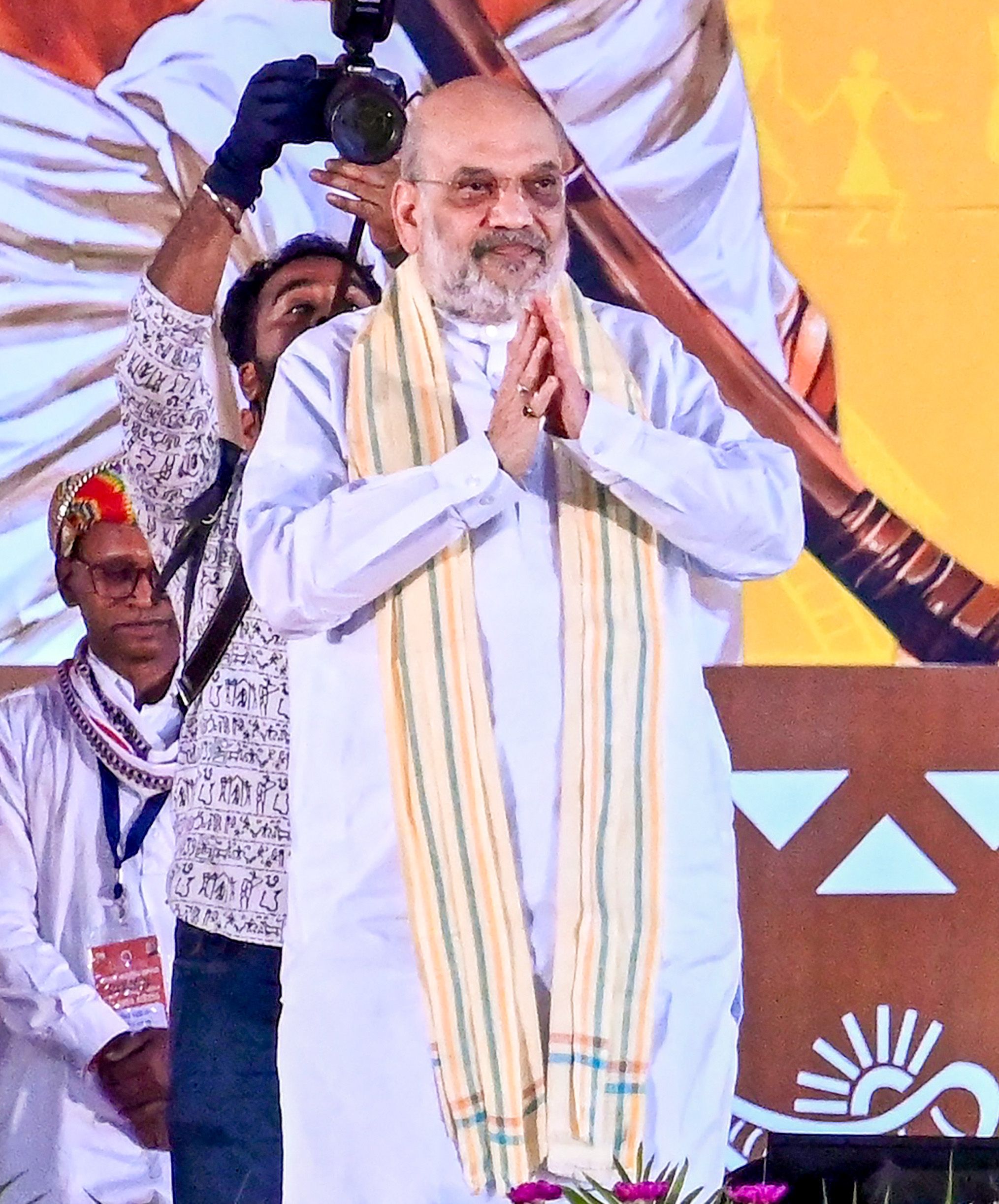
Union Home Minister Amit Shah is slated to preside over the 73rd plenary session of the North Eastern Council (NEC) in Shillong, the capital of Meghalaya, on Thursday. This high-level gathering underscores the central government's sustained focus on the comprehensive development and strategic integration of India's North Eastern states. The session is expected to bring together key regional and central stakeholders to deliberate on critical issues, review ongoing projects, and formulate future strategies for accelerated progress. Shah's presence as the Union Home Minister signals the paramount importance attached to both developmental initiatives and security aspects, crucial for the stability and prosperity of the eight sister states. The NEC, a pivotal regional planning body, serves as an essential platform for fostering inter-state coordination and channeling central assistance.
Established in 1971 by an Act of Parliament, the North Eastern Council was initially conceived as an advisory body to address socio-economic development needs. With Sikkim's inclusion in 2002, it now encompasses all eight states, functioning as a nodal agency for economic and social planning. The NEC acts as a catalyst for balanced and inclusive development, ensuring the region's unique challenges and vast potential are addressed through coordinated efforts, strategic investments, and robust policy frameworks. It identifies priority sectors, formulates schemes, and covers crucial areas like infrastructure development (roads, railways, airports, power), human resource development, health, agriculture, tourism, and industrial growth. The Council facilitates a unified approach to regional planning and acts as a conduit for central funds, ensuring effective resource allocation.
The decision for Union Home Minister Amit Shah to preside over the 73rd plenary session highlights the elevated importance the central government attaches to the North East. As Home Minister, his portfolio extends beyond internal security to encompass significant aspects of governance, development, and inter-state relations, particularly in strategically sensitive regions. His leadership at the NEC session is expected to provide strong impetus to ongoing development projects and policy implementations. It also sends a clear message of the Centre's direct engagement and commitment to resolving long-standing issues, accelerating infrastructure build-out, and ensuring peace and stability. This high-level participation is often seen as a catalyst for faster decision-making and greater resource allocation, reinforcing the Centre's 'Act East' vision.
While specific agenda points for the 73rd plenary session were not detailed, such high-profile meetings typically involve comprehensive reviews of the NEC's ongoing projects and schemes. Discussions are likely to revolve around enhancing regional connectivity, a critical aspect for unlocking the North East's economic potential. This includes deliberations on improving road networks, expanding railway lines, and upgrading air travel facilities. Furthermore, the session is expected to address strategies for boosting economic growth through investments in agriculture, horticulture, tourism, and small-scale industries. Security considerations, given the region's geopolitical significance, are also likely to feature prominently, ensuring development initiatives are underpinned by a stable and secure environment. The presence of another Union Minister, reportedly from the Ministry for Development of North Eastern Region (DoNER), would be crucial.
The North Eastern region, with its diverse topography, rich cultural heritage, and abundant natural resources, presents both unique challenges and immense opportunities. Geographical isolation, coupled with historical underdevelopment, has necessitated a focused approach to infrastructure and connectivity. The region's potential in areas like hydropower, organic farming, ecotourism, and bamboo-based industries remains largely untapped. The 'Act East Policy' has further amplified the region's strategic importance, positioning it as India's gateway to Southeast Asia. The NEC's role is critical in harmonizing these opportunities with the developmental aspirations of the local populace, ensuring growth is inclusive and sustainable. Addressing issues like skill development, youth employment, and effective resource management will be central.
The central government has, over recent years, significantly intensified its focus on the North East, launching various initiatives aimed at accelerating its development trajectory. These include special packages for infrastructure, enhanced budgetary allocations, and schemes tailored to the region's specific needs. Efforts have been made to improve governance, streamline project implementation, and foster a conducive environment for investment. The emphasis has been on transforming the North East from a peripheral region to a core growth engine for the nation. Such initiatives, when reviewed and guided by high-level bodies like the NEC under the chairmanship of a Union Minister, gain crucial momentum and ensure better coordination between central schemes and state-level priorities. The aim is to create a robust ecosystem that empowers local communities.
The 73rd plenary session, under the stewardship of Union Home Minister Amit Shah, is anticipated to yield significant policy directions and operational guidelines. It is expected to facilitate enhanced inter-state cooperation on critical development projects and security matters. The discussions are likely to result in clearer roadmaps for improving physical and digital connectivity, boosting economic opportunities, and strengthening social infrastructure across the eight states. A key outcome could be the identification of new priority areas for investment and the allocation of resources to fast-track projects that have a direct impact on public welfare and regional integration. The session serves as a crucial mechanism for ensuring accountability and driving progress, reinforcing the central government's unwavering commitment to the region's prosperity and stability.
As the North Eastern Council continues its vital work, sessions like the 73rd plenary, chaired by senior Union Ministers, are indispensable for shaping the region's future. They provide a strategic forum for aligning national objectives with regional aspirations, fostering a collaborative spirit among various stakeholders. The collective vision for the North East encompasses not just economic growth but also cultural preservation, environmental sustainability, and social harmony. With renewed focus and high-level political backing, the region is poised for a transformative era, moving towards greater self-reliance and contributing significantly to India's overall growth story. The outcomes of this session are eagerly awaited, as they are expected to lay down crucial markers for the path ahead for the North Eastern states, ensuring a brighter and more integrated future.