
AI Tooling for Software Engineers in 2026
Claude Code dominates tool usage, leaders are more positive about AI than engineers, staff+ engineers are the biggest users of AI agents, and more. Exclusive data and analysis from 900+ respondents
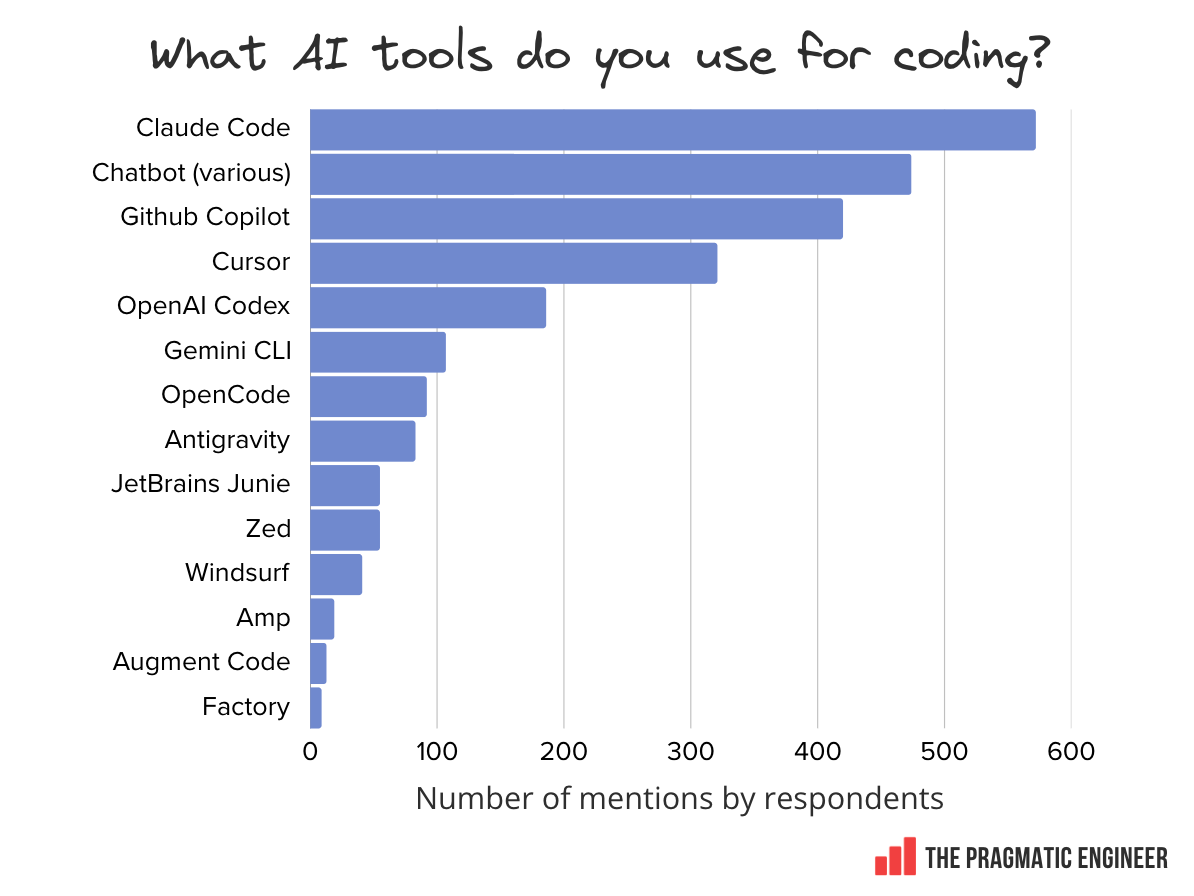
In 2026, the landscape of AI tooling for software engineers has undergone significant changes, with new tools gaining traction and established players solidifying their positions. A recent survey conducted by The Pragmatic Engineer, which gathered responses from over 900 subscribers between 27 January and 17 February 2026, provides valuable insights into the current state of AI tool adoption and usage.
One of the most striking findings from the survey is the rapid rise of Claude Code, which has become the most widely used AI tool among software engineers. In just eight months, Claude Code has surpassed many competitors, including GitHub Copilot, which was the dominant tool in a similar survey conducted in 2023. This rapid ascent highlights the fast-paced nature of the AI market and the evolving preferences of software engineers.
The survey also reveals that AI tooling has become mainstream, with 95% of respondents reporting weekly usage of AI tools. Furthermore, 75% of engineers use AI for half or more of their work, and an impressive 56% claim to do 70% or more of their engineering tasks with the help of AI. This indicates a growing reliance on AI tools to streamline development processes and enhance productivity.
Among the most-used AI tools, Claude Code leads the pack, followed closely by chatbots and GitHub Copilot. Interestingly, Cursor has been making a significant impact, while newer tools like Codex and Antigravity are gaining traction. Many engineers report using multiple AI tools simultaneously, with the majority juggling two to four tools at once.
When it comes to specific AI models, Anthropic's Opus and Sonnet models have emerged as the favorites for coding tasks. These models are mentioned far more frequently than any other models, showcasing their effectiveness and popularity among engineers.
The survey also delves into the usage of AI agents, with 55% of respondents regularly employing them. Notably, staff+ engineers are the biggest users of AI agents, with 63.5% of them reporting regular use. This group is also twice as excited about AI as engineers who do not use AI agents, highlighting the positive impact of AI agents on their work experience.
Company size appears to influence the choice of AI tools, with smaller businesses overwhelmingly favoring Claude Code, particularly at the tiniest organizations, where it is used by 75% of respondents. In contrast, large enterprises tend to default to GitHub Copilot. This disparity can be attributed to enterprise procurement preferences and Microsoft's aggressive marketing efforts for GitHub Copilot within larger organizations.
In conclusion, the 2026 AI tooling survey reveals a rapidly evolving landscape where AI has become an integral part of software engineering. Claude Code's dominance, the widespread adoption of AI tools, and the growing popularity of AI agents are just a few of the key trends shaping the future of AI in software development. As AI continues to advance, it will be fascinating to see how these tools and agents further transform the way engineers work and collaborate.









