
Home TechnologyAI, Simulation, and the New Reality of Predictive ...
Technology⭐ Featured

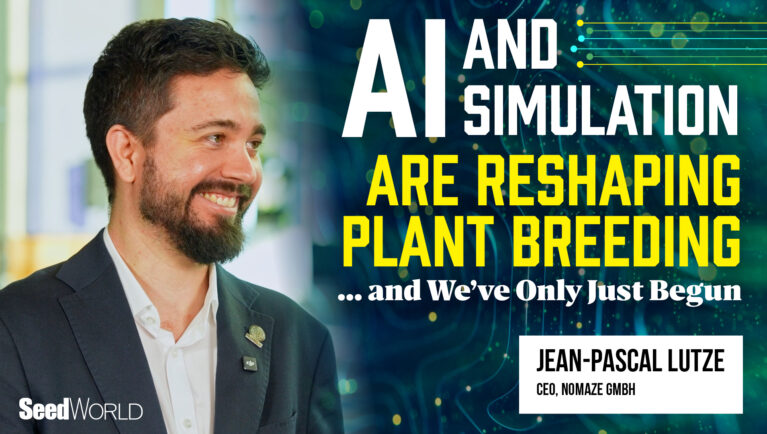
AI, Simulation, and the New Reality of Predictive Plant Breeding

Plant breeding has reached a data tipping point, with modern programs generating more multi-trait and multi-environment data than traditional analytics can handle. AI is closing the gap by accelerating selection decisions, managing complexity, and improving resource allocation across breeding cycles. Simulated field trials are a key breakthrough, using genetic and environmental data to predict performance across locations and stress conditions, guiding smarter field testing. AI supports breeders through augmentation, enabling faster, higher-confidence decisions and competitive advantage. The post AI, Simulation, and the New Reality of Predictive Plant Breeding appeared first on Seed World .
6 April 2026 at 05:14 pm
1 views
AI, Simulation, and the New Reality of Predictive Plant Breeding

Plant breeding has quietly crossed a tipping point, with modern programs generating more multi-trait and multi-environment data than traditional analytics can handle. This surge in data has created a challenge for breeders, as traditional methods struggle to keep up with the speed, scale, and adaptability required for competitive breeding cycles. The result is a growing gap between the data available and the decisions breeders can make in a timely manner. This is where artificial intelligence (AI) is starting to make a significant impact, offering solutions to accelerate selection decisions, manage complexity, and improve resource allocation across breeding cycles.

AI in plant breeding is often discussed in broad, futuristic terms, but its real value is evident in practical applications. By leveraging AI, breeders can process vast amounts of data more efficiently, identify patterns that might be overlooked, and make faster, higher-confidence decisions. As breeding pipelines become more global and multi-trait, the question has shifted from whether models can be developed to whether they can be developed quickly enough to stay competitive.

One of the most promising developments in this space is the use of simulated field trials. Traditional field trials rely on physical plots and seasonal snapshots, which can be time-consuming and resource-intensive. Simulated field trials, on the other hand, use existing genetic, environmental, and performance data to predict how breeding lines are likely to perform across locations, years, and stress conditions. This approach allows breeders to test thousands of scenarios digitally before committing resources in the field.

In practice, simulated trials can help breeders identify weak candidates earlier, focus field trials where they add the most value, and explore environments or trait combinations that would be impractical to test physically. The result is not fewer field trials, but smarter ones—with simulation guiding where human expertise is best applied. This combination of AI and simulation enables breeders to make more informed decisions, optimize their use of resources, and accelerate the breeding process.

As AI becomes more integrated into plant breeding, there are understandable questions about its role and impact. Will AI replace plant breeders? Will models override experience? In reality, the opposite is happening. AI systems excel at processing massive datasets and surfacing patterns that no individual could identify manually. However, they do not replace the human expertise and intuition that breeders bring to the table. Instead, AI augmentation allows breeders to leverage data more effectively, making decisions that are both data-driven and informed by experience.

The integration of AI and simulation in plant breeding represents a significant shift in how breeders approach their work. By harnessing the power of data and advanced analytics, breeders can make more informed decisions, optimize their resources, and accelerate the development of new plant varieties. This new reality of predictive plant breeding is not only transforming the industry but also paving the way for more efficient and sustainable agricultural practices in the future. As the gap between data generation and decision-making continues to grow, AI and simulation will play a critical role in ensuring that plant breeders can stay ahead of the curve and meet the challenges of a rapidly changing agricultural landscape.


Source: Seed World
📰 Related News
Ekaya Banaras Founder Palak Shah’s ₹40 Lakh Billboard Mistake Became a Masterclass in Startup Marketing
Ekaya Banaras founder Palak Shah recently opened up about one of the most expensive mistakes she made while building her luxury textile brand. During the early years of the company, Shah rented a premium billboard near Delhi’s DLF Emporio to increase brand visibility. However, after forgetting to cancel the campaign, the hoarding reportedly continued running for months — resulting in losses of nearly ₹40 lakh. The incident has now become a viral example of how small operational oversights can turn into costly business lessons for startups and entrepreneurs.
28 May
Betting On AI: Jensen Huang And NVIDIA’s Rise To The Top
Before AI was inevitable, it was a gamble—and Jensen Huang went all in.
14 Apr
Red Hat OpenShift sandboxed containers 1.12 and Red Hat build of Trustee 1.1 bring confidential computing to bare metal and AI workloads
Red Hat is excited to announce the release of Red Hat OpenShift sandboxed containers 1.12 and Red Hat build of Trustee 1.1, marking a major leap forward in our confidential computing journey. These releases graduate confidential containers on bare metal from …
14 Apr
Large AI firms hoovering maximum funding, not enough for smaller startups: Y Combinator’s Ankit Gupta
YC Startup School: India’s talent pool across colleges and universities are key for building next-gen startups, which is what YC is looking to tap into. It wants to target entrepreneurs building for global markets, focussed on fintech, consumer, B2B, and ecom…
14 Apr
TSMC likely to book fourth straight quarter of record profit on insatiable AI demand
TSMC-RESULTS/ (PREVIEW, PIX):PREVIEW-TSMC likely to book fourth straight quarter of record profit on insatiable AI demand
14 Apr
TSMC likely to book fourth straight quarter of record profit on insatiable AI demand
Any profit result ‌above T$505.7 billion would mark the company's highest-ever quarterly net income ​and its ninth consecutive quarter of profit growth
14 Apr
TSMC likely to book fourth straight quarter of record profit on insatiable AI demand
On Thursday, ​TSMC is expected to report a net profit of $17.1 billion for the quarter, according to an LSEG SmartEstimate compiled from 19 analysts. The war in the Middle East threatens to disrupt the supply of production materials for semiconductors such as…
14 Apr
If we can’t kick the habit, how do we manage AI’s energy needs?
One can only hope that OpenAI’s Sam Altman was joking when he sought to justify the immense energy consumption of artificial intelligence
14 Apr
What caused Nvidia Blackwell GPU prices to spike? #tech
Blackwell GPU hourly “rent” surges on agentic AI demand A compute pricing index tracking hourly costs for Nvidia Blackwell GPUs shows a sharp climb: hourly rental hit $4.08 , up 48% from $2.75 just two months earlier. The reported driver is rising demand tied…
14 Apr
Anthropic Releases Claude Mythos Preview with Cybersecurity Capabilities but Withholds Public Access
Anthropic has introduced Claude Mythos Preview, its most advanced AI model, improving significantly in reasoning, coding, and cybersecurity. Unlike previous releases, it will not be publicly available. Access is limited to a consortium of tech companies throu…
14 Apr







