Home HealthAI model designs new treatment candidate for opioi...
HealthтнР Featured

AI model designs new treatment candidate for opioid addiction that cuts cravings in rats

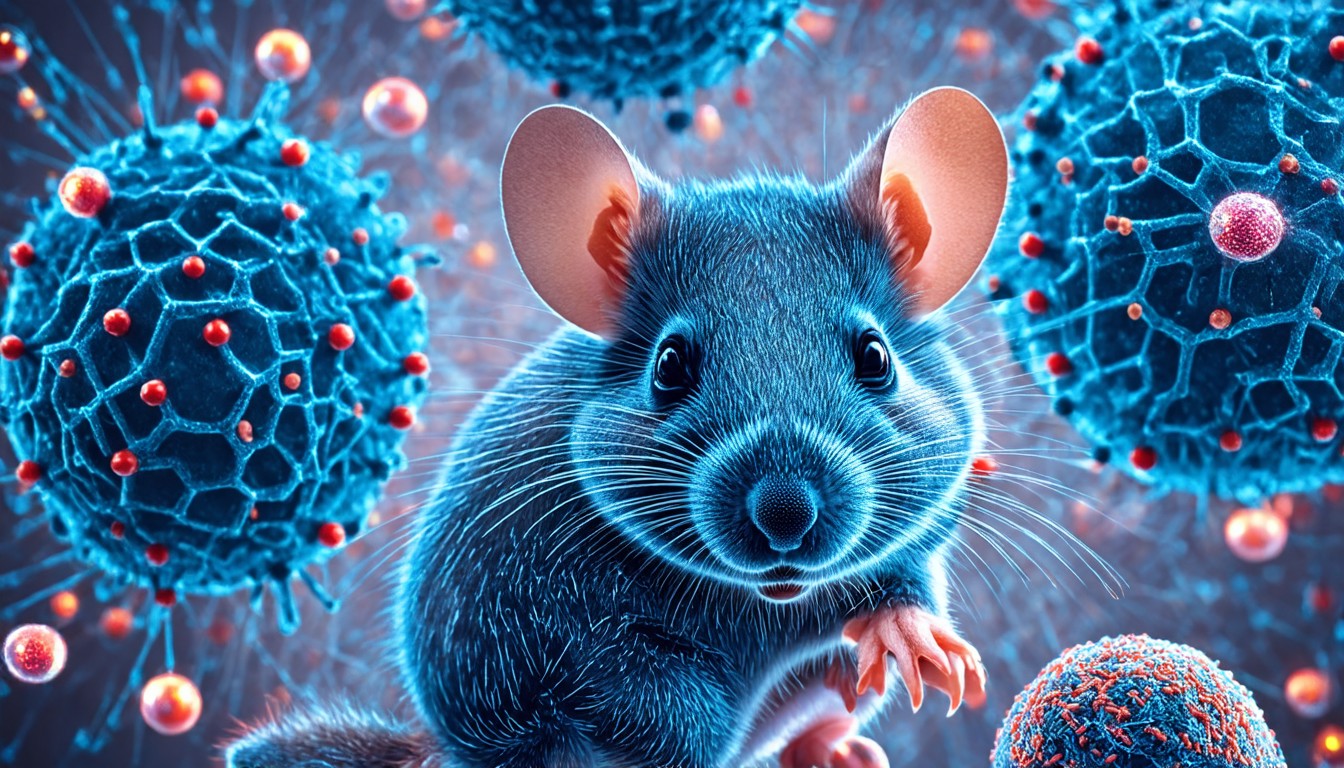
While the opioid epidemic is one of the most urgent public health emergencies facing the U.S., new therapeutic approaches for treating the underlying substance use disorder have lagged far behind. Scientists have now used an artificial intelligence program to design a compound that reduced fentanyl use in addicted rats, which could one day serve as a new tool to help patients recover from opioid abuse.
6 April 2026 at 08:39 pm
1 views
AI model designs new treatment candidate for opioid addiction that cuts cravings in rats

In a bid to combat the opioid epidemic, a team of researchers has leveraged artificial intelligence (AI) to design a novel treatment candidate that shows promise in reducing opioid cravings in rats. This breakthrough, which could eventually offer a new avenue for patients struggling with opioid addiction, underscores the growing potential of AI in drug discovery and development.

The opioid crisis, which has claimed countless lives and devastated communities across the United States, has been a persistent challenge for public health officials and medical professionals alike. While efforts to address the immediate symptoms of opioid use disorder (OUD) have been substantial, the development of effective treatments targeting the underlying addiction has lagged. This has left many patients without viable options for long-term recovery.

Enter the AI-driven approach. By utilizing advanced computational models, scientists have designed a compound that demonstrated significant potential in reducing fentanyl use in rats. Fentanyl, a highly potent synthetic opioid, is often implicated in the escalation of addiction due to its strong euphoric effects and potential for overdose. The new compound, which remains in the preclinical stage, was identified through a systematic screening of potential molecules, a process that would have been prohibitively time-consuming and resource-intensive to conduct manually.

The AI system, trained on vast databases of chemical structures and their biological activities, was able to predict the most promising candidates for targeting opioid addiction. Once identified, these compounds were synthesized and tested in laboratory settings. In the case of the fentanyl-reducing compound, the results were encouraging: the treatment significantly curtailed the rats' use of fentanyl, suggesting that it may interfere with the neural pathways responsible for addiction.

This innovative approach not only accelerates the drug discovery process but also broadens the scope of potential treatments. Traditional methods often rely on a limited set of known targets, whereas AI can explore a much wider array of molecular interactions. This flexibility could lead to the identification of novel mechanisms of action that are not readily apparent through conventional research.

However, the path from preclinical studies in rats to human trials and eventual approval is long and fraught with challenges. Researchers must meticulously validate the compound's efficacy and safety in more complex models, such as primates, before moving on to clinical trials. Furthermore, the specific neural mechanisms underlying opioid addiction in humans are not fully understood, which could pose hurdles in translating findings from animals to humans.

Despite these challenges, the success of the AI-driven approach in reducing opioid cravings in rats offers a glimmer of hope for those affected by the opioid epidemic. The ability to design treatments that target the root causes of addiction could pave the way for more effective and lasting interventions. As the field of AI continues to evolve, it holds the potential to revolutionize not only opioid addiction treatment but also other areas of medicine, where the search for new therapies is often a daunting task.

In conclusion, the use of AI in drug discovery, exemplified by the recent development of a compound that reduces fentanyl use in rats, represents a promising step forward in addressing the opioid crisis. While much work remains to be done, this innovative approach underscores the growing role of technology in combating complex public health challenges. As researchers refine their methods and gain a deeper understanding of addiction's biological underpinnings, the prospect of more effective treatments for opioid addiction becomes increasingly within reach.


ЁЯУ░ Related News
The Rise and Sudden Fall of OpenAIтАЩs Sora
OpenAIтАЩs abrupt decision to shut down its AI video generation app, Sora, just 103 days after launch has sparked widespread debate about the companyтАЩs strategic direction and financial health. Despite a $1 billion partnership with Disney and a viral debut thatтАж
13 Apr
St. LukeтАЩs stays on track with massive expansion
St. Luke’s Medical Center continues to absorb higher costs brought about by the ongoing Middle East crisis as much as it can, with the company staying on track with massive investments for expansion and technology upgrades.
7 Apr
Granulated Lime vs. Bulk Lime: WhatтАЩs the Difference?
Understanding the type of lime required for your soil can significantly impact your crop yield and overall soil health.
7 Apr
Can surgery used to treat fluid accumulation also help with AlzheimerтАЩs? A Singapore trial is exploring this possibility
Early results from a small clinical trial at Changi General Hospital suggest the technique could lead to improvements in memory, mood and cognition.
7 Apr
Famers hear how to тАШLook after your health and your herdтАЩ at latest meeting of Grassland Club
The members of Fermanagh Grassland Club were in for a treat in March when eminent qualified doctor and vet, Professor Patrick Wall, Dublin, was the speaker at their meeting in the Killyhevlin Hotel, Enniskillen.
7 Apr
ICMSA: HSA rules on telescopic telehandlers тАШway over the topтАЩ
The vast majority of farmers are completely unaware that training is now required under Health and Safety Authority (HSA) telescopic telehandlers rules, according to farm organisation. Pat OтАЩBrien, chairperson of the farm business committee for the Irish Creamery Milk Suppliers Association (ICMSA) has criticised requirements for training from the Health and Safety Authority (HSA). Under […] The post ICMSA: HSA rules on telescopic telehandlers ‘way over the top’ appeared first on Agriland.ie .
7 Apr
ICSA: тАШAdditional supportтАЩ needed for bluetongue vaccination
Bluetongue vaccination must be supported as “an additional measure” and not at the expense of core animal health actions, the Irish Cattle and Sheep Farmers’ Association (ICSA) has warned. Last month the Minister for Agriculture, Food and the Marine, Martin Heydon said that vaccination against bluetongue virus would be included as an “option” for farmers […] The post ICSA: ‘Additional support’ needed for bluetongue vaccination appeared first on Agriland.ie .
7 Apr
AWS Weekly Roundup: Amazon Connect Health, Bedrock AgentCore Policy, GameDay Europe, and more (March 9, 2026)
Fiti AWS Student Community Kenya! Last week was an incredible whirlwind: a round of meetups, hands-on workshops, and career discussions across Kenya that culminated with the AWS Student Community Day at Meru University of Science and Technology, with keynotes from my colleagues Veliswa and Tiffany, and sessions on everything from GitOps to cloud-native engineering, and [тАж]
7 Apr
Farm accident survivor welcomes requirements for use of telehandlers
A farm accident survivor originally from Co. Sligo has welcomed the stringent requirements outlined by the Health & Safety Authority for the use of telehandlers, sometimes called teleporters. It follows comments made earlier this week by the Irish Creamery Milk Suppliers’ Association (ICMSA) claiming that the requirements were “over the top”. Such commentary has been […] The post Farm accident survivor welcomes requirements for use of telehandlers appeared first on Agriland.ie .
7 Apr
Sabah bans export and import of some local freshwater fish, including koi, after virus outbreak
Mr Jamawi said such actions violated biosecurity principles and caused infections among native species.
7 Apr