
AI machine sorts clothes faster than humans to boost textile recycling in China
In an industrial park in Zhangjiagang, a small city on China's east coast, a large humming and hissing machine feeds on piles of used clothes and sorts them.…
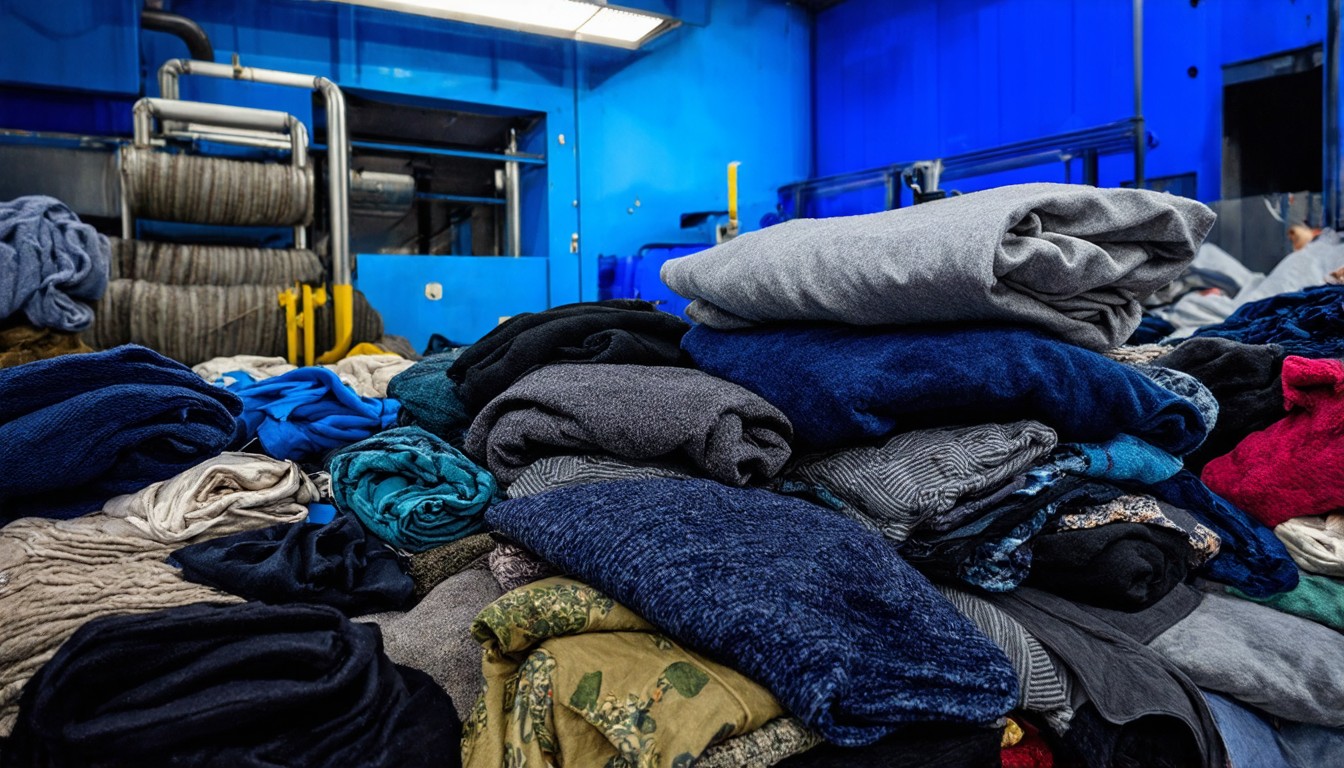
In an industrial park in Zhangjiagang, a small city on China's east coast, a large humming and hissing machine feeds on piles of used clothes and sorts them. This innovative AI-powered textile sorter is revolutionizing the recycling process, outperforming human workers in speed and efficiency. The machine, developed by a local technology company, has been hailed as a game-changer in the textile recycling industry, which is critical for China's efforts to reduce waste and promote sustainability.
The AI machine operates by using advanced sensors and computer vision algorithms to identify and categorize different types of fabrics, colors, and textures. It can sort through thousands of garments per hour, separating them into distinct piles based on quality, material, and potential reuse value. This not only speeds up the recycling process but also ensures that higher-quality materials are prioritized for reprocessing, while lower-quality items are diverted to other uses or disposal methods.
The introduction of this AI-powered sorter has significant implications for the textile recycling sector in China. The country is one of the world's largest textile producers and consumers, and its rapid industrialization has led to a surge in textile waste. According to recent estimates, China generates over 10 million tons of textile waste annually, much of which ends up in landfills or is incinerated, contributing to environmental pollution and resource depletion.
The AI machine in Zhangjiagang is part of a broader effort to address this waste crisis. By automating the sorting process, it enables recycling facilities to handle larger volumes of textile waste more efficiently. This not only reduces the environmental impact of textile production but also creates new economic opportunities for the region. The sorted textiles can be reused in various applications, such as producing new clothing, industrial fabrics, or even insulation materials.
The success of the AI-powered sorter in Zhangjiagang has already attracted attention from other regions in China. Several cities and provinces are now exploring the possibility of implementing similar technologies in their waste management systems. These initiatives are supported by the Chinese government's commitment to achieving a circular economy, where waste is minimized, and resources are reused and recycled as much as possible.
However, the adoption of AI in textile recycling is not without challenges. One concern is the potential displacement of human workers in the industry. While the AI machine significantly enhances efficiency, it requires a skilled workforce to operate and maintain. Local authorities in Zhangjiagang have acknowledged this issue and are working with technology companies to provide retraining programs for displaced workers, helping them transition to new roles in the rapidly evolving recycling sector.
Moreover, the effectiveness of the AI machine depends on the quality of the input data and the sophistication of its algorithms. The technology must be able to differentiate between a wide range of fabrics and materials, which can be challenging due to variations in texture, color, and design. Continuous improvements in AI capabilities and the availability of large datasets are expected to enhance the machine's sorting accuracy over time.
In conclusion, the AI-powered textile sorter in Zhangjiagang represents a promising step forward in China's quest to tackle textile waste and promote sustainable practices. By automating and optimizing the recycling process, it not only boosts efficiency but also opens up new avenues for economic growth and environmental protection. As the technology continues to evolve and spread across the country, it has the potential to transform the textile recycling industry and contribute to a more sustainable future for China and beyond.









