
AI agents that automatically prevent, detect and fix software issues are here as NeuBird AI launches Falcon, FalconClaw
The mantra of the modern tech industry was arguably coined by Facebook (before it became Meta): "move fast and break things." But as enterprise infrastructure has shifted into a dizzying maze of hybrid clouds, microservices, and ephemeral compute clusters, the "breaking" part has become a structural tax that many organizations can no longer afford to pay. Today, two-year-old startup NeuBird AI is launching a full-scale offensive against this "chaos tax," announcing a $19.3 million funding round alongside the release of its Falcon autonomous production operations agent. The launch isn't just a product update; it is a philosophical pivot. For years, the industry has focused on "Incident Response"—making the fire trucks faster and the hoses bigger. NeuBird AI is arguing that the only sustainable path forward is "Incident Avoidance". As Venkat Ramakrishnan, President and COO of NeuBird AI, put it in a recent interview: "Incident management is so old school. Incident resolution is so old school. Incident avoidance is what is going to be enabled by AI". By grounding AI in real-time enterprise context rather than just large language model reasoning, the company aims to move site reliability engineering and devops teams from a reactive posture to a predictive one. The AI divide: a reality check on automation Accompanying the launch is NeuBird AI’s 2026 State of Production Reliability and AI Adoption Report, a survey of over 1,000 professionals that reveals a massive disconnect between the boardroom and the server room. While 74% of C-suite executives believe their organizations are actively
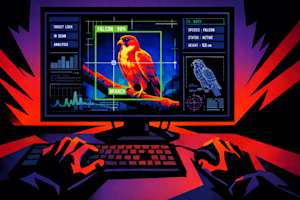
The mantra of the modern tech industry was arguably coined by Facebook (before it became Meta): "move fast and break things." But as enterprise infrastructure has shifted into a dizzying maze of hybrid clouds, microservices, and ephemeral compute clusters, the "breaking" part has become a structural tax that many organizations can no longer afford to pay. Today, two-year-old startup NeuBird AI is launching a full-scale offensive against this "chaos tax," announcing a $19.3 million funding round alongside the release of its Falcon autonomous production operations agent. The launch isn't just a product update; it is a philosophical pivot.
For years, the industry has focused on "Incident Response"—making the fire trucks faster and the hoses bigger. NeuBird AI is arguing that the only sustainable path forward is "Incident Avoidance." As Venkat Ramakrishnan, President and COO of NeuBird AI, put it in a recent interview: "Incident management is so old school. Incident resolution is so old school. Incident avoidance is what is going to be enabled by AI." By grounding AI in real-time enterprise context rather than just large language model reasoning, the company aims to move site reliability engineering and devops teams from a reactive posture to a predictive one.
Accompanying the launch is NeuBird AI’s 2026 State of Production Reliability and AI Adoption Report, a survey of over 1,000 professionals that reveals a massive disconnect between the boardroom and the server room. While 74% of C-suite executives believe their organizations are actively using AI to manage incidents, only 39% of the practitioners—the engineers actually on-call at 2:00 AM—agree. This 35-point "AI Divide" suggests that while leadership is writing checks for AI platforms, the technology is often failing to reach the frontline.
For engineers, the reality remains manual and grueling: troubleshooting, debugging, and resolving issues after they occur. This not only consumes significant time and resources but also disrupts user experiences and hampers business operations. NeuBird AI's Falcon and FalconClaw are designed to address this by leveraging AI to proactively identify and mitigate potential issues before they escalate.
Falcon, the autonomous production operations agent, is built to operate within the complex ecosystems of modern enterprises. It uses real-time data and contextual understanding to predict and prevent issues, reducing the need for reactive fixes. By integrating with existing systems, Falcon can monitor performance, detect anomalies, and automatically apply corrective actions. This not only improves system reliability but also frees up teams to focus on strategic initiatives rather than firefighting.
FalconClaw, on the other hand, is a toolset designed for developers and operations teams to embed AI-driven reliability checks into their workflows. It includes a suite of APIs and integrations that allow teams to incorporate predictive analytics and automated testing into their development and deployment pipelines. This ensures that potential issues are identified and addressed early in the development cycle, further reducing the likelihood of incidents down the line.
The launch of Falcon and FalconClaw is part of a broader trend in the tech industry toward a more proactive approach to infrastructure management. As enterprises become increasingly reliant on complex, distributed systems, the cost of incident response has become unsustainable. NeuBird AI's vision is to shift the focus from managing and resolving incidents to avoiding them altogether.
The 2026 State of Production Reliability and AI Adoption Report highlights the urgent need for this shift. While many organizations recognize the potential of AI in improving infrastructure reliability, the reality on the ground often lags behind. The AI Divide reveals a critical gap between what leadership believes and what the frontline teams experience. NeuBird AI's solution is not just a new product but a comprehensive approach that bridges this divide.
By grounding AI in real-time enterprise context, Falcon and FalconClaw offer a practical pathway to Incident Avoidance. They represent a significant step forward in the evolution of site reliability engineering and devops, enabling organizations to transform from reactive to predictive. As the complexity of enterprise infrastructure continues to grow, the ability to proactively manage and prevent issues will become increasingly crucial. NeuBird AI's launch underscores the importance of this shift and sets a new standard for how organizations can harness AI to optimize their infrastructure and operations.









