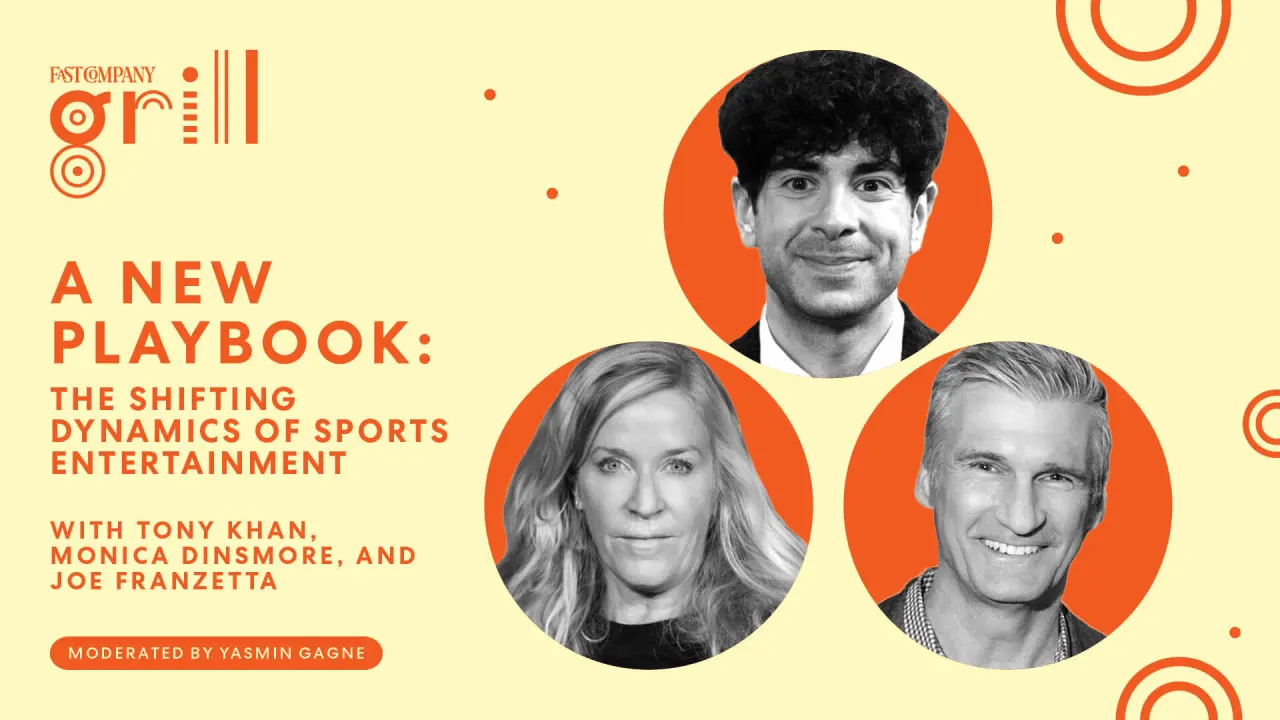
A New Playbook: The Shifting Dynamics of Sports Entertainment
Featuring Monica Dinsmore, Head of Esports, Electronic Arts; Joe Franzetta, Head of Sports, Roku and Tony Khan, Founder, CEO, GM, and Head of Creative, All Elite Wrestling. Moderated by Yasmin Gagne, Staff Editor, Fast Company. When it comes to sports entertainment, networks and streamers are in heated bidding wars for exclusive rights, new leagues are disrupting incumbents, and the “esports winter” is thawing out to create new opportunities for the massive industry. Hear how execs from Roku, All Elite Wrestling, and EA Sports are rewriting the rules of their industries and shaping the future of sports entertainment.
In the rapidly evolving landscape of sports entertainment, the traditional boundaries between television, streaming, and gaming are blurring, creating a new playbook for industry leaders. This transformation is driven by a combination of factors, including the rise of esports, the increasing demand for diverse content, and the competitive bidding wars for exclusive rights. To understand this shift, we turn to three key figures: Monica Dinsmore, Head of Esports at Electronic Arts; Joe Franzetta, Head of Sports at Roku; and Tony Khan, Founder, CEO, GM, and Head of Creative at All Elite Wrestling. These executives are rewriting the rules of their industries and shaping the future of sports entertainment.
Monica Dinsmore, who oversees EA Sports' esports division, highlights the growing importance of esports in the broader entertainment ecosystem. "Esports is no longer just a niche market," she explains. "It's becoming a mainstream phenomenon that's attracting a diverse audience, including casual gamers and traditional sports fans." Dinsmore notes that the once-dubbed "esports winter" is thawing, with increased investment and partnerships driving growth. EA Sports, for instance, has expanded its esports offerings through collaborations with major leagues like FIFA and NFL, integrating real-world sports with digital competition. This convergence is not only boosting engagement but also creating new revenue streams for both traditional sports and esports.
Joe Franzetta, Head of Sports at Roku, emphasizes the role of technology and distribution in reshaping sports entertainment. With Roku's platform reaching millions of households, Franzetta observes a surge in demand for sports content across diverse channels. "Viewers are no longer limited to traditional networks," he states. "They're seeking on-demand access to their favorite teams, leagues, and events, often through streaming services or even social media." This shift has intensified competition among platforms, leading to bidding wars for exclusive rights. Franzetta predicts that this trend will continue, forcing traditional broadcasters to adapt and innovate to remain relevant.
Tony Khan, the visionary behind All Elite Wrestling (AEW), offers insights into the disruption caused by new leagues and the redefinition of sports entertainment. AEW, which launched in 2019, has quickly become a force in professional wrestling, challenging long-established competitors like WWE. Khan attributes AEW's success to a focus on storytelling, innovative programming, and a strong online presence. "The wrestling industry has seen a sea change," Khan asserts. "Fans now expect high-quality content, engaging narratives, and a sense of community—all of which we're committed to delivering." This approach has not only attracted new viewers but also redefined the boundaries of sports entertainment, blending traditional wrestling with elements of drama and comedy.
The dynamics of sports entertainment are further complicated by the intersection of technology and fan engagement. Dinsmore points to the growing importance of data and analytics in shaping content and strategies. "Understanding our audience's preferences and behaviors is crucial," she explains. "By leveraging data, we can create more personalized experiences and drive engagement across all platforms." Franzetta agrees, noting that Roku's platform provides valuable insights into viewer habits, enabling more targeted content creation and distribution.
Khan, meanwhile, underscores the role of social media and fan interaction in shaping the future of sports entertainment. "Fans are no longer passive consumers," he says. "They expect to be part of the conversation, to have a voice and influence the content they love." AEW, for example, has built a strong following by engaging directly with fans through social media, incorporating their feedback into storylines and events. This two-way communication not only fosters loyalty but also creates opportunities for cross-promotion and partnerships.
In conclusion, the future of sports entertainment is being redefined by a confluence of factors, including the rise of esports, technological advancements, and the emergence of new leagues. Executives like Dinsmore, Franzetta, and Khan are at the forefront of this transformation, leveraging data, innovation, and fan engagement to create new opportunities and reshape the industry. As traditional boundaries blur and competition intensifies, the next generation of sports entertainment will likely be more diverse, interactive, and immersive, catering to a global audience that craves personalized, engaging experiences.