
A man’s blockchain is his castle
But who gets a key to the gate?
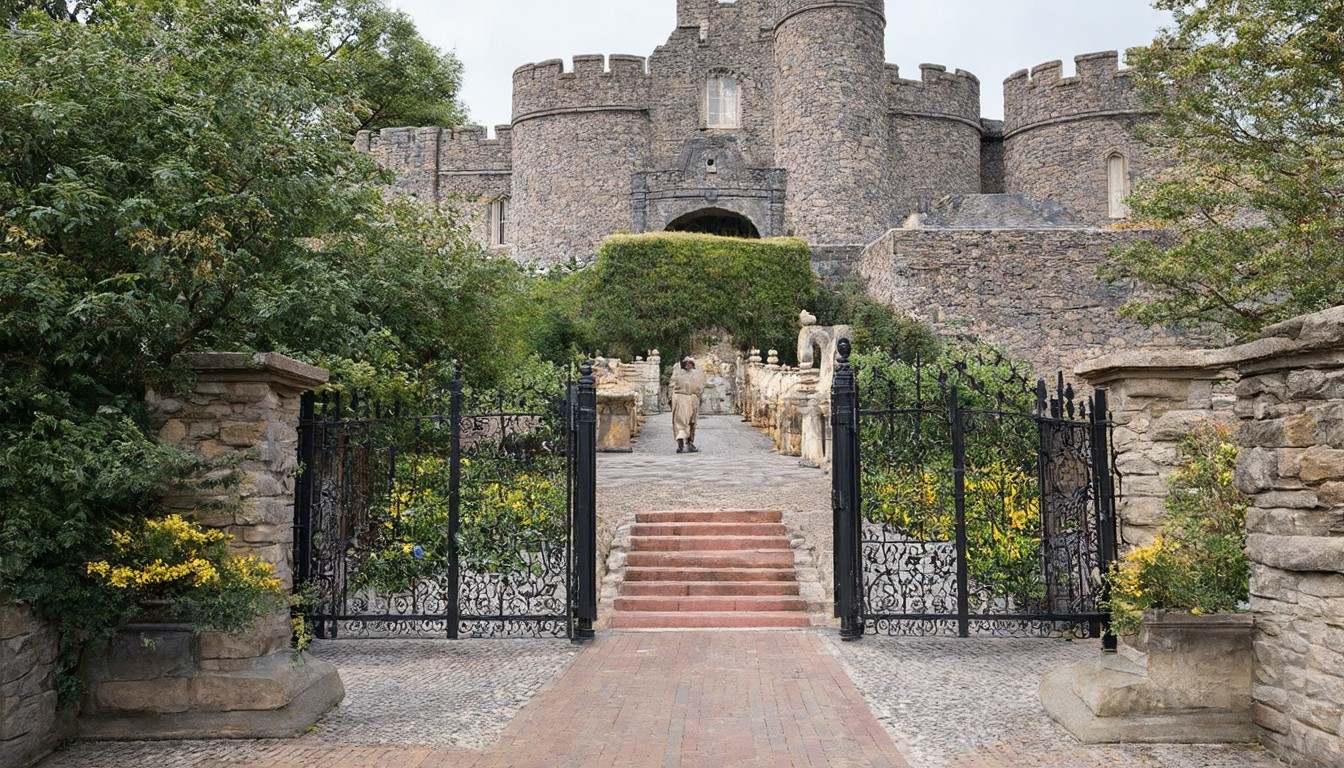
In a world where digital security is increasingly paramount, one man has taken the concept of privacy to an unprecedented level. By building a blockchain-based fortress, he has created a digital realm that he alone controls, raising profound questions about access, ownership, and the future of personal data.
The story of this man, who wishes to remain anonymous, begins with his growing concern over the erosion of personal privacy in the digital age. As more companies and governments collected and traded data without consent, he sought a way to safeguard his information. Traditional encryption methods, he realized, were insufficient. They relied on third-party keys and could be compromised. So, he turned to blockchain technology, a decentralized system that offers unprecedented security through cryptographic algorithms and distributed ledgers.
Blockchain, typically associated with cryptocurrencies like Bitcoin, is a distributed database that records transactions across many computers. Each block in the chain contains a cryptographic hash of the previous block, linking them in an unbreakable chain. This makes it nearly impossible to alter past transactions without detection. The man saw potential in this technology to create a personal digital fortress—a blockchain where he alone held the keys.
To build his blockchain castle, he started by setting up a private network. He chose a consensus algorithm that required no central authority, ensuring that no one else could interfere. He then created a unique cryptographic key, a long string of characters that would unlock his digital realm. This key, he believed, was invulnerable to hacking, as it relied on complex mathematical problems that are nearly impossible to solve.
His castle was not just a digital space; it was a complete ecosystem. He stored his personal data, communications, and even financial transactions on the blockchain. By doing so, he ensured that all his information was immutable and tamper-proof. He could access his castle from anywhere, as long as he had his key.
However, the question remains: who gets a key to the gate? The man insists that his castle is his alone, a sanctuary from prying eyes. He has not shared his key with anyone, not even close friends or family. He argues that true privacy requires absolute control, and that sharing the key would risk compromising his security.
Critics argue that this approach is impractical. They point out that while blockchain is secure, it is not foolproof. There are always vulnerabilities, and the man’s reliance on a single key makes him a single point of failure. Moreover, the man’s castle is not easily accessible. Without a user-friendly interface, it is difficult for others to interact with his blockchain, limiting its utility.
Others see potential in the man’s vision. They suggest that his approach could inspire new ways of thinking about digital privacy. If everyone had their own blockchain castle, they argue, it could lead to a future where personal data is decentralized and secure. However, this would require a shift in how we approach data ownership and sharing.
The man’s blockchain castle is more than just a technological experiment. It is a bold statement about the future of privacy. It challenges us to reconsider what it means to own our digital selves and who has access to them. As we navigate an increasingly interconnected world, the question of who gets a key to the gate becomes more relevant than ever.
In the end, the man’s story is a cautionary tale and a call to action. It reminds us that privacy is a precious commodity that must be protected. It also highlights the need for innovative solutions to the challenges posed by the digital age. As we look to the future, the man’s blockchain castle serves as a powerful reminder of the potential—and the perils—of the digital world.









