
A long Mideast war could take away from support for Ukraine, Zelenskyy tells the AP
Ukrainian President Volodymyr Zelenskyy is concerned that a prolonged U.S.-Israeli war on Iran could erode America's support for Ukraine as Washington's global priorities shift
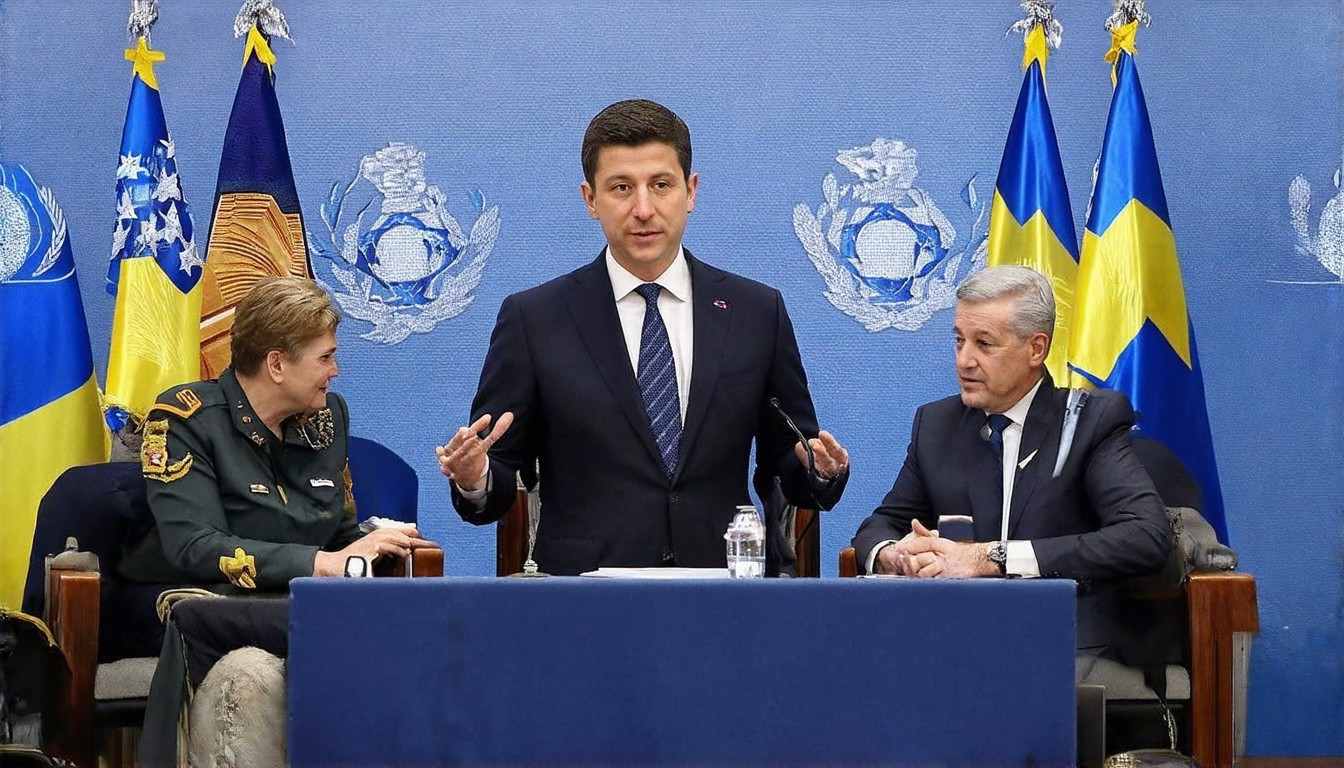
Ukrainian President Volodymyr Zelenskyy has expressed concern over the potential impact of a prolonged U.S.-Israeli conflict with Iran on the support for Ukraine. In an interview with the Associated Press, Zelenskyy highlighted that a drawn-out war in the Middle East could shift Washington's global priorities, potentially leading to reduced backing for Ukraine's ongoing struggle against Russian aggression.
Zelenskyy's remarks come as tensions in the Middle East continue to escalate, with both the United States and Israel increasingly vocal about their stance against Iran's nuclear program. The Ukrainian leader acknowledges the importance of the U.S. and Israel's efforts to address regional security concerns, but he also warns that a protracted conflict could divert attention and resources away from Ukraine's needs.
"We understand the importance of the Middle East issues, but we also need to ensure that the support for Ukraine remains a priority," Zelenskyy told the AP. "A long war in the region could lead to a situation where the focus on Ukraine diminishes, and that would be a serious concern for us."
The Ukrainian president's apprehension is rooted in the fact that the United States has been a key ally and supporter of Ukraine since the start of the Russian invasion in 2022. Washington has provided substantial military aid, financial assistance, and diplomatic backing to help Ukraine defend its sovereignty and resist Russian forces. However, the prospect of a major conflict in the Middle East could force the U.S. to reallocate its resources and attention, potentially affecting the scale and consistency of support for Ukraine.
Zelenskyy's concerns are not without basis. The U.S. has already faced similar challenges in the past, such as the Iraq War in the early 2000s, which led to a temporary reduction in focus on other global issues. While it is unclear whether a prolonged Middle East conflict would have the same impact, Zelenskyy is taking proactive steps to ensure that Ukraine's needs remain a priority.
In addition to expressing his concerns, Zelenskyy has also emphasized the importance of maintaining strong bilateral relations with the United States and other key allies. He has called for continued cooperation and coordination to address the complex challenges facing both Ukraine and the international community.
"We need to work together to find a sustainable solution that addresses the security concerns in the Middle East while ensuring that Ukraine's fight for independence and territorial integrity is not compromised," Zelenskyy said. "The support of our allies is crucial, and we must ensure that it remains unwavering in the face of any challenges."
As the situation in the Middle East continues to evolve, Zelenskyy's message serves as a reminder of the interconnectedness of global security issues. While the U.S. and Israel have legitimate concerns about Iran's nuclear program, the potential ramifications for Ukraine's struggle against Russia cannot be ignored.
Ultimately, Zelenskyy's concerns highlight the need for a balanced approach to global security that takes into account the interests and needs of all parties involved. As the conflict in Ukraine and tensions in the Middle East persist, it will be essential for all stakeholders to navigate these complex challenges with care and foresight, ensuring that the support for Ukraine remains a top priority.








