A border wall through Big Bend appears to be on hold after public outcry, but questions remain
While the federal government hasn’t made a public statement about its plans, official maps show a “virtual wall” going through the region rather than a physical barrier.
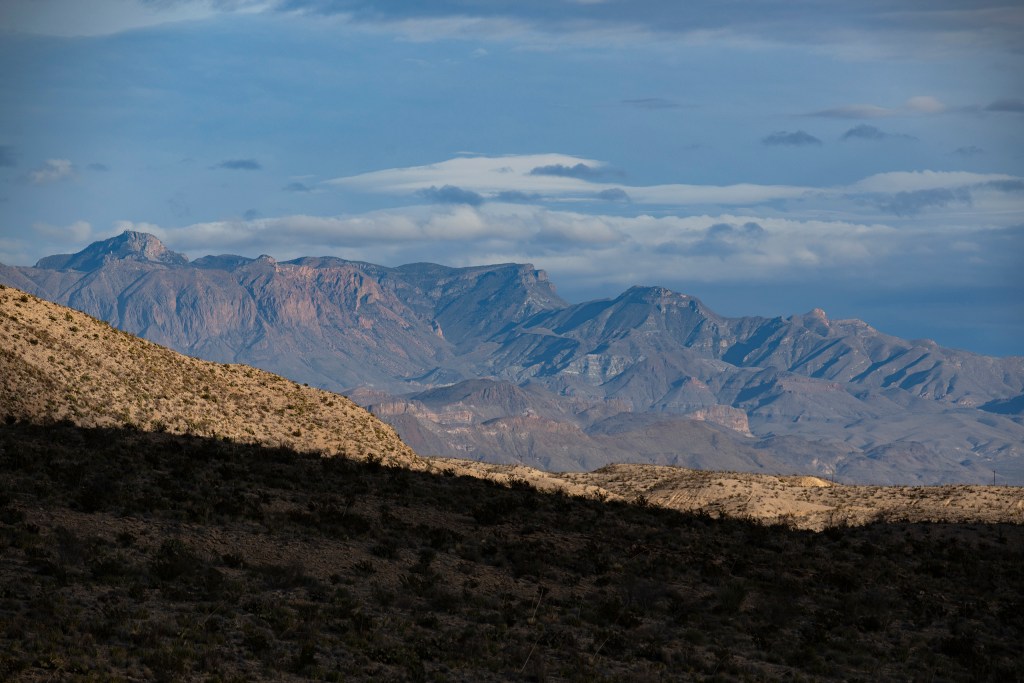
The proposed border wall through Big Bend National Park, a stunning region of rugged canyons and towering mountains in Texas, appears to be on hold after a wave of public outcry. While the federal government has not issued an official statement regarding the project, recent updates to official maps reveal a "virtual wall" rather than a physical barrier, raising questions about the future of the controversial plan.
Big Bend National Park, known for its breathtaking landscapes and diverse wildlife, has been at the center of a contentious debate over the past few years. Environmental groups and conservationists have fiercely opposed the idea of constructing a wall through the park, arguing that it would disrupt ecosystems and harm wildlife habitats. They also emphasized the park's cultural significance, as it is home to numerous Native American artifacts and historical sites.
The initial proposal for the border wall in the Big Bend area drew widespread criticism, with many pointing out the impracticality of building a physical barrier in such a remote and challenging terrain. The park's rugged terrain, characterized by steep canyons and narrow trails, would make the construction of a traditional wall not only difficult but also potentially destructive to the natural environment.
In response to the public pressure and mounting concerns, the federal government has reportedly shifted its approach. Instead of a physical wall, the updated maps indicate a "virtual wall," which likely refers to enhanced surveillance technologies and increased border patrol efforts. This shift has been met with mixed reactions. While some see it as a concession to environmental concerns, others argue that it does not fully address the core issues of border security and immigration policy.
The transition to a virtual wall raises new questions about the effectiveness of such measures. Critics contend that relying solely on surveillance and patrols may not be sufficient to deter illegal crossings, especially in a region as vast and remote as Big Bend. They also express concerns about the potential environmental impact of increased border patrol activities, such as the disruption of wildlife habitats and the introduction of new pollutants.
Despite the apparent pause in the physical wall project, the debate over border security and the protection of natural areas continues. Advocates for conservation and environmental protection are urging policymakers to prioritize sustainable solutions that balance security needs with the preservation of fragile ecosystems. They argue that the unique beauty and ecological significance of Big Bend National Park should not be compromised in the pursuit of border control.
Meanwhile, proponents of the border wall argue that enhanced surveillance and patrols are not a complete solution and that a physical barrier is still necessary to address the challenges posed by illegal immigration. They contend that the virtual wall approach may not provide the same level of deterrence as a tangible wall, and that the environmental concerns can be mitigated through careful planning and execution.
As the debate rages on, the future of the border wall in Big Bend remains uncertain. The shift to a virtual wall may signal a temporary pause in the construction of a physical barrier, but it does not resolve the underlying tensions between border security and environmental conservation. The situation in Big Bend serves as a microcosm of broader national debates over immigration policy and the protection of natural resources, highlighting the complexities and challenges faced by policymakers in balancing these competing priorities.
In the meantime, the park continues to attract visitors from around the world, drawn by its stunning landscapes and rich cultural heritage. As the debate over the border wall persists, the stakes could not be higher. The outcome will have far-reaching implications not only for Big Bend National Park but also for the broader landscape of U.S. immigration policy and environmental conservation efforts.