5-step Google Business Profile audit to improve local rankings
Learn where competitors are outperforming you — from review recency to category selection — and how to close the gap.
Google Business Profile (GBP) audits are crucial for local businesses aiming to improve their rankings in search engine results pages (SERPs). Despite the rise of ads and AI overviews, GBP remains a top source of inbound leads and a quick way to enhance visibility through simple fixes. This article outlines a five-step audit to identify and address gaps that many businesses overlook, helping them close the gap with competitors in local rankings.
Step 1: Evaluate Google Review Velocity and Recency
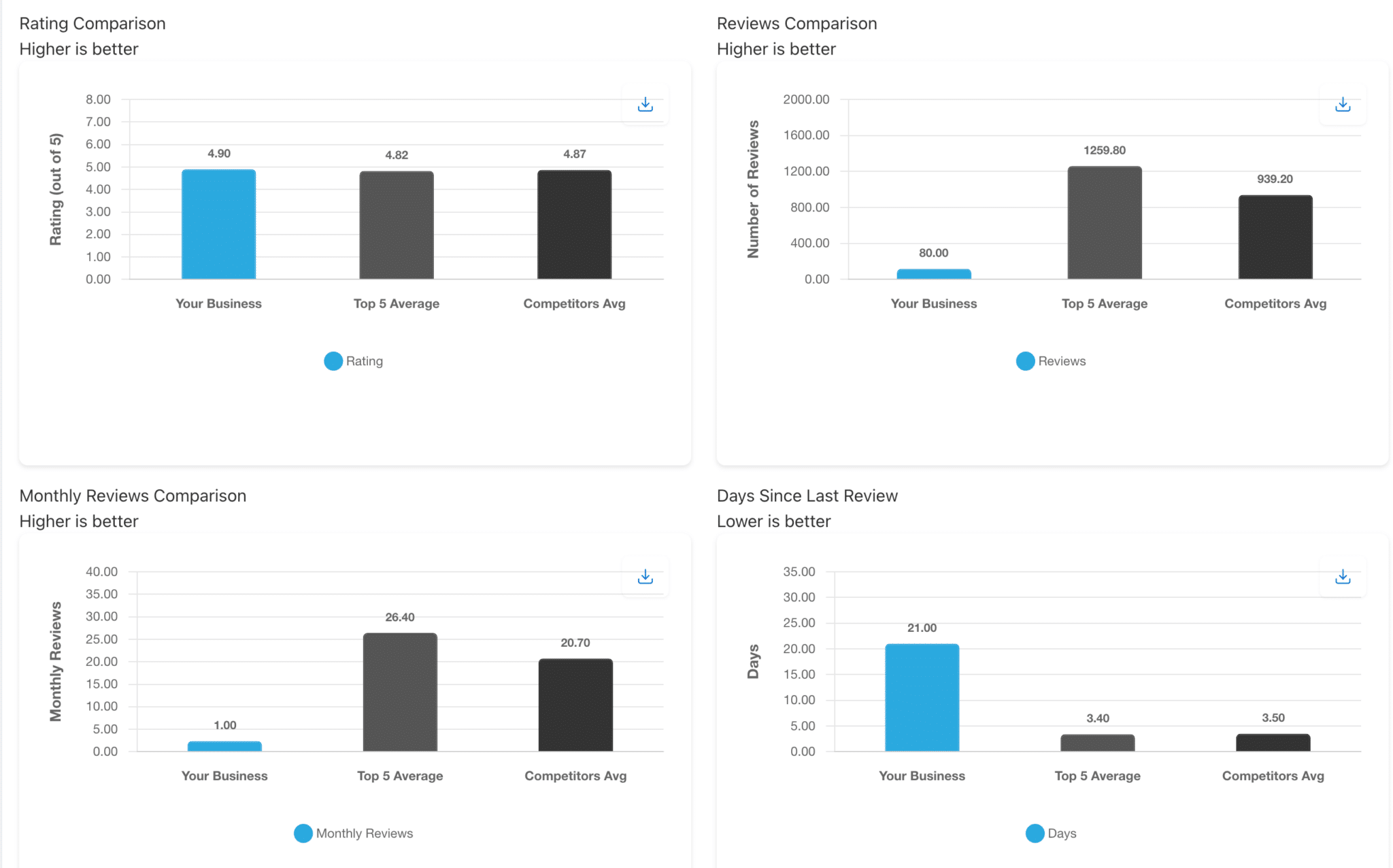
A common misconception is that businesses with the most Google reviews automatically rank higher in Google Maps. While a high review count provides social proof, Google's algorithm prioritizes more recent reviews. The number of reviews received per month (review velocity) and the recency of the most recent review often outweigh the total count for critical map pack positions.
For example, a business with 500 reviews but no new ones since 2024 is likely to be outranked by a competitor with 100 fresh reviews from the last month. To measure these metrics, start by analyzing competitors who outrank you for your top keywords. Use geo-grid ranking scans to identify these competitors. Then, note how many reviews they received in the last 30 days and when their most recent review was posted.
Benchmark your data by creating a simple table comparing your monthly review count and recency. Tools like Places Scout, Local Falcon, or Whitespark can automate this process, providing grid scans and review data. Automating this analysis helps track progress and ensure consistency in review acquisition.
Step 2: Add Keywords to Your Business Name
Including keywords in your business name is one of the simplest yet effective ways to improve local rankings. Google's algorithm prioritizes businesses with names that include relevant keywords, making them more visible in local searches. For instance, a plumber in New York City should include "plumber" and "New York City" in their business name.
However, be cautious not to overstuff keywords, as this can appear unnatural and harm your credibility. Instead, focus on including the most relevant and high-intent keywords that accurately represent your business.
Step 3: Optimize Your Business Categories
Choosing the right business categories is essential for local SEO. Google uses these categories to categorize businesses, and selecting the most relevant and popular ones can improve your visibility.
To optimize your categories, first identify the primary services or products you offer. Then, research the most commonly used categories in your industry. Tools like Google's Business Categories or industry-specific directories can help. Ensure your categories align with the terms users typically search for in your area.
Step 4: Ensure Consistency in Your Online Presence
Google prioritizes businesses with consistent online presence across all platforms. This includes ensuring your business name, address, phone number, and other details are the same across your website, social media profiles, and other directories.
Inconsistencies can confuse Google's algorithms and lead to lower rankings. Regularly review and update your information to maintain consistency. Additionally, ensure your website is optimized for local SEO, including localized content, schema markup, and a clear call-to-action for inquiries.
Step 5: Monitor and Adjust Strategically
Local SEO is an ongoing process that requires continuous monitoring and adjustment. Regularly review your GBP audit results and make necessary changes to improve your rankings.
For instance, if you find that your review velocity is low, consider implementing a local SEO sprint—a focused 90-day plan to boost reviews and engagement. This might involve offering incentives for reviews, responding to customer feedback, or increasing your online presence in local communities.
In conclusion, a comprehensive Google Business Profile audit can significantly improve local rankings by addressing gaps in review velocity, keyword usage, business categories, online consistency, and strategic adjustments. By following these five steps, businesses can stay ahead of competitors and attract more inbound leads through their GBP.