
5 Mysteries That the Artemis Missions to the Moon Could Finally Solve
The moon is not just a barren rock orbiting the Earth. The Artemis missions could answer the great unknowns that the satellite holds.
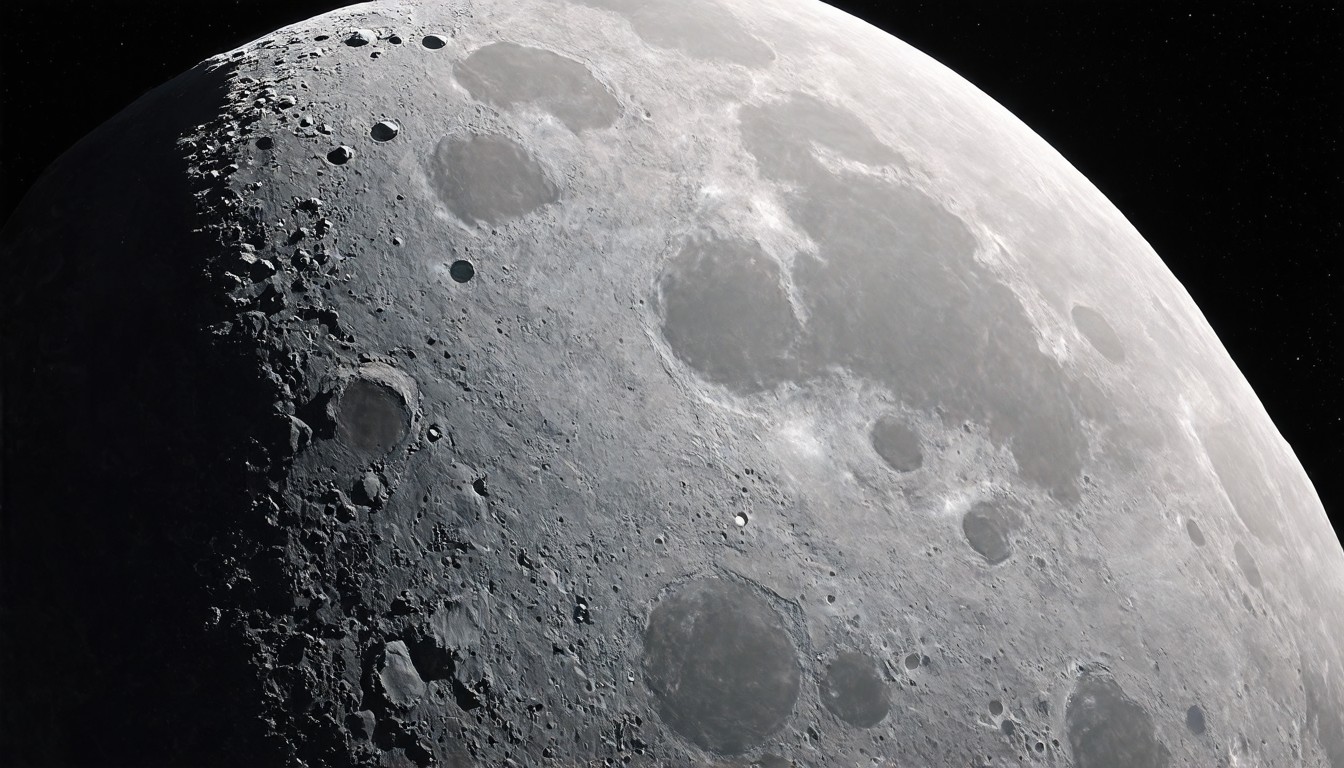
The Artemis missions, a series of crewed and uncrewed spaceflights aimed at establishing a sustainable presence on the Moon, are not just about revisiting a place last visited by humans in the 1970s. They hold the potential to unravel some of the most intriguing mysteries that our closest celestial neighbor has yet to reveal. As NASA and its international partners prepare for these missions, scientists are eagerly anticipating answers to five key questions that could reshape our understanding of the Moon and its role in the universe.
First and foremost, the Artemis missions could shed light on the Moon's origins. While the prevailing theory suggests that the Moon formed from debris ejected during a giant impact between Earth and a Mars-sized body, there are still gaps in our knowledge. The missions will provide samples from the Moon's surface and possibly from deeper within its crust, which could contain clues about the conditions under which it formed. By analyzing these samples, scientists hope to determine whether the Moon formed closer to Earth than it is today or if it migrated outward over time. This understanding would not only deepen our grasp of the Moon's history but also provide insights into the early solar system's dynamics.
Another mystery that the Artemis missions aim to address is the Moon's internal structure. While we know that the Moon has a solid inner core and a liquid outer core, the exact composition and extent of these layers remain uncertain. The missions will collect data on the Moon's seismic activity, which can reveal information about its internal structure. By studying seismic waves generated by impacts or natural events, scientists can create a more detailed map of the Moon's interior. This could help explain why the Moon's core is so small relative to its size and whether it has been cooling and contracting over billions of years.
The Artemis missions also hold the promise of answering questions about the Moon's water resources. Recent discoveries have revealed that the Moon's poles contain significant amounts of water ice, which could be crucial for sustaining human presence and future exploration. The missions will explore these regions in detail, searching for deposits of water and assessing their accessibility. Understanding the distribution and availability of water on the Moon is essential for planning long-term human missions, as it could be used for life support, propulsion, and construction materials.
Furthermore, the Artemis missions could provide answers about the Moon's past volcanic activity. While the Moon is often depicted as a barren, inactive world, evidence suggests that it was once geologically active. The missions will search for signs of ancient volcanoes, lava flows, and other geological features that could indicate past volcanic activity. By studying these remnants, scientists hope to understand how the Moon's volcanic activity influenced its surface and internal structure. This could also help explain why the Moon's surface is so heavily cratered, as volcanic activity might have both created and obscured some craters over time.
Lastly, the Artemis missions could reveal whether the Moon has any subsurface liquid water. While the presence of water ice at the poles is well-documented, the existence of liquid water beneath the surface remains a topic of debate. The missions will conduct experiments to search for signs of liquid water, which could be crucial for potential future lunar habitats. If liquid water is found, it would not only support life but also provide a resource for in-situ resource utilization, reducing the need for Earth-based resupply missions.
In summary, the Artemis missions are not just about returning humans to the Moon. They represent a significant step forward in our quest to understand one of the most enigmatic bodies in our solar system. By addressing these five mysteries, the missions could transform our knowledge of the Moon's origins, internal structure, water resources, volcanic history, and potential for subsurface liquid water. As we prepare for these missions, the promise of new discoveries is as exciting as the journey itself.








