
5 Mysteries That the Artemis Missions to the Moon Could Finally Solve
The moon is not just a barren rock orbiting the Earth. The Artemis missions could answer the great unknowns that the satellite holds.
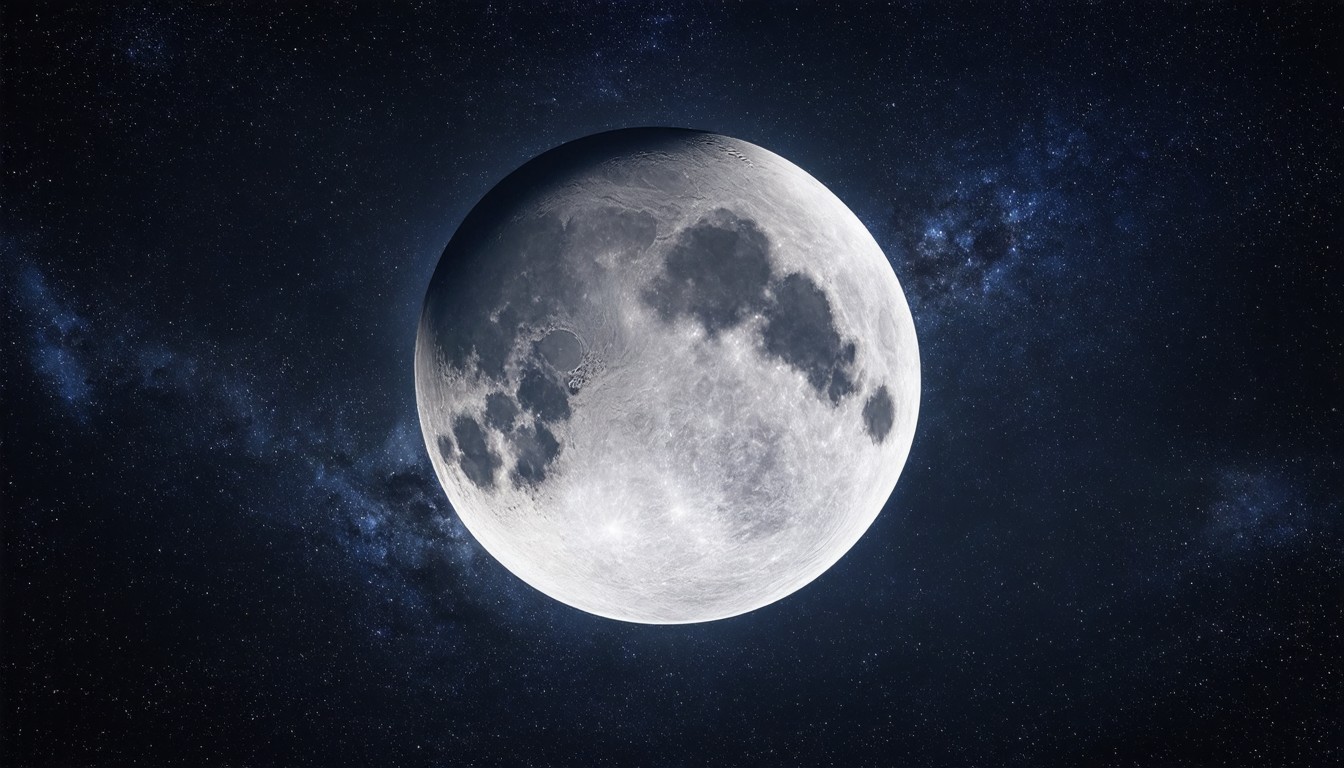
The Artemis missions, a series of crewed and uncrewed spaceflights aimed at establishing a sustainable presence on the Moon, are not just about revisiting a place last visited by humans in the 1970s. They hold the potential to solve several long-standing mysteries about our closest celestial neighbor. The Moon, often portrayed as a barren rock in popular culture, is actually a complex and dynamic body teeming with scientific enigmas. Here are five mysteries that the Artemis missions could finally unravel.
First and foremost, the Artemis missions could shed light on the Moon's formation and early history. Current theories suggest that the Moon formed around 4.5 billion years ago from the debris of a giant collision between Earth and a Mars-sized body. However, the exact details of this event remain uncertain. By studying the Moon's oldest rocks, which are believed to be remnants from this period, scientists hope to piece together the sequence of events that led to the Moon's creation. The Artemis missions plan to collect samples from the lunar south pole, an area that is believed to preserve some of the oldest material on the Moon. Analyzing these samples could provide critical insights into the Moon's formation and the early solar system.
Another significant mystery concerns the Moon's internal structure. While we know that the Moon has a solid inner core and a liquid outer core, the exact composition and dynamics of these layers are not fully understood. The Artemis missions could help answer questions about how the Moon's core formed and evolved over time. Seismic data from previous missions, such as the Lunar Reconnaissance Orbiter, have provided some clues, but in-situ measurements from the lunar surface would be invaluable. By deploying instruments on the Moon's surface, scientists could study the seismic activity and magnetic fields more directly, potentially revealing how the Moon's core interacts with its surface and how it has changed over billions of years.
The Artemis missions could also help us understand the Moon's volcanic activity and its role in the early Earth-Moon system. While the Moon is not currently volcanically active, there is evidence of past volcanic eruptions, particularly in the form of maria—large, dark, basaltic plains. The timing and extent of these eruptions are not well understood, and they could have had a profound impact on both the Moon and Earth. For instance, volcanic outgassing on the Moon might have contributed to the delivery of water and other volatiles to Earth, influencing the development of life. By studying the Moon's volcanic features and the materials they produced, scientists could better understand the interplay between the Moon and Earth in the early solar system.
A fourth mystery that the Artemis missions could address is the presence of water on the Moon. While the Apollo missions discovered water in the form of ice in the permanently shadowed craters of the Moon's poles, the extent and accessibility of this resource remain uncertain. The Moon's water could be crucial for future lunar exploration and colonization, as it could be used for life support, propellant, and construction materials. The Artemis missions plan to explore the lunar poles more extensively, searching for accessible water reserves and studying its distribution. Understanding the Moon's water resources could have significant implications for both scientific exploration and human endeavors on the Moon.
Finally, the Artemis missions could provide insights into the Moon's role in Earth's climate and geological history. The Moon's gravitational influence has shaped Earth's tides and rotation, and it is believed to have played a role in stabilizing Earth's axial tilt, which in turn has influenced its climate. However, the exact nature of this influence and how it has changed over time are not fully understood. By studying the Moon's gravitational effects on Earth and the Moon's own geological activity, scientists could better understand the dynamic relationship between the two bodies. This knowledge could help us predict future climate changes and better understand the factors that have shaped Earth's history.
In conclusion, the Artemis missions are not just about returning humans to the Moon. They represent a significant opportunity to unravel some of the most profound mysteries about our closest celestial neighbor. By exploring the Moon's formation, internal structure, volcanic activity, water resources, and gravitational interactions with Earth, the Artemis program could provide groundbreaking insights into the history and dynamics of our solar system. As we prepare for these missions, the potential discoveries they could make are as exciting as the journey itself.








