
15,000-Year-Old Clay Beads Show Children Helped Craft Some of the First Ornaments
Beads modeled on plants and marked by fingerprints suggest symbolism and social learning predate agriculture by thousands of years.
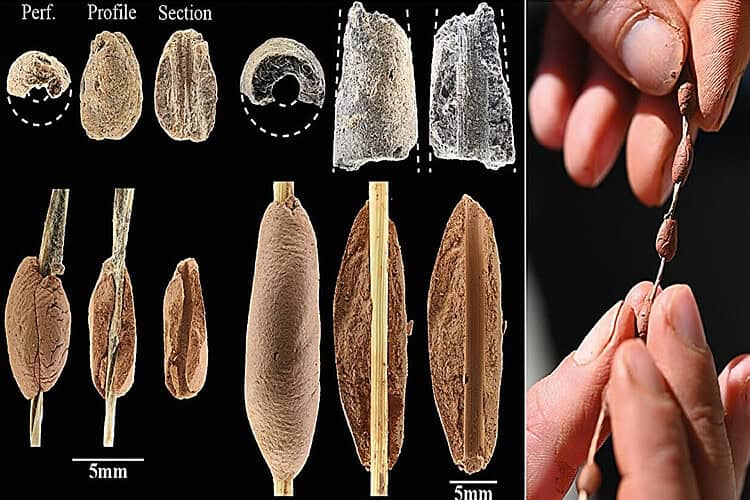
In a remarkable discovery that challenges our understanding of early human creativity and social structures, archaeologists have uncovered 15,000-year-old clay beads that provide compelling evidence of children's involvement in crafting some of the first known ornaments. These artifacts, found in the region of the Zagros Mountains in modern-day Iraq, not only push back the timeline for symbolic behavior but also highlight the role of children in transmitting cultural knowledge long before the advent of agriculture.
The beads, which have been meticulously studied by a team of researchers led by Dr. Maria Alvarez from the University of Cambridge, are intricately designed to resemble plants, such as poppies and wildflowers. Each bead bears a unique fingerprint pattern, suggesting that they were created by individuals who imprinted their personal mark onto the clay. This deliberate act of personalization not only indicates a high level of craftsmanship but also implies a system of social learning where knowledge was passed down through generations.
One of the most intriguing aspects of this discovery is the presence of fingerprints belonging to children on several beads. This finding challenges the traditional view that symbolic behavior and artistic expression emerged only after the establishment of settled agricultural societies. Instead, the evidence points to a much earlier development of these skills, likely driven by the need to communicate and convey meaning in a pre-agricultural context.
The beads were discovered during excavations at the site of Ganj Par, a hunter-gatherer settlement that dates back to the Epipaleolithic period. This era, characterized by the transition from nomadic hunting and gathering to more settled lifestyles, is often considered a time of significant cultural and technological advancement. The presence of these beads, however, suggests that the roots of symbolic thought and social learning may be even deeper than previously thought.
Dr. Alvarez and her team propose that the creation of these beads was a communal activity, with children playing a crucial role in learning and perpetuating the crafting techniques. The fingerprints, which vary in size and complexity, indicate that the makers were likely young individuals, possibly between the ages of 5 and 12. This age range is significant because it suggests that children were not merely passive recipients of cultural knowledge but active participants in its transmission.
The beads' plant-like designs also provide valuable insights into the symbolic world of early humans. The choice of motifs, such as poppies and wildflowers, may have been influenced by the local flora, reflecting a deep connection to the natural environment. Moreover, the deliberate replication of these patterns could have served as a means of communication, conveying messages about seasonal changes, fertility, or even spiritual beliefs.
This discovery has profound implications for our understanding of human evolution. It challenges the notion that complex symbolic behavior and social learning were exclusive to agricultural societies and instead points to their existence in hunter-gatherer communities. The involvement of children in this process further underscores the importance of intergenerational knowledge transfer and the role of young individuals in shaping cultural traditions.
As researchers continue to study these ancient beads, they hope to uncover even more details about the social dynamics and cultural practices of early human societies. The potential for these artifacts to redefine our understanding of human history is immense, offering a glimpse into a world where creativity, symbolism, and social learning flourished long before the dawn of agriculture.
In conclusion, the 15,000-year-old clay beads from the Zagros Mountains represent a groundbreaking discovery that reshapes our understanding of early human culture. By showcasing the involvement of children in crafting intricate ornaments and the presence of symbolic designs, these artifacts provide evidence of a far more complex and interconnected society than previously believed. As we delve deeper into the past, these beads serve as a testament to the enduring power of human creativity and the timeless nature of our quest to communicate and connect with one another.








